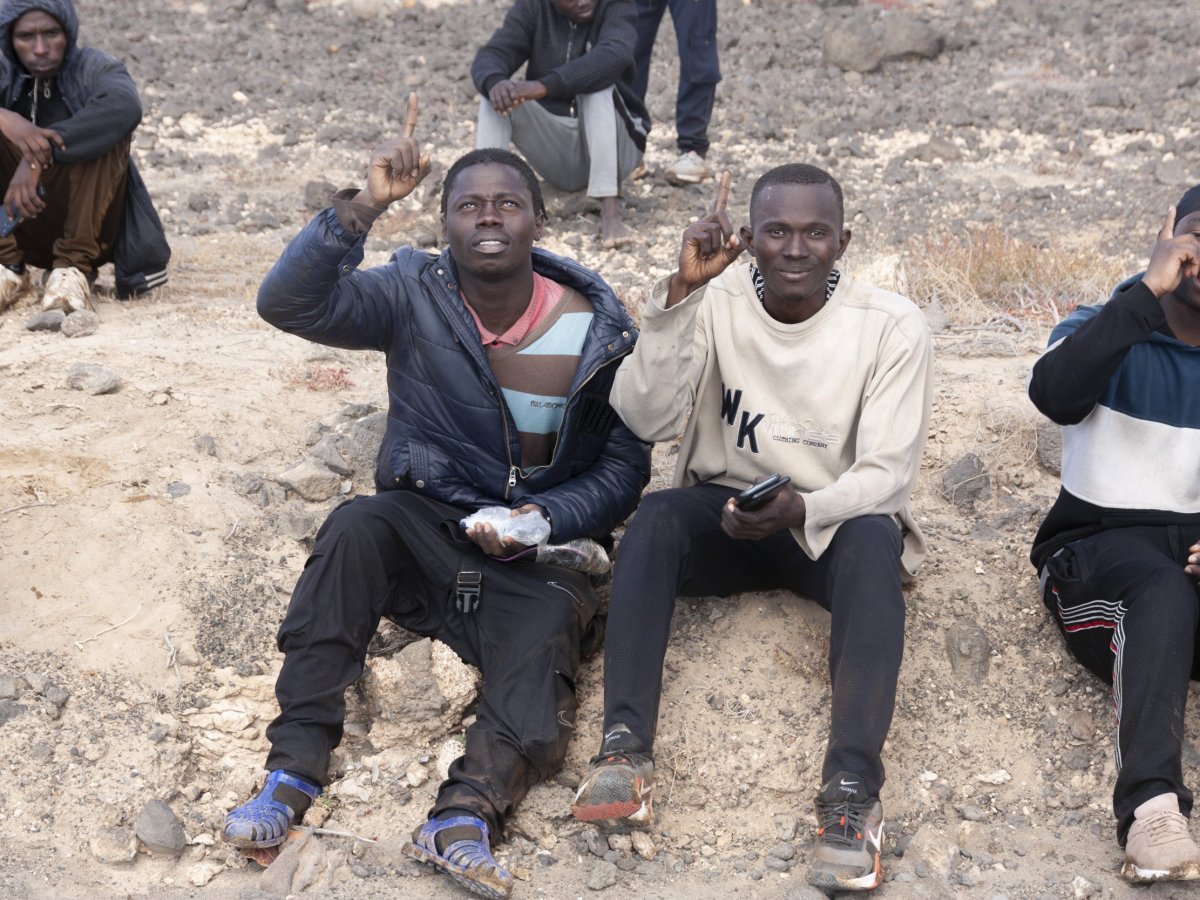
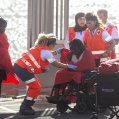
Up to 122 people risked their lives at the beginning of July by sailing across the Atlantic on an inflatable boat that was rescued by Maritime Rescue 20 kilometers from Lanzarote. It was the first precarious vessel of its kind to arrive on the island with so many people on board. A few weeks earlier, another boat with 80 people crammed inside had also arrived at this corner of the Atlantic. The collective Caminando Fronteras had already warned a few months ago: the migratory route to the Canary Islands is increasingly dangerous.
During the months of greatest influx of migrant arrivals to the Canary Islands, in November 2020, more than 1,400 people arrived in the archipelago in a single day. The image of the Spanish border of Ceuta, where 72,000 people swam from Morocco on Thursday, July 30 (according to the latest data from the Ministry of the Interior), has represented an unprecedented crisis at the Spanish borders. It has also been used by the far-right to incite hatred.
Both realities have a much broader context in common. Behind the people who throw themselves into the sea, whether by swimming, in an inflatable boat or a cayuco, there are numerous causes that push them to seek a new life on the European continent and wait for the opportunity to cross. Some, from inland African countries such as Guinea Conakry, Burkina Faso or Mali (or from the interior of coastal countries), have never seen the sea before.
Europe and the millions of euros it pays to Morocco, Senegal and Mauritania
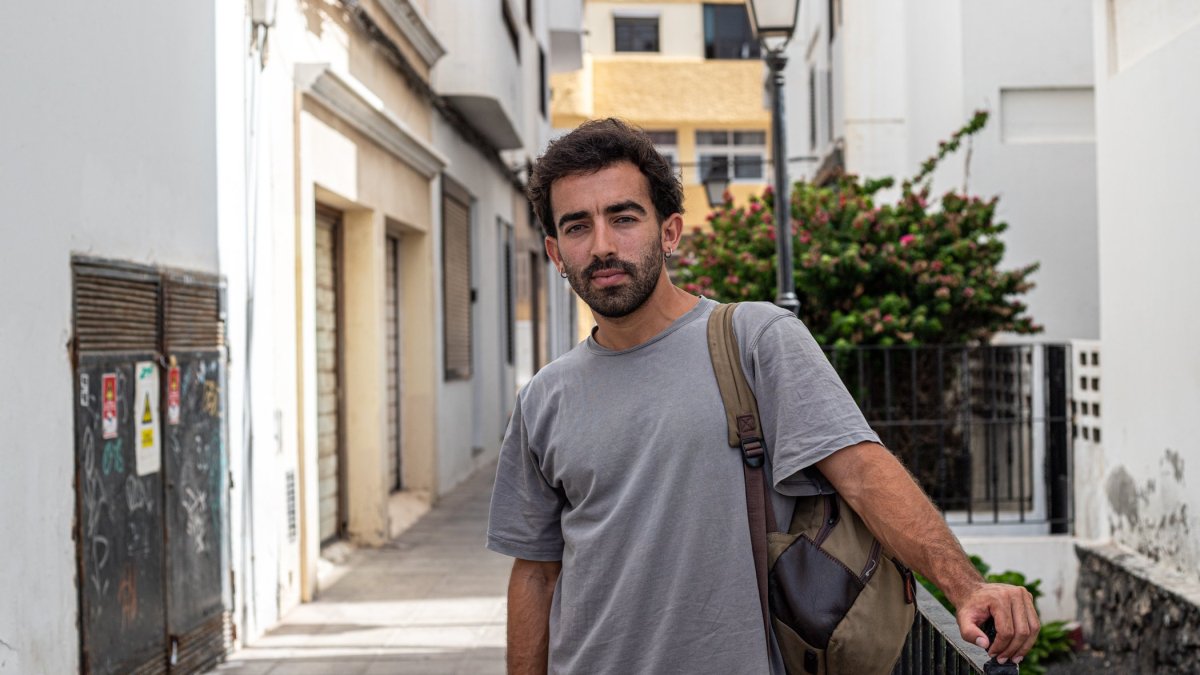
Sociologist and researcher of the migratory route to the Canary Islands, Samuel Núñez, states that the arrival of irregular migrants from the African continent to the Canary Islands cannot be explained without European border externalization policies.
"Policy is everything, and migration policy in this case is what is behind what happened in Ceuta, in Arguineguín, in La Restinga, in Lampedusa," he explains.
The European Union has decided to toughen access to its borders and has been paying third countries for years to stop the flow of foreign people from the African continent or the Middle East. Countries such as Morocco, Senegal, Mauritania, or Libya receive millions of dollars to curb migratory flows. In Mauritania, for example, prisons have been created for migrants, and in Libya, those trying to reach Europe are intercepted and returned to detention centers where they suffer torture and sexual violence, according to Amnesty International.
"When you monetize the border, what happens is that that State has the capacity that at some point, if that price is not enough for them, they can blackmail you through people who, in the end, we have seen the images, are vulnerable people," explains Núñez.
A report by Human Rights Watch published last August warned that the racial persecutions, beatings, and arrests suffered by foreign people in Mauritania were being financed with European money. This reality is worsened by the European Pact on Migration and Asylum, which came into force this June and, among other measures, allows biometric data to be obtained from people over fourteen years of age.
Faced with this, the Migration expert points out that "it is a shame that in Europe they have such a short-sightedness" and advocates for "a much simpler visa policy."
Networks, a field without doors for hate
Faced with a complex reality, the simplification of discourse driven by far-right hate means that racist and xenophobic messages run rampant on social media. "The sensationalism and simplification of reality are more successful," says Núñez, who has just finished his thesis on migrant minors and the Atlantic route at the University of Lille in France.
This simplification ignores the reality that the African continent is made up of 54 countries and one State (Western Sahara), where the reasons that push people to leave their homes are not always the same. From countries at war, to other militarized ones governed by militias, states where the rights of the LGTBI collective are repressed or where repeated violations of women's rights occur. Also others where there are practically no possibilities for the population to progress.
The Spanish Observatory on Racism and Xenophobia (Oberaxe) reports that since January 1, 2025, more than 1.1 million racist messages have been detected on major social networks. Most of them were directed at people from North Africa and Muslims.
There is no single reason behind people arriving in Europe through irregular channels, but there are many threads to unravel. In the images from Ceuta, one could see "many Moroccan children, many young people without future prospects, who mobilized a few months ago and where all their protests were repressed," highlights the sociologist. However, international organizations have also detected minors from the Gaza Strip, as well as young people from Sudan, Somalia, Eritrea, or Nigeria.
In the summer arrivals in the Canary Islands, when the Consortium of Emergencies and Security has begun to break down the nationalities of foreigners rescued in makeshift boats, people from dozens of countries converge, such as Congo, Burkina Faso, Ivory Coast, Mali, and even the Comoros Islands, also from Senegal, Mauritania, or Morocco.
"I understand, people are tired of working eight hours a day and the last thing you want is to delve into the flames," says Núñez, who uses an analogy in which he explains that the fires that plague the peninsula cannot be explained without talking about the consequences of climate change, nor immigration without talking about the European policy of externalizing borders.
"We are not talking about crises of people on the move, but rather people who are moving due to structural conditions that push them to migrate," adds Núñez. In this regard, he indicates that the externalization of borders causes migrating people to try to leave from increasingly distant and dangerous places to avoid border controls.
"The only thing that differentiates a person living on the other side of the border is a passport that, by chance, allows you to move around the world," concludes Núñez. At the same time, he asks: "Can one not be aware of the privileges they have and, based on that, conduct a more in-depth analysis?".

Add La Voz de Lanzarote as a preferred Google source.
Stay informed with the latest current news.