Three surf instructors who were working on Famara beach intervened to rescue a father and son on the verge of drowning this past weekend. Famara beach experienced a situation on Saturday, July 4th, that could have ended in tragedy. Around 11:45 in the morning, a father and his young son were dragged by the current and were left far from the shore, without the strength to return on their own.
"We had to abandon our students to go to the rescue," said those responsible for the rescue in a statement. "Thanks to that quick intervention, the father and the child were able to get out of the water," they continued, "had we not acted in time, today we could be talking about two new drowning victims on the coast of Teguise."
"They were not surfers, they were bathers," emphasized those responsible for the rescue in a statement, in which they highlighted that they were tourists who, like many visitors who arrive in Lanzarote each year, "did not know the behavior of the sea, the currents, or the real risks of a beach like Famara."
"The situation was critical." According to their testimony, the minor was swimming with great difficulty due to exhaustion after being dragged by the current, while the father, in a state of panic, tried to stay afloat by holding onto him, putting both their lives at risk. At that moment, we were not talking about a simple scare, but about two active victims in the water.
We are not issuing this warning out of ignorance, warned the workers, who work daily in Famara: "We know its currents, its tide changes, its risk zones, and the current reality of the beach." Furthermore, "we are the same ones who provide aquatic safety coverage for the Quemao Class and big wave surfers in Lanzarote." "We know what we are talking about," they insisted.
Other tragedies in Famara
Famara has already experienced tragedies at sea. The most recent case occurred in November 2025, when three bathers got into trouble on this beach: one of them, a 37-year-old man, drowned; another managed to get out of the water on his own; and a third bather, aged 28, disappeared, with a lifeless body being found days later in the same area.
These workers have warned that "Famara cannot wait for another tragedy to act," but rather that it "needs prevention before rescue."
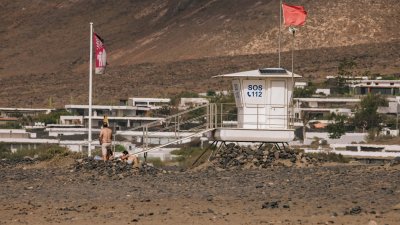
They have also denounced that despite the fact that the Teguise City Council publicly announced the installation of three autonomous surveillance towers on Famara beach as part of a reinforcement of surveillance and lifeguard resources on the municipal coastline. The reality on the beach is different: "In the middle of July, with Famara full of bathers, families, tourists, and schools, several of these new towers remain closed due to lack of personnel".
"There was time to announce, photograph, and publicly display the new towers," they continued. "Now there must be the same urgency to staff them, provide them with resources, and implement real planning. Because since they were installed, several of these towers have remained closed, while the beach remains full and the risk remains the same."
These workers have recalled that "a closed tower does not prevent accidents, a booth without sufficient personnel does not inform bathers, a flag does not rescue a person dragged by the current." Meanwhile, they have pointed out that "Famara needs personnel, resources, and active prevention."
In this statement, they have indicated that "we are not asking for the impossible or unrealistic coverage of five full kilometers of beach. We are asking for something logical: to reinforce, delimit, and better cover the area of greatest influx, especially from the bungalows to the town, where a large part of the bathers, tourists, families, and surf schools are concentrated."
At the same time, they have indicated that "that area must be better signposted, better monitored, and better covered."
Tourists who do not know the area
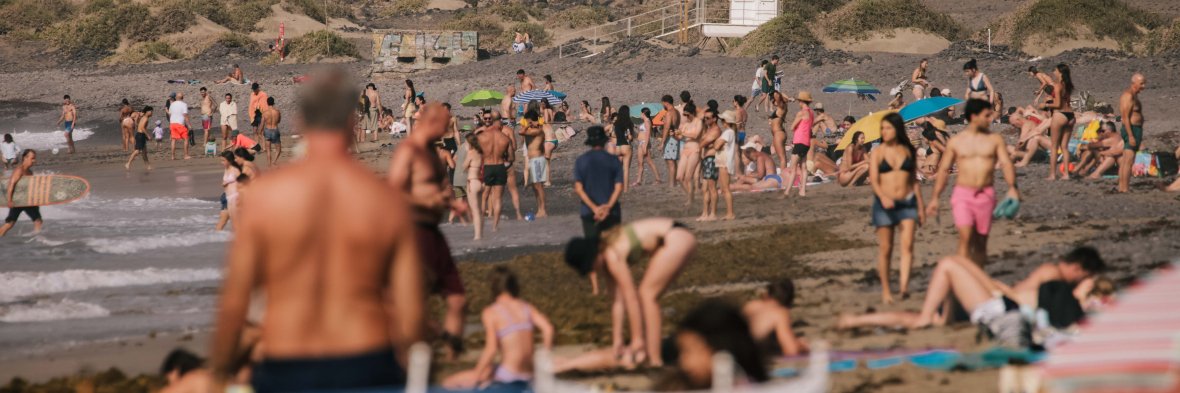
Many tourists who arrive in Famara come from cities, inland areas, or countries where they do not have regular contact with the ocean. They do not know the currents. They do not know how to interpret the sea. They do not understand that an apparently calm area can drag them out to sea in a matter of minutes.
"Canary Islands live off tourism. Lanzarote lives off tourism," the surf instructors recalled. "We live all year round from our beaches, our climate, and the sea, precisely for this reason it is difficult to understand that prevention and aquatic safety are not much more professionalized," they questioned.
In many areas of northern Spain, where the beach season is concentrated practically in the summer months, rescue services are better equipped, have more staff, and have a more professionalized structure during that period. In the Canary Islands, on the other hand, we live from the sea, the beaches, the climate, and tourism throughout the twelve months of the year. That is why it is difficult to understand that a land that depends so much on its coasts is not better endowed, better prepared, and much more professionalized in terms of aquatic prevention and safety.
"It should be the other way around, the Canary Islands should be a benchmark in aquatic safety, prevention, and rescue," they added. However, "the reality we see today in Famara is far from that."
Even places like Hawaii have turned their aquatic rescue teams into global benchmarks. The Canary Islands, due to its climate, its tourism, its coast, and the number of people who enter the sea each year, should aspire to that level.
For years, surf schools and sea professionals have carried out daily prevention work in Famara: warning bathers, alerting them to currents, rescuing people from dangerous areas, and acting in emergency situations. But they have indicated that this responsibility cannot fall on those who are working with students in the water.
"The safety of a beach like Famara must be dimensioned by the institutions according to the current reality: more tourism, more bathers, more families, more schools, more activity, and more risk," they added.
"It's not just about reacting when someone is drowning. It's about preventing them from reaching that situation," they concluded.
Famara needs more staff, more resources, more clear signage of currents, more preventive presence on the shore, and real coverage in the section with the highest attendance. Especially in the summer months, when the beach multiplies its number of bathers, tourists, and families, coverage must be reinforced to respond to the real increase in risk.
If there are new towers, they must be operational. If the greatest concentration of users is between the bungalows and the town, surveillance must be reinforced there. If there are thousands of tourists who do not know the sea, there must be constant information and prevention.
Because the best rescue professional is not the one who performs the most rescues or the most resuscitations. The best professional is the one who goes home dry because they have done their prevention work well.
"Famara does not need towers for the photo. It needs personnel, resources, and real prevention," they have concluded. "Closed towers do not save lives, prevention does."
Add La Voz de Lanzarote as a preferred Google source.
Stay informed with the latest current news.