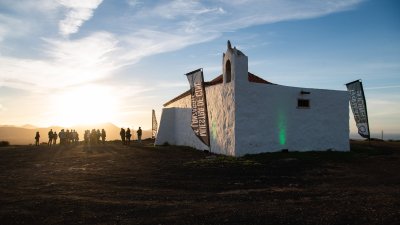
The Lanzarote Film Festival surprised again this Thursday with an unforgettable opening that began at the hermitage of San Rafael and culminated with the reopening of the old cinema in Teguise, transformed to host a first-class artistic show. More than 300 people had requested to attend this event organized by Tenique Cultural, although only about 160 were able to participate due to capacity limitations.
After nine years of holding openings in some of the most emblematic places in Lanzarote, such as Jameos del Agua, the Muelle de las Cebollas, or the Castillo de Guanapay, the Film Festival has turned these gatherings into one of the most unique cultural experiences on the island, combining surprise, artistic creation, and a different perspective on the territory.
As in previous editions, everything began in the surroundings of the Arrecife fairgrounds, where attendees were summoned without knowing their destination. This formula aims to recover the capacity for wonder in an island that, due to the familiarity of daily life, has often ceased to be looked at with curiosity and fascination.
The first stop was the hermitage of San Rafael, located on an elevation near Teguise from which numerous towns in Lanzarote can be seen. The choice was particularly significant, as towns are the central theme of this edition. The temple opened its doors for the occasion. Participants enjoyed an extraordinary sunset accompanied by a tasting of white, rosé, and red wines from Bodegas El Grifo.
José Farray, Julie Campagne, Jesús Cáceres, and Nieves Rodríguez welcomed attendees in groups of about 25 people to take a tour of the surroundings of the hermitage. From different fields of knowledge, they offered an approach to the island's landscape and history, pointing out places such as Teguise, the remains of the ancient settlements of Zonzamas and Fiquinineo, or the lime kilns, elements linked to the memory and transformation of the towns of Lanzarote.
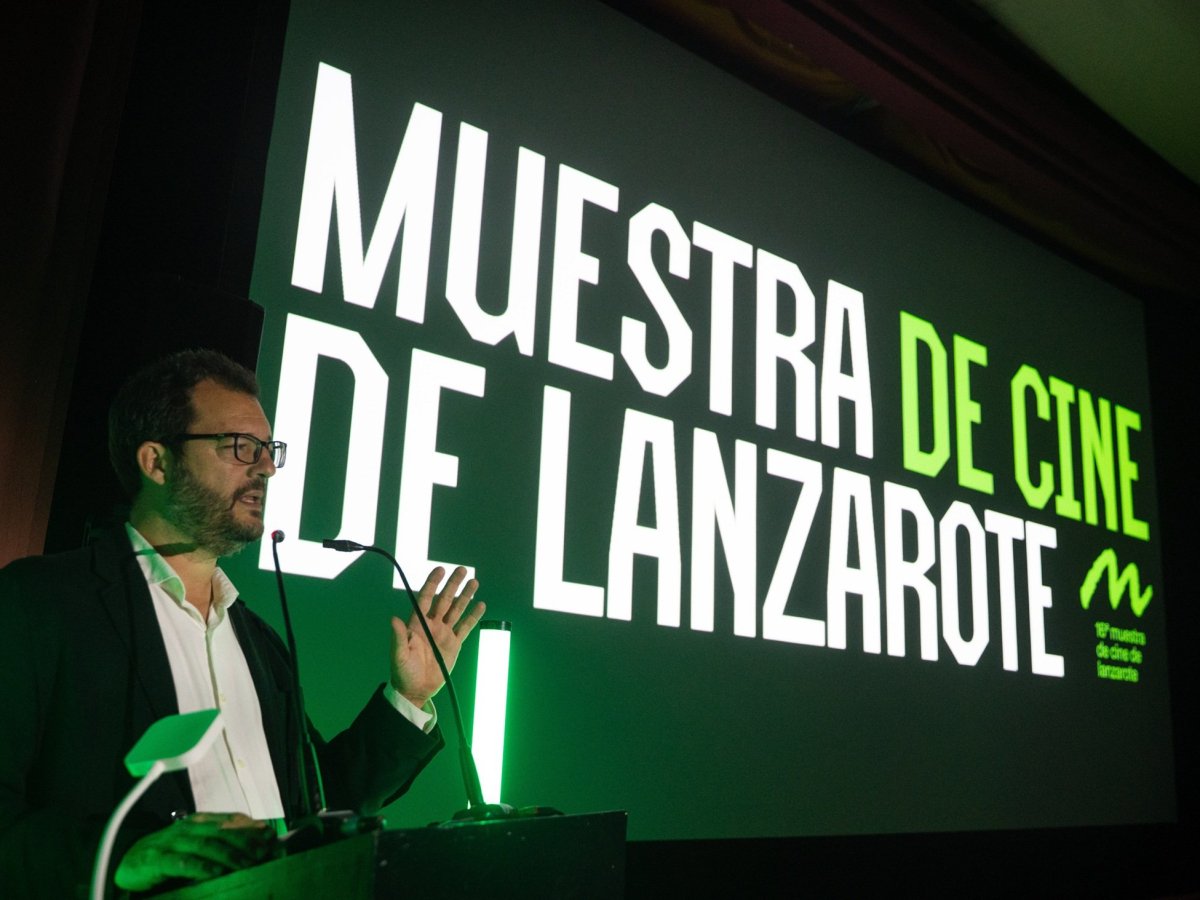
The old cinema in Teguise comes back to life
With the arrival of night, the participants were led to a second destination that they still did not know: the old cinema of Teguise. The building, which had been a commercial space for decades, had been completely transformed to recover its cinematic function and return to spectators the collective experience of a movie theater.
After the institutional presentation, an audiovisual show with old footage of the towns of Lanzarote began, intervened by Dailo Barco and accompanied by a musical composition directed by Toñín Corujo, with the participation of Domi Corujo, Néstor Castro Corujo, and Sergei Saprychev. The images, from different decades of the 20th century, recovered scenes of streets, inhabitants, camels, donkeys, and ways of life that have disappeared or been profoundly transformed, provoking moments of special emotion among those present.
During the evening, the Honorary Award of the Festival, a bottle from Bodega El Grifo, was also presented to Women in Film and Television International (WIFTI), an organization dedicated to defending the recognition and participation of women in film and audiovisual. Domizia De Rosa received the award from Juan Rafael Martínez Curbelo and Marco Arrocha, two of the founders of the Film Festival.
The program continued with a short film dedicated to the memory of the old cinemas of Lanzarote, which recovered testimonies from people of different generations, some of whom had known the Teguise cinema itself when it was still open.
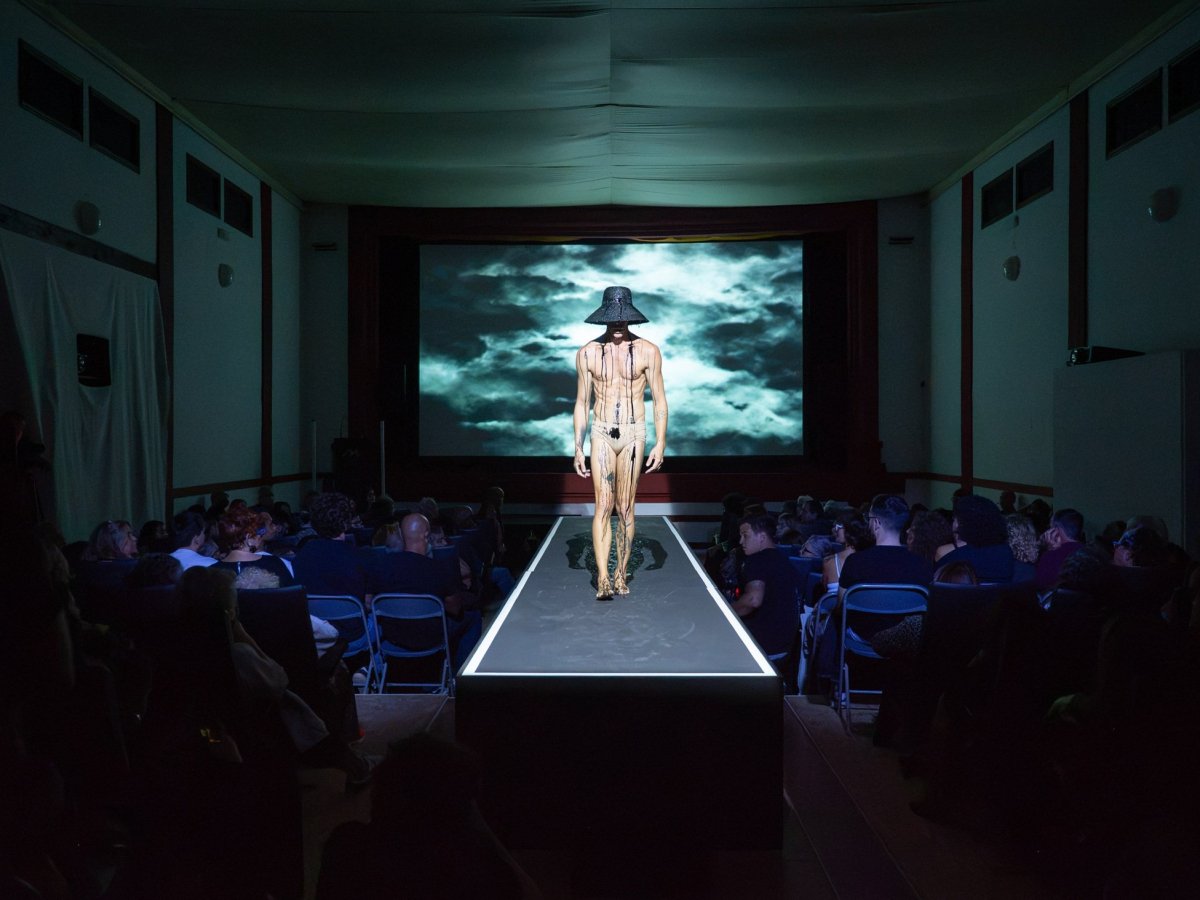
The artistic closing was led by the Lanzarote dancer Javier Ferrer, with music by Selu Herráiz. His performance, of extraordinary physical and emotional intensity, explored the darker side of life in the towns: rumors, prejudices, social control, and forms of repression that can be exercised against those who deviate from established conventions. Through a female figure who transformed, evoking different eras, the piece showed how communities can also become spaces of surveillance and punishment, especially against behaviors considered different.
The celebration concluded with a popular Canarian meal at the Acatife venue in Teguise, bringing an end to an inauguration that combined emotion, festivity, and reflection. The Film Showcase thus returned to proposing a complex look at the towns of Lanzarote: places of beauty, memory, tradition, and encounter, but also settings of exclusion, anguish, and social control.

Add La Voz de Lanzarote as a preferred Google source.
Stay informed with the latest current news.