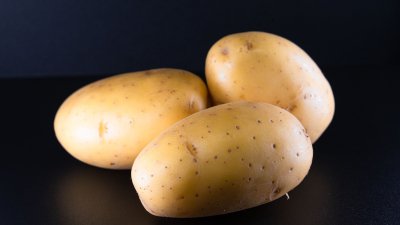
The Canarian agricultural sector faces strong commercial pressure after the import of potatoes in the archipelago increased by 24.6% during the first eight months of the year, an increase that coincides with a drop of 28.8% in their average entry price.
This was warned this Thursday in the Parliament of the Canary Islands by the Minister of Agriculture, Livestock, Fisheries and Food Sovereignty, Narvay Quintero, who alerted to the difficult situation faced by local producers due to the rising cost of cultivation and competition from low-cost foreign products.
In response to a question about the evolution of the potato sector in Tenerife during 2026, posed by deputy Francisco Linares, of the Canarian Nationalist Group, Quintero clarified that, according to data from the Canarian Institute of Statistics, despite the increase in imported volume, the total value of these imports decreased by 12.6% in the first eight months of the year.
During his speech, the minister highlighted that the average entry price of imported potatoes, at 0.42 euros per kilo, is below the local production costs recorded in the latest available statistical sheet, corresponding to the 2019-2020 campaign, which estimates them at 0.67 euros per kilo. Furthermore, he recalled that this reference predates the sharp increase in inputs recorded between 2021 and 2023 and does not include transportation and packaging costs.
Inequality in the price chain
He also pointed out that, although prices have increased in the different links of the food chain during 2026, this rise has had an unequal impact.
Specifically, data for the period from January to August show that the average price of potatoes paid by consumers in Tenerife stood at 2.78 euros per kilo, 7% more than in the same period of 2025, while the wholesale price in Mercatenerife reached 1.98 euros per kilo, an increase of 13.2%.
In this regard, the average price at origin in the Canary Islands, which is the available reference for valuing the remuneration received by the farmer, registered a more moderate increase of 4.4%, reaching 0.92 euros per kilo. This situation was particularly delicate during the summer months, when prices at origin ranged between 0.70 and 0.78 euros per kilo, reducing the profitability margins of the farms.
Thus, Quintero stressed that “our farmers face a double pressure: the rising cost of producing in an island territory and the competition from imported potatoes that are entering at very low prices”. Likewise, he pointed out that “the increase in the price paid by the consumer must also translate into an improvement in the profitability of those who produce our food and contribute to maintaining agricultural activity in the midlands”.
Aid from POSEI and border control
Faced with this situation, the head of the regional department highlighted the importance of aid from the Canary Islands Agricultural Production Support Community Program (POSEI), whose specific action aimed at table potato producers has a funding of around 6.2 million euros from the European Union in 2026.
This support line combines a premium per cultivated area and another per ton marketed, in addition to considering incentives for farmers integrated into producer organizations and those who contract agricultural insurance.
In this regard, Quintero stressed the need to promote the organization of farmers and the contracting of agricultural insurance, instruments that, in addition to facilitating access to greater economic support, contribute to improving farm planning, their marketing capacity, and their negotiating position in the market. In this sense, he highlighted that an uninsured producer can receive around 9 cents per kilo in aid, compared to approximately 28 cents per kilo that a grouped and insured producer can receive.
On the other hand, the minister insisted on the importance of strengthening the monitoring of the value chain and compliance with the Food Chain Law, as well as maintaining phytosanitary controls and the labeling and origin identification requirements for imports, in order to guarantee adequate information to consumers.
Likewise, he defended the need to continue promoting the differentiation and marketing of local production, highlighting the quality and uniqueness of Canarian potatoes and the value of differentiated quality labels such as the Protected Designation of Origin Old Potatoes of the Canary Islands.
“Ensuring the profitability of potato cultivation is fundamental to maintaining our farms, encouraging the incorporation of young people into agricultural activity, and preserving the agricultural landscape of our midlands,” he concluded.



Add La Voz de Lanzarote as a preferred Google source.
Stay informed with the latest current news.