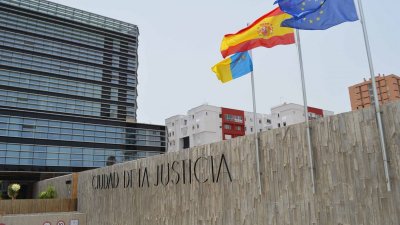
The Social Chamber of the Superior Court of Justice of the Canary Islands (TSJC) at its headquarters in Las Palmas has confirmed the validity of the disciplinary dismissal of a supermarket worker who engaged in several episodes of disobedience, disrespect, and actions contrary to the company's rules.
The ruling, issued on September 10, 2026, dismisses the appeal filed by the worker against the resolution issued by the lower court and fully confirms said resolution. The court declares that the dismissal was lawful and that no compensation or back pay is due.
The worker had been employed as a sales assistant since July 2023. The company based the dismissal on several incidents that occurred between March 8 and April 5, 2025.
Specifically, he refused to perform certain tasks assigned by his superiors, such as taking out wine labels, moving a product to another nearby establishment, and working in the butcher section.
In relation to this last incident, he stated that he could not work with knives because he had had a recurring dream in which, after being fired, he killed a company representative and a manager of another work center with them. The company decided to reassign him to another section.
It was also proven that, during an argument with a colleague about cleaning the refrigerators, the worker whistled at her and called her "chihuahua".
Furthermore, he made an error in processing a purchase amounting to 113.21 euros, charging only 13.21 euros. The company later located the customer, who paid the difference.
Finally, he asked another colleague to clock in for him, offered her his national identity document, and asked her to enter the word "puta" in the system. The worker did not agree, and the worker eventually clocked in normally.
The Chamber considers that the incidents were not isolated episodes, but rather revealed a "stubborn, rebellious, and tenacious" conduct, aimed at disobeying the orders and instructions of his superiors.
The court recalls that workplace disobedience can justify dismissal when it is serious, culpable, repeated, significant, and unjustified. In this case, it concludes that the breaches were "serious, culpable, and repeated" and that they constituted a very serious infraction as provided for in the applicable collective agreement.
The resolution highlights that there was no valid reason for the worker to refuse to perform the assigned tasks. Regarding the reference to knives, the Court states that such a statement "could be considered a veiled threat" and that, in any case, it was "improper and inadequate."
The sentence also considers the serious lack of respect proven towards two colleagues.
Regarding the episode in which he called a female worker "chihuahua," the court states that "whistling at a colleague, calling her chihuahua is not admissible in any context" and that it constitutes "a serious, injurious offense that affects the dignity of any person, man or woman."
Regarding the request for another colleague to clock in on his behalf and use the word "whore," the Court considers this to be an action "absolutely improper and contrary to the principle of correctness and good faith that governs the employment relationship."
The court considers that the set of proven behaviors justifies the maximum disciplinary sanction. The Court points out that the facts were serious and culpable and that the applied sanction was proportionate to the behavior exhibited by the worker.



Add La Voz de Lanzarote as a preferred Google source.
Stay informed with the latest current news.