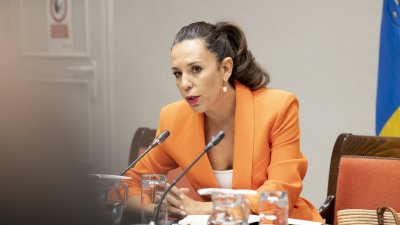
The tourism sector of the Canary Islands has "raised the alarm" in the face of a perfect storm of geopolitical, regulatory, and connectivity factors that threaten to cause "the end of the era of cheap travel in Europe". This was warned this Friday in a parliamentary commission by the Minister of Tourism of the regional government, Jéssica de León, who alerted to the decrease in air seats in the archipelago's two main source markets for this winter and the sharp increase in fuel prices expected by airlines from 2027 onwards.
De León reported in a parliamentary commission that the first cause for concern is that, for the first time in four years, scheduled seats from the British market, the main source of tourists to the Canary Islands, are falling, specifically by 1.1%.
Meanwhile, the German market "is not fully recovering" after the pandemic "and we are again losing 3.2% of seats for this winter", although domestic tourists will increase by 12% and international tourists as a whole will receive "a boost" from new markets, such as Canada, and from the Nordic countries, which "are returning strongly".
The impact of fuel and EU green taxes
The second alarm signal is the expiration, in March 2027, of the insurance policies through which airlines agree on fuel prices two years in advance, as from then on the effect of the price increase experienced after the outbreak of the conflict in the Strait of Hormuz will begin to be felt.
All of this is happening, the minister continued, at the same time that Europe is reviewing compliance with the carbon compensation and reduction plan for aviation, a debate in which the Canary Islands are proposing that said objectives be suspended or postponed, especially considering that they do not include countries that compete with its tourism industry, such as Egypt, Turkey, Tunisia, or Morocco.
Given this context, Jéssica de León pointed out, companies have been warning of an increase in fuel prices of approximately 30%, which will eventually be passed on to tourist packages, to the extent that some "are beginning to talk about the end of the era of cheap travel in Europe".
Additionally, the counselor expressed her concern about "the language" that is beginning to be used in the EU with the recent publication for public consultation of the new European tourism strategy, "which bases everything on the train". Therefore, she proposed that the Canary Islands and all Outermost Regions (ORs) must "be very present" in the definition of this strategy, from which aid funds for tourist destinations will emerge.
Shorter stays and a fortnightly "crisis committee"
Jéssica de León insisted that the price escalation ends up reducing families' purchasing power and is, in fact, causing a reduction in overnight stays at the destination. "Demand remains strong and will continue to be strong throughout the winter, but families are staying fewer days," she insisted.
Finally, she reported that the Ministry is reinforcing winter campaigns and that every fifteen days "the crisis committee" analyzes the measures that must be communicated to the Government of Spain as the interlocutor in the EU, or communicated directly to Brussels.
The counselor made these remarks in response to the CC deputy José Manuel Bermúdez, who after hearing her speech expressed his concern that, beyond geopolitical issues, others "depend on the EU," for which he advocated working together with the Government of Spain "so that the Canary Islands are not left out of the game."
Add La Voz de Lanzarote as a preferred Google source.
Stay informed with the latest current news.