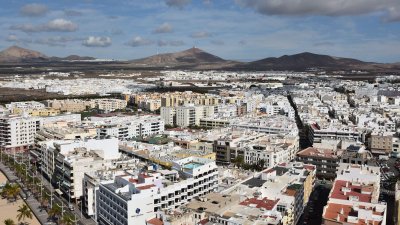
Canarias maintains in 2025 a residential imbalance between the homes it produces and the households it creates. According to the latest report from the Spanish Association of Real Estate Consulting (ACI), “Evolution of Housing Production in Spain,” the community registered a deficit of 5,637 homes compared to the households created, with Las Palmas (3,731) and Santa Cruz de Tenerife (1,906) as the main focal points of the island deficit.
Spain once again widens the gap between the homes it produces and the households it creates. According to the report, in 2025 a national deficit of 147,094 homes was registered, 40% more than in 2024.
This negative balance responds to a double dynamic: on the one hand, the increase in households created, which grow by 16%; on the other, the fall in effective supply, with a 9% decrease in completed homes. The result is an increasingly strained residential market, where production does not keep pace with demographic growth. Even so, there are positive signs: new construction permits show growth of over 22% since 2024 and provisional certifications show an acceleration in their processing in the last two years.
The largest gaps are concentrated in the provinces with the greatest population and economic pressure. Madrid leads the deficit with 25,193 fewer homes than necessary, 31% more than in 2024. It is followed by Alicante (12,091), Valencia (11,553), and Barcelona (8,798). These provinces remain at the core of the residential imbalance, although with different trends compared to the previous year.
Barcelona and Valencia are moderating the growth of their gap compared to 2024 due to less demand pressure. In Barcelona, this trend is related to a sustained reduction in household creation since 2023 and a greater weight of protected housing compared to free market housing.
In contrast, Madrid and Alicante are worsening their deficit due to an increase in household creation, although with positive prospects thanks to the growth in permits and provisional certifications that will translate into new homes.
The situation extends throughout the territory. In 2025, only Cáceres and Soria registered more completed homes than households created, three fewer provinces than in 2024. Furthermore, only 25% of the provinces managed to cover at least half of the new demand, compared to 50% the previous year, confirming that the residential deficit has become widespread.
The lack of new construction aggravates the imbalance
One of the main factors of the mismatch is the low start-up of new housing. Finished housing is decreasing, while potential housing—that with a permit that will be delivered in approximately two years—is growing by 9%. However, this increase is insufficient to absorb the accumulated demand since 2021, which already exceeds 753,000 units.
In Canary Islands, the capacity to generate new supply is conditioned by the limited availability of land. The accumulated deficit since 2021 exceeds 36,500 homes, due to the contained evolution of free housing and the scarcity of protected housing. Even so, future housing shows some improvement, with a 17% growth in permits in the last biennium and the forecast of almost 400 protected homes in 2025.
“Spain not only needs more housing, but to convert available land into real supply within reasonable timeframes. Public-private collaboration and legal certainty are essential,” points out Ricardo Martí-Fluxá, president of ACI.
The lack of new housing shifts pressure to the second-hand market. In 2025, approximately 684,000 used housing transactions were registered, 5.2% more than in 2024, the highest level in six years and ten times higher than new construction. In the Canary Islands, for every new home, thirteen second-hand homes are sold.
Scarcity of protected housing
In 2025, protected housing represented only 2.8% of total transactions, down from 4.1% in 2019, limiting its ability to balance the market.
In the Canary Islands, Las Palmas registered 603 protected housing operations out of 25,333 transactions, while Santa Cruz de Tenerife recorded 261 out of 15,112. This low proportion reduces its impact as a tool for housing access in a context of high demand pressure.
“Access to housing is one of the country's major challenges. Without public-private coordination, the deficit will continue to grow and prices will be strained,” adds Martí-Fluxá.
Demographic forecasts point to an increase of around four million inhabitants in the next decade and about three million additional households, driven by immigration, aging, and household evolution.
According to Ignacio Galará, Research Director at ACI, “the challenge cannot be addressed solely from the urgency of the current deficit; it will be necessary to anticipate a more diverse supply adapted to new social realities.”



Add La Voz de Lanzarote as a preferred Google source.
Stay informed with the latest current news.