
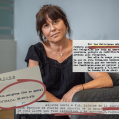
The consultant specialized in Selection of Managers and Executives at Nexo, Eugenia Soriano, intervened in the Tourism and Employment Conference "Reinventing oneself to survive", held in Puerto del Carmen on the occasion of the 60th anniversary of the tourist enclave.
With three decades of professional experience in talent management, Soriano offered a detailed radiography of the structural challenges facing the Canary Islands labor market, defining the current situation as a "perfect storm".
During her presentation, Soriano explained that the difficulty in filling vacancies is not due to a cyclical problem, but to a combination of demographic, housing, and mobility factors.
The challenges of demography, housing, and commuting
"We have on the one hand unemployment, sick leave, and retirements, along with two problems that do not go unnoticed: mobility and housing." In this regard, she warned about the impact of commuting on employment, pointing out that journeys longer than 30 or 40 kilometers end up burning out the worker and increasing turnover.
To the market tension is added an unprecedented demographic change in the archipelago. Soriano contrasted the population evolution of recent decades, where aging has accelerated notably: "While in the year 2000 one in nine Canary Islanders were over 65 years old, today the proportion reaches one in five."
"The workers we need have not been born," stated the expert, emphasizing that the massive retirements of the 'baby boom' require orderly knowledge transfers to avoid the loss of experience in key sectors such as public services, healthcare, and hospitality.
"For every student who arrives in the Canary Islands, nine leave"
Faced with a national scenario in which 160,000 jobs remain unfilled —86.6% in the service sector—, the head of Nexo directed a direct message to the young people and students present in the auditorium.
She warned against early school leaving (which affects 16% of young people between 18 and 24 years old) and recommended building solid and stable professional paths: "Do not stop studying because when the bad times come, which they will, you will have a parachute."
Likewise, he addressed the challenge of the brain drain and the return of highly qualified talent. After pointing out that "for every student who arrives, nine leave," Soriano encouraged acquiring skills outside the Islands, but warned about the salary barrier when trying to return, as in the archipelago, salaries above 60,000 euros are very few.
"Leave, yes, but when you reach that dizziness where you say 'I'm going to feel trapped by my salary,' then start the journey back," he recommended, illustrating the phenomenon with cases of Canarians from multinationals like Amazon or Google who have accepted salary adjustments of 40% in exchange for quality of life and roots in the Islands.
"Salary is important, but it's not enough"
In the area of business management, Soriano criticized the passivity in caring for active staff, revealing that four out of ten candidates who are presented with an external offer end up accepting a counteroffer from their own company: "The reflection we have to make is that the company only values me when I have another job offer, it doesn't value me now that I'm inside."
For the consultant, retaining talent requires overcoming policies focused solely on salary and incorporating flexibility, work-life balance, and real development prospects.
"Salary is important, but now it's not enough," he stated, urging companies to see every new hire as a long-term investment in the future.
"We cannot think that when there is a vacancy we have to look for a waiter to put in the last piece of the puzzle. We have to think that this waiter who comes in, in five years will be the maître d' or the head chef, and get involved in training and developing him."
Finally, Soriano stressed that this scenario represents a structural change accelerated by digitalization, automation, and artificial intelligence: "We are going to live an exciting moment in which we will have to transform our jobs and digitize repetitive processes."
The Tourism and Employment Conference "Reinventing to Survive" was co-organized by the Tías City Council and Lanzarote Media and was sponsored by the Lanzarote Centers for Art, Culture, and Tourism and with the collaboration of GEHOCAN.


Add La Voz de Lanzarote as a preferred Google source.
Stay informed with the latest current news.