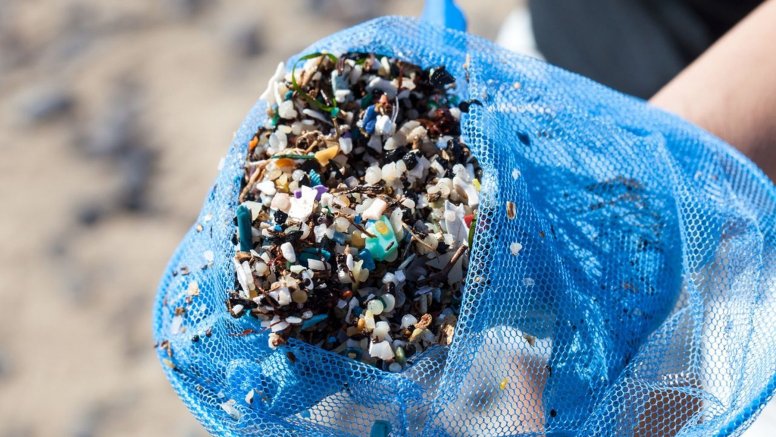
The presence of microplastics has been detected on beaches and seabeds of Lanzarote, which affects the local fauna and its diversity.
Scientific studies indicate that these particles can accumulate in the food chain, with potential consequences for human health.
In addition to improving waste management and increasing citizen awareness, there are scientific solutions such as replacing plastics with active, biodegradable, and multifunctional biopolymers.
That is the purpose of ECOSYSTEM, a pioneering circular economy project coordinated by the Spanish technology foundation FUNDITEC Research and fully financed by the European Commission with 3.9 million euros.
ECOSYSTEM promotes sustainability in applications such as agricultural films, food and pharmaceutical packaging.
ECOSYSTEM is made up of an international consortium of 9 partners with both industrial and academic profiles, and is part of the Horizon Europe Program, financed by the European Commission and the European Innovation Council (EIC). FUNDITEC Research is responsible for scientific and administrative coordination.
Through the treatment and utilization of agricultural waste, the synthesis of monomers, the development of biopolymers and active biopolymers, and bioactive ingredients, the goal is to develop new-generation sustainable materials. Specifically, clamshell-type packaging for red berries and blister packs for pills and medicines are being investigated.
The project promotes innovative lines of research and the validation of sustainable prototypes.
FUNDITEC has more than twenty years of experience, and its Madrid and Barcelona offices are made up of more than 120 researchers.
Add La Voz de Lanzarote as a preferred Google source.
Stay informed with the latest current news.