The Parliament of the Canary Islands today approved the new Canary Science Law, a regulation that establishes the legal framework to strengthen the Canarian research, development, and innovation system and move towards a more stable, coordinated, and prepared model to respond to the Archipelago's major social, economic, and technological challenges.
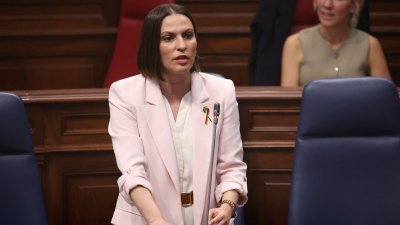
The Minister of Universities, Science and Innovation and Culture, Migdalia Machín, highlighted that the approval of the Law represents "a historic step for the Canary Islands and the result of collective work that began many months ago, listening to universities, research organizations, innovative companies, and the entire scientific ecosystem." As she stated, "this law is born from dialogue and consensus, with the aim of providing the Canary Islands with a useful instrument that allows consolidating science and innovation as a strategic policy for the future of our islands."
The regulation culminates a process initiated by the Government of the Canary Islands with the drafting of the preliminary bill, which was submitted for public information and the corresponding participation process with the main agents of the Canarian R&D&I system. After incorporating the contributions received and obtaining the mandatory favorable reports, including that of the Canary Islands Consultative Council, the text began its parliamentary processing as a bill, where it was subject to debate, hearings, submission of amendments, and committee work until its final approval by the Canarian legislature.
With this law, the Canary Islands will have a new own regulatory framework that will allow for more effective planning of public research and innovation policies, strengthen coordination between the different agents of the system, and move towards more stable and predictable funding for scientific activity.
The new text also incorporates measures aimed at promoting research careers, fostering talent attraction and retention, improving knowledge transfer to the productive sector, and simplifying administrative procedures related to the management of R&D&I projects, one of the main demands made by the sector in recent years. Likewise, it strengthens the system's governance and recognizes the strategic role of universities, public research organizations, technology centers, innovative companies, and other entities that make up the Canarian science and innovation ecosystem.
For the counselor, one of the main advances of the new standard lies precisely in that "it not only recognizes the value of those who investigate, but also creates better conditions for them to develop their work". In this regard, she pointed out that the Law "will contribute to reducing administrative burdens, offering greater stability to the system, and favoring closer collaboration between all the agents that generate knowledge and innovation in the Canary Islands".
Machín stressed that having this law "will allow strategic challenges for the Canary Islands to be faced with greater guarantees such as economic diversification, digital transformation, sustainability, energy transition, or the improvement of citizens' health and quality of life, placing knowledge as one of the main drivers of development in the Archipelago".
After its parliamentary approval, the progressive implementation of the instruments provided for in the standard will begin to develop the new model of governance, planning, and coordination of the Canarian system of science, technology, and innovation.
The counselor concluded by assuring that "the approval of this law does not represent the end of a legislative process, but the beginning of a new stage for science in the Canary Islands. From now on, the challenge is to turn this regulatory framework into real opportunities for researchers, innovative companies, universities, and, ultimately, for Canarian society as a whole".


Add La Voz de Lanzarote as a preferred Google source.
Stay informed with the latest current news.