Lanzarote has not earned its reputation as the quintessential island of volcanoes in the Canary Islands by pure chance, but rather this small piece of land is home to more than 100 volcanoes, spread throughout its geography, especially in the southern area.
The last volcanic eruption dates back to September 1, 1730, and lasted more than 5 years, in Timanfaya. However, today, many of the volcanoes have been adapted so that everyone can enjoy their peculiarities full of history.
1. La Corona Volcano
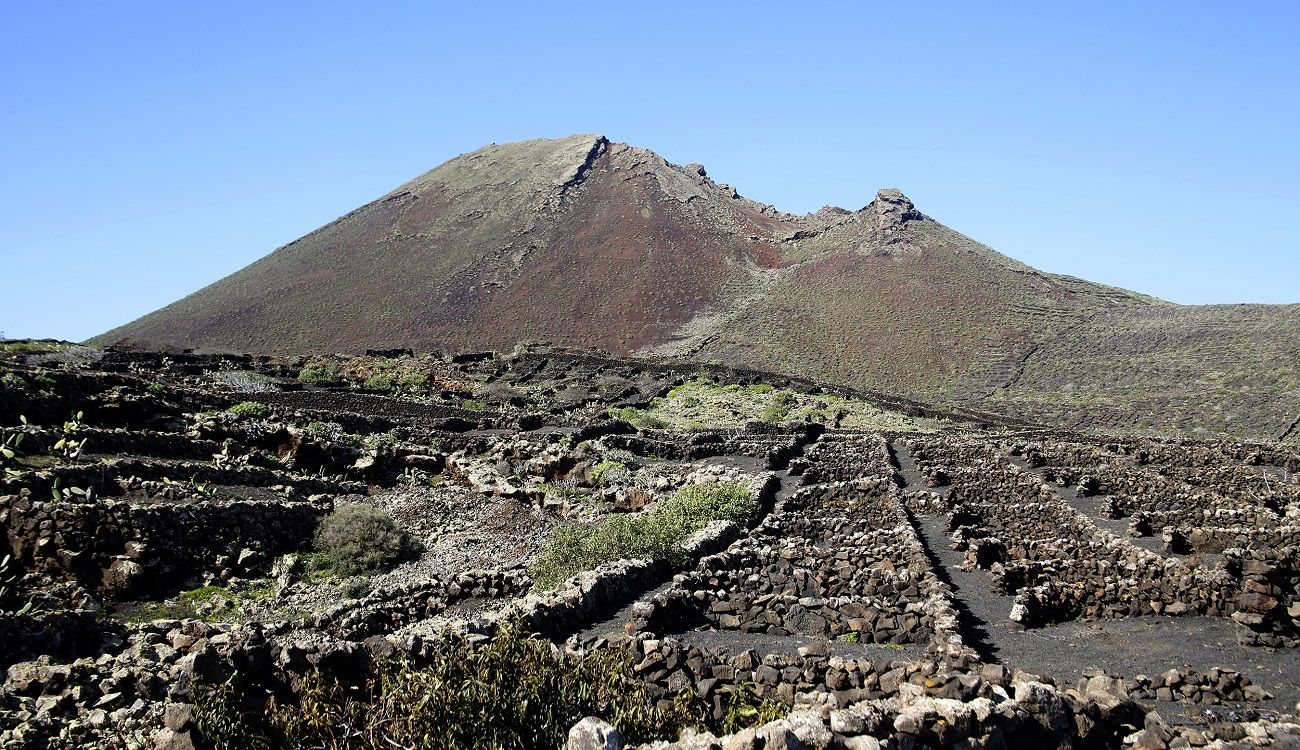
In the municipality of Haría lies one of Lanzarote's most popular volcanoes, the La Corona volcano, a lava formation 609 meters high that offers a simple hiking route, but with a certain incline.
It is important to mention that this path, which takes approximately 2 hours round trip, does not lead to the highest point, as reaching it would require going around the volcano, something inadvisable due to its danger. Before starting the path to this emblematic volcano, you can leave your car next to the Hermitage of the small town of Ye, as a few meters away you will find a sign indicating the start of the trail.
At the beginning, the path is rather flat, with fig and prickly pear crops surrounded by stone walls to protect them from the wind. After that section, an ascent begins along a rocky slope that is relatively easy to climb, but where care must be taken to avoid slipping.
Once at the summit, you can enjoy the reddish crater of the volcano, about 450 meters in diameter, and a postcard view of the north of the island. Finally, to descend, simply return by the same path.
2. Caldera Blanca and La Caldereta
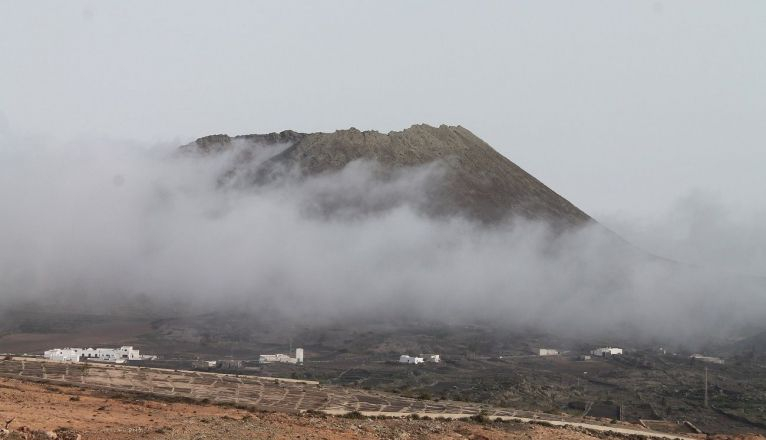
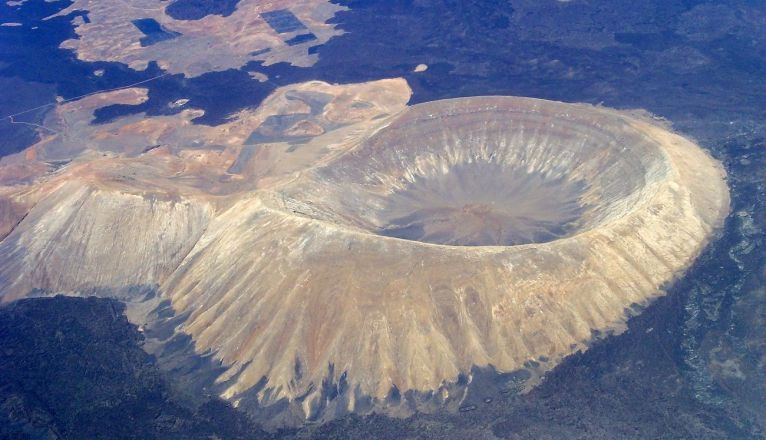
With more than 450 meters in height and a crater 1,200 meters in diameter, one of the most impressive volcanoes on the island is Caldera Blanca volcano, located in the municipality of Tinajo.
The route to visit it consists of about 10 kilometers, and can be completed in about four hours on average. The starting point is a parking lot located on a dirt road called “camino del Cráter”, near the Hermitage of Los Dolores.
From there, you will begin a path of just over 1 kilometer (about 25 minutes) in a zigzag through a solidified sea of lava, until you reach La Caldereta, another smaller volcano. Once past it, and following the marked path, you will end up reaching the base of the famous Caldera.
The ascent does not present much technical difficulty, although it is advisable to be in shape, and from the heights you will be able to observe the contrast of the white of the volcano with the black of the lava sea, as well as its immense crater. However, for the more adventurous who wish to see Timanfaya National Park, they can go around the crater on the left side until they reach the highest point of the volcano.
It is important to mention that one must be cautious during this part of the route, as strong winds can make the climb difficult. Therefore, it is always recommended to climb when the weather is good.
3. Volcán del Cuervo
If, on the other hand, you are looking for a more relaxed route that you can do with family or elderly people, the Volcán del Cuervo, located in the municipality of Tinajo, is the best option.
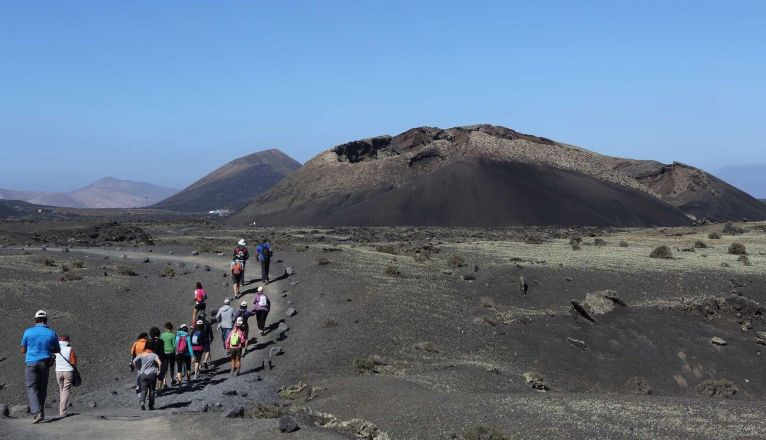
It is a circular hiking route, with no elevation change, that surrounds this peculiar dark-colored volcano over 380 meters high.
During the walk, you can enjoy the landscape, composed of an extensive mass of petrified lava and many other volcanoes such as Montaña Colorada. You will also have the opportunity to enter the crater itself and see the flora that has re-emerged from the ashes, as well as the occasional typical lizard of Lanzarote.
From the parking lot, it takes just 20 minutes to reach the base of the volcano and, once there, you will have two alternatives: go all the way around if you go to the left, or take the path to the right, the shortest to the crater. In any case, the round trip from the parking lot is about an hour.
4. Montaña Colorada
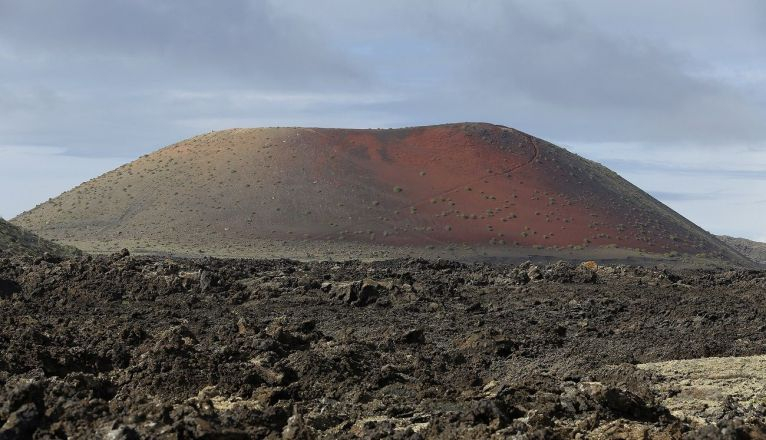
Opposite the Volcán del Cuervo is Montaña Colorada, a volcano that owes its name to the reddish tones that characterize it, a consequence of the presence of iron oxides in the lava's composition. It should be noted that this volcano was one of the last to form during the eruption period.
The route to the top begins with a path that ascends transversally. It is important to mention that this is a more complex route than the previous one, with 465 meters of elevation gain, where the ground also tends to have loose stones, slowing down the ascent.
Once at the summit of Montaña Colorada, you will be able to observe the volcano's crater and also have incredible views towards Timanfaya National Park and towards the Volcán del Cuervo itself.
5. Las Montañas del Fuego
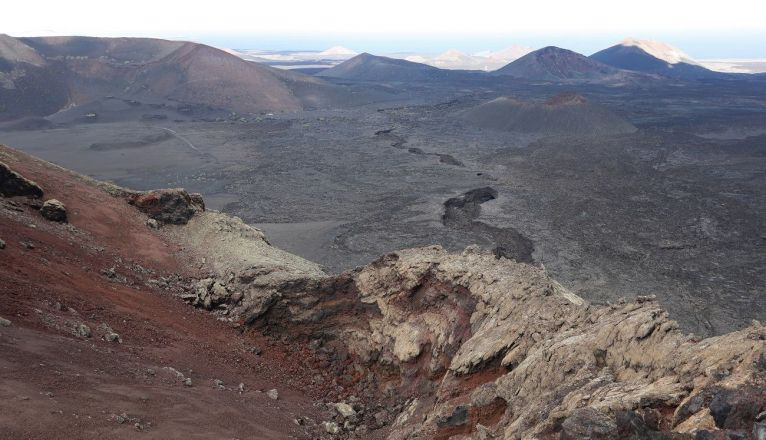
Probably, the best-known volcanic route in Lanzarote is that of the Fire Mountains, within Timanfaya National Park, which houses up to 25 volcanoes after the eruptions that occurred between 1730 and 1736.
This route, located between the municipalities of Tinajo and Yaiza, is the only one that cannot be done independently, so it is mandatory to hire a guided bus or walking tour to visit the volcanoes.
To do the bus route, the price is 12 euros for adults and 6 euros for minors, although these figures may be reduced by various discounts. The entrance includes parking, geothermal demonstrations, and a bus tour along the volcanic route.
During the tour, you can enjoy Martian-like reddish formations, dark volcanic cones, and the occasional splash of green corresponding to the lichens that have managed to overcome the lava.
However, for those intrepid individuals who wish to walk among volcanoes and observe these landscapes up close, always with a guide, they can take the Tremesana route, about 2 kilometers long, or the coastal route, a path parallel to the coast, both free, but with prior reservation.



Add La Voz de Lanzarote as a preferred Google source.
Stay informed with the latest current news.