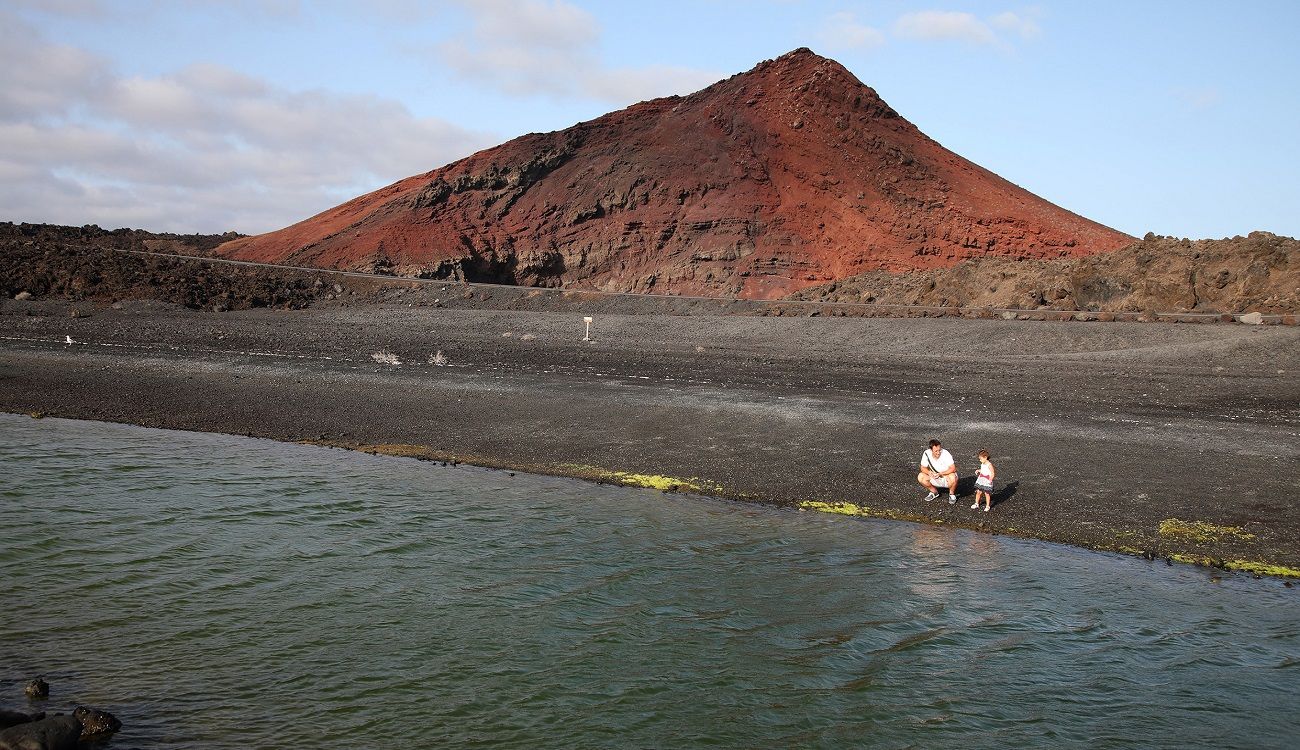
Lanzarote is characterized by its volcanoes, but also by its innumerable beaches. However, what many do not know is that not all of them are golden sand. The island also has numerous black sand beaches.
On most of them, located in the south of the island, the waves hit the shore hard, so swimming is not recommended. The important thing is to always follow the warnings and corresponding signage of the beaches.
1. Playa del Paso
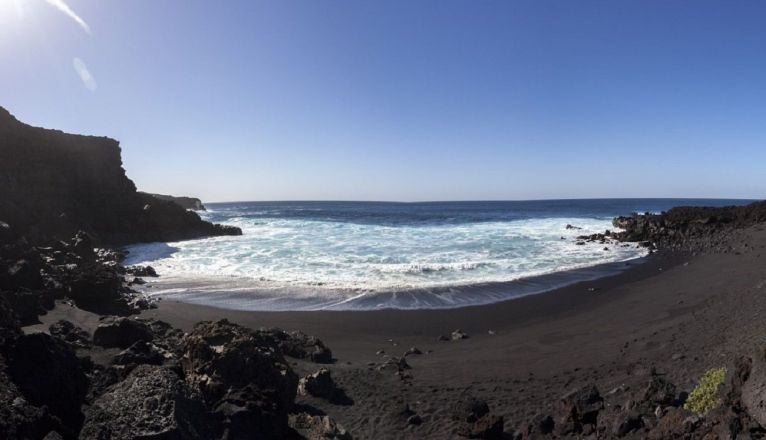
The Playa del Paso is located on the coast of the Timanfaya National Park, in the municipality of Yaiza, so it could be said that it is a beach between volcanoes.
About 180 meters long, this area is characterized by its coal-black sand, as well as its strong waves and sea currents, so swimming is totally inadvisable.
In addition, to access it, it is necessary to take a short walk along a dirt path that goes from the town of El Golfo to the north.
2. Playa de Los Clicos
On the same coast, just 5 kilometers to the south, is one of the most touristy areas of Lanzarote, El Golfo.
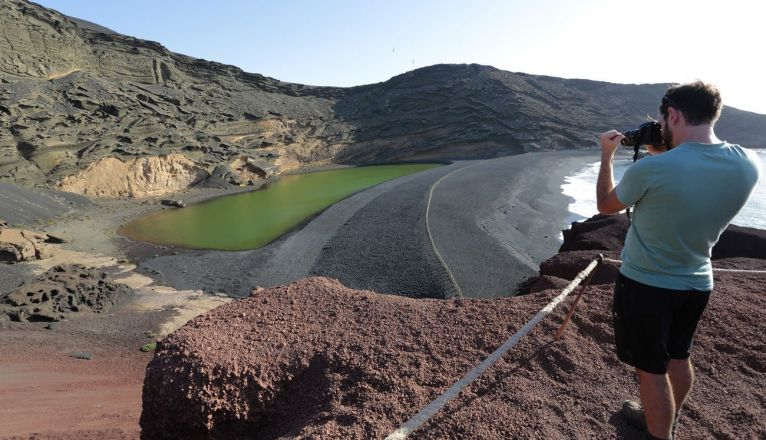
It is a fishing village characterized by a huge pool, popularly known as “El Lago Verde” (The Green Lake), due to the color of its waters, a consequence of the abundance of sulfur.
In front of the lake and the surrounding reddish mountains, there is a black sand beach called Playa de los Clicos, where the waves crash against the shore with force and swimming is also not recommended. In any case, it is a good place for photography lovers, as the landscape looks like it's from the planet Mars.
3. Playa de Montaña Bermeja
If you continue the route to the south of the island, a few minutes by car, there is a beach very similar to Los Clicos, but much less frequented by tourists.
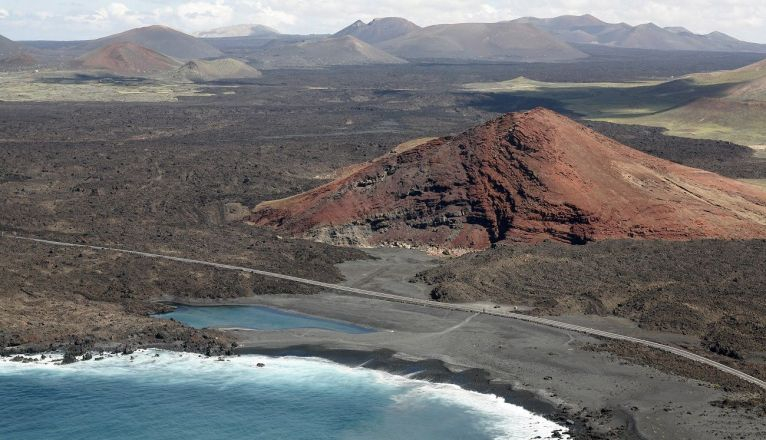
Located in front of the Montaña Bermeja volcano, from which it gets its name, and a small pond, this black gravel beach manages to reflect a very different landscape from conventional beaches, with a contrast between the dark color of the sand, the blue of the sea, and the red of the mountain.
To get there, you have to follow a small path not far from the road and the parking lot, where you can leave your car. It is a little-crowded beach, more of a stopping point, as it is not suitable for swimming due to its strong currents.
Many opt to go there to watch the sunsets that paint the sky in orange and pink hues, accompanied by the sound of waves crashing forcefully on the shore.
4. Janubio Beach
On the same stretch of coastline and on the route towards the popular Playa Blanca area, lies another of Lanzarote's main attractions, the Janubio Salt Flats. These are salt flats where salt is worked, a centuries-old artisanal activity, which also offers colorful views.
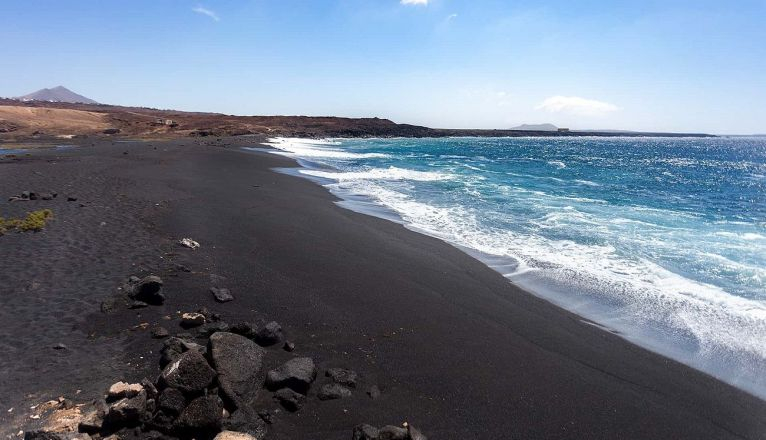
Opposite it is Janubio Beach, a pristine area with over 800 meters of black sand dotted with signs indicating the strength and danger of the waves, making it a less frequented spot by tourists and Lanzarote residents.
Furthermore, it is an area designated as a Special Protection Area for Birds (ZEPA), as the salt flats are home to birds such as the Tawny Pipit or the Trumpeter Finch.
5. La Arena and El Pozo Beaches
Finally, these two secluded beaches, located in Playa Quemada, in the south of the island, are characterized by dark-colored sand, like the others, but stand out for being the most suitable for swimming thanks to their calm waters.
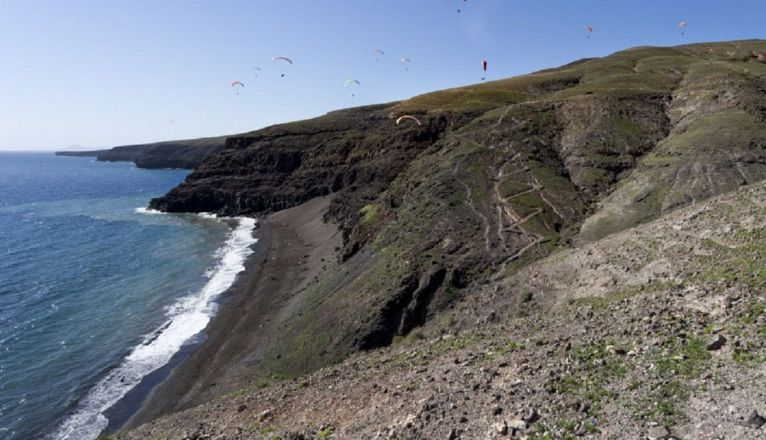
La Arena beach is located a few meters from the fishing village in the area, so it is easily accessible on foot via a small hill, which belongs to the protected natural area of Los Ajaches. However, when the tide is completely out, it is also possible to reach it along the shore.
Additionally, if you continue walking for about half an hour more along the marked route, you will reach another beach, known as El Pozo beach, a place that can also be accessed by a 4x4 vehicle. It is a place very little frequented by tourists and even locals, due to its remoteness from the village.

Add La Voz de Lanzarote as a preferred Google source.
Stay informed with the latest current news.