The Spanish Observatory on Racism and Xenophobia (OBERAXE), dependent on the Secretariat of State for Migration, detects a total of 54,771 hate speech contents and discriminatory narratives on social networks during the celebration of the 2026 FIFA World Cup, from its start on June 11 to July 21, the day of the main celebrations linked to the victory of the Spanish team in the final.
52% of the racist and xenophobic messages registered were associated with the sports sphere, a proportion notably higher than that observed in previous months, reflecting the impact of the football World Cup on the monitored digital conversation.
The monitoring carried out by OBERAXE during the football World Cup systematically collects hostile messages directed against individual footballers, national teams, fans, and groups linked to the competition.
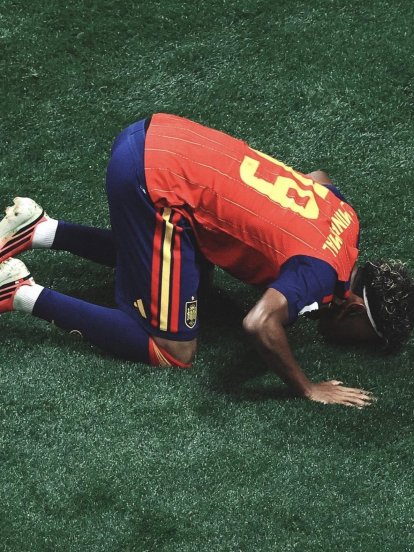
In this section, messages of a racist and Islamophobic nature directed at Lamine Yamal stand out, questioning his belonging to the Spanish team. Hate messages have increased with the celebration of his first goal with La Roja against Saudi Arabia through the Muslim gesture of sujud. This moment has been used to question Yamal's legitimacy as a representative of the Spanish team with comments such as "our roots humiliated," "disgusting moor," or "he is not worthy of being Spanish."
In the same vein, members of some national teams, such as the French team, have been the target of repeated comments questioning the legitimacy of the players due to their foreign origin or ancestry to represent this country. Many messages reflect exclusionary approaches with frequent expressions such as "they are all Angolans, without football they would be homeless" or "the French deserve it for not defending their origins."
The final between the Spanish and Argentine teams also acted as a trigger for the publication of hate content on social networks. Although OBERAXE has pointed out that racist and xenophobic messages about Latin American people accounted for 15% of the total detected during the football World Cup period, the dynamic reached a greater intensity during the final that pitted the Spanish and Argentine teams against each other.
Regarding the target groups analyzed by OBERAXE, people from North Africa have constituted the main focus to which hate speech content has been directed during the Football World Cup, accounting for 66% of the total detected messages. Here, content linked to the Moroccan team and various episodes related to its supporters stands out. 13% of the reported content has been directed against Muslim people, reproducing stereotypes and exclusionary discourses.
The hate speech detected during the Football World Cup reflects that 74% of the messages include content that attacks the dignity of the target groups through dehumanization with messages such as “let the trash Moor stop playing” or “shitty argentine ape”
Regarding the type of language used, the use of explicit aggressive language predominates, present in 50% of the analyzed messages.
Racist and xenophobic messages that promote discredit also stand out, representing 40% of the total, attributing negative characteristics to these people such as “these Moors are a burden on progress, backwardness and barbarism”.
On the other hand, 15% of the reported comments incite the expulsion of these target groups, while 14% promote violence against them.
The Spanish Observatory of Racism and Xenophobia concludes that “the Football World Cup can serve as a context for the dissemination of racist and xenophobic prejudices that transcend sport”.
Add La Voz de Lanzarote as a preferred Google source.
Stay informed with the latest current news.