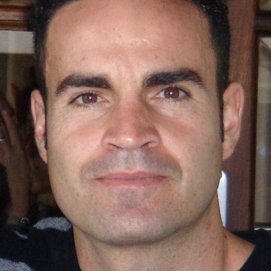
The succession of Ástrid Pérez has ceased to be an organic matter to become a dispute over the future of the party and the power that each sector will have heading into 2027.
"An agreement on a person does not necessarily mean an agreement on power."
There are moments in politics when an apparently minor decision ends up revealing that the problem is much larger. What happened in the Popular Party of Lanzarote with the cancellation of the Insular Board of Directors scheduled for September 21 is one of those moments. On paper, it is a meeting that was supposed to serve to launch the insular Congress. In practice, its suspension once again highlights that the succession of Ástrid Pérez is not being a simple transition and that behind the renewal of the party leadership there is much more at stake than a change of names.
The PP of Lanzarote has been living with its own tensions for too long to interpret what happened this week as an isolated episode. Jacobo Medina's departure from the General Secretariat, his loss of the vice-presidency of the Cabildo, María Jesús Tovar's arrival at the organic leadership, the political aspirations of different leaders, the situation of the pact with Coalición Canaria, and finally, the appearance of José Valle as a consensus candidate are part of the same story: the search for internal power that will mark the Popular Party of Lanzarote for the coming years.
And all this happens as 2027 begins to loom on the horizon.
For almost two decades, Ástrid Pérez has been the undisputed reference of the Lanzarote PP. Her leadership has gone through different stages, governments, pacts, defeats, and victories. But no political leadership is eternal. The party itself began some time ago to face the need for renewal, and the insular Congress, pending since 2021, was finally to become the stage to close that chapter.
It seemed that the solution had appeared with José Valle.
The president of the Chamber of Commerce of Lanzarote and La Graciosa agreed to become the consensus candidate to succeed Pérez. His profile had an evident advantage: he was not directly associated with the internal battles that had marked popular politics in recent times. He was, in principle, a figure capable of bringing together leaders with different backgrounds and aspirations around the same table.
The operation seemed even designed so that no one would lose entirely. Ástrid Pérez could facilitate an orderly departure after so many years; the party could present a renewal; the regional leadership could support a consensus solution, and the different sectors could avoid an internal battle that would leave wounds before the new electoral cycle began.
But politics has an uncomfortable characteristic: an agreement on a person does not necessarily mean an agreement on power.
And that is where the real problem probably lies.
Because the issue is not solely about who will preside over the PP of Lanzarote. The important question is what team will be placed around that president, who will have decision-making power, and, above all, who will set the strategy with which the party will go into the 2027 elections.
The precedent of Jacobo Medina is inevitable.
In 2025, Ástrid Pérez decided to remove him from the General Secretariat of the party and replace him with María Jesús Tovar. Shortly before, Medina had also lost the vice-presidency of the Cabildo. These were two moves of enormous political significance that modified the internal balance of the Lanzarote PP.
Medina, however, did not disappear.
This very year, he publicly reiterated his desire to lead the Popular Party's candidacy for the Cabildo. That is, a leader who had lost weight within the party's organic structure maintained his aspiration to occupy the main institutional responsibility that the popular party can contest in Lanzarote.
That fact makes the next Congress much more important.
Because the leadership that emerges from that process will have to coexist with the electoral aspirations of its own leaders. It will have to decide how to face the future of the Cabildo, how to relate to Coalición Canaria, how to strengthen its position in Arrecife, and how to build a project capable of presenting itself to the citizens in 2027.
María Jesús Tovar is also no stranger to this story. The current general secretary even publicly acknowledged, just a few days before Valle's candidacy became known, that she was considering running for insular Presidency. Finally, a consensus alternative emerged that could avoid confrontation.
Tovar has denied that there is an internal division in the PP and has publicly defended the unity of the organization. And it is worth noting that position because it is part of the party's political reality. But one thing is to deny the existence of a formal fracture and another very different thing is to ignore that for months there have been movements, dismissals, aspirations, and disagreements that have altered the internal balance of the organization.
To all this is added the role of Yonathan de León. The mayor of Arrecife holds the Deputy Secretary of Organization of the insular PP and represents a piece of enormous importance due to the political weight of the capital. His position does not, by itself, allow us to speak of an organized bloc or a strategy opposed to other leaders, but it does oblige us to take him into account when analyzing who will have influence in the new stage.
The Cabildo introduces another variable. Partido Popular and Coalición Canaria govern the insular institution jointly and have had to face differences during the term. The next leadership of the PP will have to maintain that pact, review it, or redefine its relationship with the nationalists within the framework established by the bodies of both parties. What happens internally in the PP will therefore have consequences that may go beyond the walls of its headquarters.
And then José Valle appears.
His candidacy seemed to offer precisely what the party needed: a figure capable of closing a stage without turning the handover into a war between leaders. But the suspension of the Board of Directors shows that finding a name is not enough. There must also be agreement on the process, on the composition of the future leadership, and on the space that will be occupied by those who already have a trajectory and their own political aspirations.
That is why the question that now runs through the party should not only be who will replace Ástrid Pérez. There is another, much deeper one: who will decide the Partido Popular of Lanzarote that will arrive at the 2027 elections.
Manuel Domínguez's regional leadership also appears in this story. His role in the conversations that led to Valle's candidacy has been publicly pointed out and, at the same time, some information points to regional intervention in the paralysis of the Board. These are points that will have to be clarified by the party itself. And precisely this need for clarification shows the extent to which the crisis has ceased to be an exclusively island issue.
There is no need to talk about two PP's to recognize that tensions exist. Nor is it necessary to attribute hidden intentions to each leader to verify that the internal balance has changed. The facts are sufficient: a leadership that is reaching the end of a long stage, a general secretary dismissed, a new general secretary who considered her own candidacy, a leader who is once again claiming the candidacy for the Cabildo, a mayor with organic weight, a consensus candidate from the business world, and a Board of Directors canceled when it was supposed to start the Congress.
All this depicts a party in transition. And political transitions are never resolved solely by changing the person occupying the main office. It is also necessary to decide who will accompany the new leadership, what project will be represented, and what balance of power will be established to face the next cycle.
The problem of the PP of Lanzarote, therefore, does not seem to be solely about who will replace Ástrid Pérez. It is about determining whether the party will be able to turn an inevitable succession into an orderly renewal or if the accumulated differences will end up being transferred to the Congress and, afterwards, to the construction of the electoral project for 2027.
The cancellation of the Board on September 21st could be a pause to recompose consensus. It could also be the first sign that the agreement announced around José Valle had not yet resolved the fundamental differences. We will have to wait for the next moves to find out.
But one thing does seem evident: the real Congress of the PP of Lanzarote does not begin on the day the delegates meet. It began much earlier, in the offices, in internal conversations, and in the different aspirations that have emerged in recent months.
And perhaps that is why the question that best summarizes what is happening is not who will win the Congress, but what Popular Party will emerge from it.
Add La Voz de Lanzarote as a preferred Google source.
Stay informed with the latest current news.