
In one of the hottest Julys of the last century, in Spain we remained on edge due to the different fires that plague the Iberian Peninsula. A few hours after our authorities and volunteers controlled the flames in Madrid, Toledo, and León, Spain burns again.
On July 30, we witnessed another difficult episode to assimilate with the crossing of the Ceuta border by thousands of young Moroccans. The images of the floaters on the shore, of children in their parents' arms, or of chants of joy do not overshadow the incessant trickle of deaths. And on social media, in chats, or in conversations, we have already forgotten the backdrop. Talking about fires without talking about climate change is like talking about these young people without talking about migratory policies. Behind each episode, there is a backdrop.
The sustained increase in temperatures and the greater frequency of heat waves are structurally reducing the humidity of the soil and vegetation. Every summer offers more days with meteorological conditions favorable for large fires. In the same way, agreements with third countries for the management of migratory flows only generate more clandestine routes, violence, and violation of human rights. We see it in the Canary Islands, at the Melilla fence, and today at the Ceuta border with Fnideq, where almost 40,000 people swim desperately to reach dry land.
In the game of externalizing borders to third countries, what happens when one of these states decides that this money is no longer enough? The Government of Morocco has used its vulnerable youth on numerous occasions. They and their families are the ones who have demonstrated for the lack of opportunities, who suffer the repression of their leaders, the consequences of climate change on their coasts, and who must also assume the economic responsibility for their families. Today they arrive on our coasts or borders in search of opportunities.
Europe and Spain cannot be accomplices of these flames. We know that control and persecution are not the solution. We know that there is no migratory crisis but a political crisis. Libya, Morocco, or Turkey will continue to open borders when there is a greater interest, and with it, people who are victims of a structural phenomenon will continue to die.
And while that happens, our country breaks and the flames make their way through public opinion. Hatred increases, people who arrive exhausted on our shores are dehumanized and even persecuted. How painful it is to see a country in flames, and how painful that they do it so quickly.
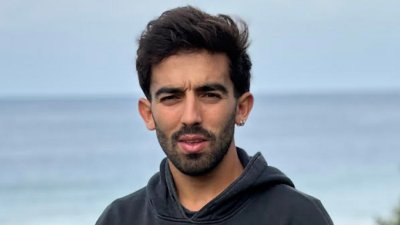
Samuel Núñez González, sociologist and researcher on the Canary Route.
Add La Voz de Lanzarote as a preferred Google source.
Stay informed with the latest current news.