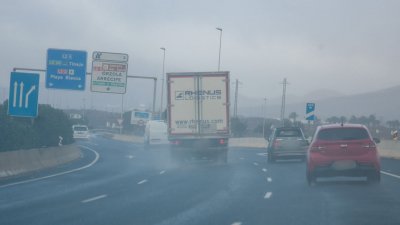
The Cabildo of Lanzarote has issued a decree with recommendations in view of the pre-alert situation in Lanzarote and La Graciosa starting at 08:00 hours on January 1st, due to rain, storms, and wind; and the alert situation for adverse coastal phenomena.
Therefore, and given that the State Meteorological Agency does not rule out locally stormy showers on the eastern islands, the Consortium of Security and Emergencies recommends that the town councils suspend recreational, cultural, sports, and outdoor leisure activities from 08:00 on January 1st until 18:00 on January 2nd.
Furthermore, the public is asked to take the following recommendations into account to ensure safety at all times.
Recommendations to the public regarding the pre-alert for rain:
Before the rain arrives, check the condition of the roofs, drains, etc
If you live near a ravine, inform your City Council if it is saturated with waste, debris, etc.
Given the imminent arrival of heavy rains, pay attention to the instructions given through the media.
Never (not even in summer) camp in flood-prone areas: dry creek beds, etc.
If possible, remain in your home, taking into account that it is not located in ravine beds or in risky areas.
Avoid driving during heavy rains. If it is essential, exercise extreme caution, paying special attention to the water level, moderating speed, and monitoring the brakes. If the vehicle begins to fill with water, it is best to abandon it.
It preferably travels on main roads or highways, avoiding forest tracks or secondary roads and using the shortest gears
If you have to cross flooded areas where the water is flowing, tie a rope around your waist, securing the other end to a fixed or heavy object.
Do not cross bridges that the water is overflowing
If the problem surprises you at home, prevent toxic and/or flammable substances from coming into contact with water.
Do not enter flood-prone areas of the house, such as garages, basements, etc.
Never use the elevator, the electrical fluid could fail at any moment.
Disconnect the electrical current.
If the situation arises, do not hesitate to abandon the dwelling, heading to higher ground, or to where the authorities are directing residentsIf the water isolates you on the upper floor of your house, do not abandon it by swimming, the current can drag you away, it is preferable to wait for help
Don't overestimate your chances, be prudent, and if necessary, wait for specialized help
Once the emergency is over, do not return to your home until technicians indicate it is safe to do soOnce you can access the homes, do not light matches or any devices that give off sparks, including the light switch
Drink only bottled water.
Call 1-1-2 exclusively in case of emergency. If you need any type of information, use 012 and not 1-1-2
Recommendations to municipalities
Predict the signage for areas that usually suffer damage in the municipality (premises, ground-floor parking, seaside promenades, etc.).
Control areas of potential landslidesTo inform and alert municipal officials and members of the municipal organizationBe attentive to meteorological information and, in particular, to the warnings issued by CECOES 1-1-2. Establish mechanisms for monitoring and informing about the situation
Determine Surveillance Points with the following functions:
- Mark or beacon the flood-prone areas of the municipality: avoid parking vehicles, ensure that activities that could be affected are not carried out- Make a forecast of the available and necessary resources.- Establish the corresponding notices for emergency services, basic services, and entitiesCommunicate the activation of the municipal plan to the CECOES 1-1-2To use the TETRA RESCAN network as the primary radiocommunication system with CECOES 1-1-2Control access to boardwalks, piers, and jettiesEvacuate from the beaches if necessary and prohibit swimming in the sea and ban sports and recreational activities in the seaIn a situation of imminent risk, cut off traffic on roads or paths leading to flood-prone areas (traffic control). Especially mark and close off fordsNotify the population in areas where the situation assessment makes damage foreseeableEvaluate the composition of the CECOPAL and its management and advisory bodies.
Regarding the general population, the following prevention and action measures are recommended for wind:
How to prevent
Close doors and windows to prevent drafts that can lead to broken and falling glassRemove flowerpots and any objects that could fall into the street from balconies and rooftopsRevise dwellings so that there are no cornices, balconies, and facades in poor condition that could cause falling debris and rubble
Avoid going on hikes or camping trips until normal conditions are restored.
Postpone road travel if possible and exercise extreme caution if you must travel. Public transport is recommendedMotorcycles and large vehicles with a large surface area exposed to the wind (trucks, vans, vehicles with trailers or caravans) run the risk of overturning in crosswinds
How to act
Avoid walking through gardens or wooded areas.
Stay away from walls, old houses, scaffolding, illuminated signs, billboards, and other structures that could be blown down by the wind.
Light poles and power towers are dangerous. Stay away and in case of risk, call 112.
In case of risk from construction cranes, call 112 immediately
Try to stay away from the coast (beaches, boardwalks, pier jetties, etc.) to avoid being hit or swept away by wave action.
Drive slowly and with caution due to the possible presence of obstacles on the road or gusts of wind that could cause you to lose control of your vehicle, especially when overtaking
Avoid calling by phone, in order to prevent the lines from collapsing. In case of emergency, do not hesitate to call 112
For any information requests, call 012
Regarding the general population, the following prevention and action measures are recommended for the risk of coastal phenomena:
How to prevent
Protect your home from the potential invasion of seawater.
Do not stand at the end of piers or jetties, nor risk taking photographs or videos near where the waves break.
Avoid fishing in a risk zone.
Do not drive vehicles on roads near the beach line.
Never swim at secluded beaches or ones you don't know well, as there may be local undertows
Avoid swimming at beaches with red flags, in areas with strong waves and undertow, or those lacking surveillance and lifeguard services.
Avoid engaging in sports and nautical activities in areas affected by heavy surf and do not camp on the beach when there is a sea storm warning
If you notice unusual waves, do not stay near the sea, nor approach it, even if it calms down suddenly.
If you have a boat, try to secure its mooring in a sheltered location.
If you see other people in dangerous places, warn them of the danger
If you fall into the water, move away from where the waves break, call for help, and wait to be rescued.
If you try to leave and are dragged by the surf, try to stay calm; do not swim against the current and let yourself be carried. Coastal currents usually lose intensity in other sections, and that is when you should swim
If you are on land and see someone has fallen into the water, throw them a rope with a flotation device, or any other object they can hold onto. Immediately call 112

Add La Voz de Lanzarote as a preferred Google source.
Stay informed with the latest current news.