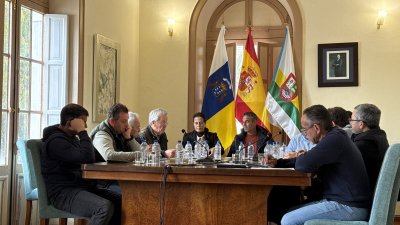
The Haría City Council approved the regulatory ordinance for the operation and service of municipal camps, after its validation in the plenary session by the governing group. This definitive regulation is born with the objective of regulating the management and provision of municipal camp or school services to facilitate the reconciliation of work and family life.
The mayor, Alfredo Villalba, highlights the importance of this advance, pointing out that “this ordinance represents a decisive step to provide greater legal certainty and quality to a service highly demanded by our families”. Villalba adds that with this regulation it is guaranteed that the municipal camps offered by the City Council “comply with homogeneous criteria of organization, attention and safety, reinforcing citizens' trust in public services”.
For her part, the Councillor for Education, Evelia García, highlights the “educational and social character” of these camps and assures that “they are an essential service that not only offers leisure during holiday periods, but also contributes to the comprehensive development of minors, fostering values such as coexistence, equality, autonomy, and respect for the environment”.
The service is specifically aimed at children aged between 0 and 12 years and takes place during the school holiday periods of Easter, summer, and Christmas. The regulations establish that children registered in the municipality of Haría and those enrolled in educational centers or nursery schools in the town will have preference in access.
In terms of safety and quality, the ordinance requires that all camps have qualified monitors who have first aid training and the sexual offenses certificate that certifies the absence of a record. Likewise, the approved economic regime includes specific bonuses for large families, single-parent families, and those people who are in vulnerable economic situations.
After the public exhibition period, the City Council decided to dismiss the allegations presented by various entities, considering that the comprehensive protection of childhood and the inclusion of minors with functional diversity are already fully guaranteed by state and autonomous legislation of a higher rank.


Add La Voz de Lanzarote as a preferred Google source.
Stay informed with the latest current news.