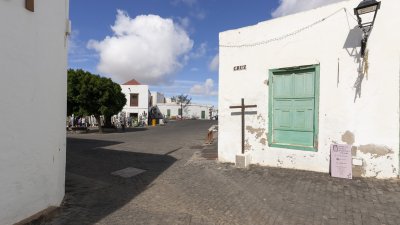
Squares and streets increasingly empty, lifeless, and without residents. This is what the neighbors of La Villa de Teguise notice in their daily lives for several years due to gentrification, a phenomenon motivated by tourist pressure and rising housing prices that is affecting Spain, especially the Canary Islands. The Chimida de Teguise Neighborhood Association has raised its voice in the face of a situation that is turning the town into a "ghost town".
The association reports that in central areas of the town such as Plaza Clavijo y Fajardo, Plaza Maciot de Bethencour, and streets like El Rayo, where the Palacio Ico is located, there are hardly any residents. "Between the three squares, only about ten people live there," explains Francisco Parrilla, president of the Chimida de Teguise Neighborhood Association.
Parrilla explains that some of the most central homes in Teguise "are empty, others have been bought or they want to build rural hotels." Here, the Municipal Technical Office plays a very important role, which is overwhelmed with more than 5,000 urban planning files pending processing. "Heritage takes years to grant licenses for restoration, and many of the houses are falling down," he points out.
In this regard, the residents of Teguise have noticed how foreigners with high purchasing power are buying some of these traditional homes. "Especially Italians and English, but they don't buy them to live in, but for business, and it's a shame because if the inhabitants of Teguise end up abandoning the town, there will be nothing left, and it will only be a shopping center," he warns.
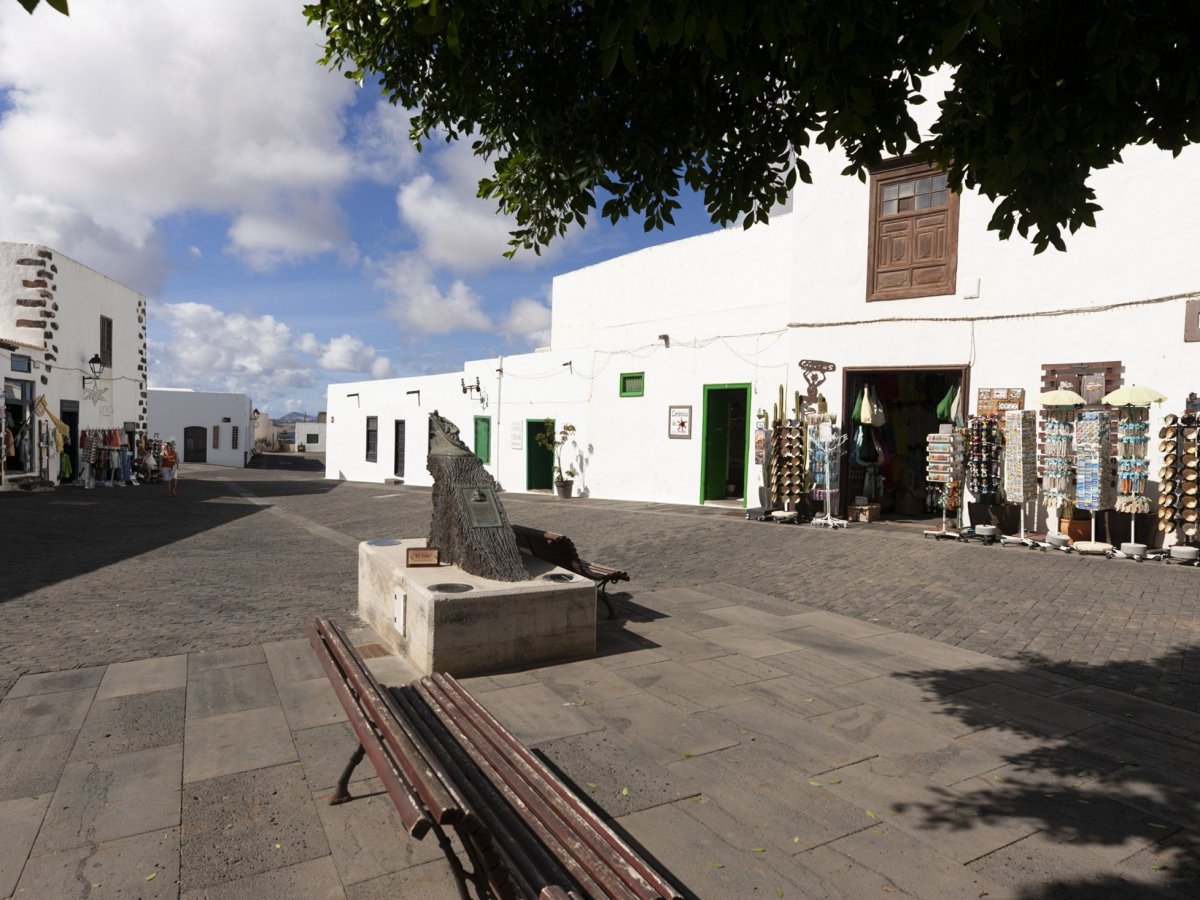
High housing prices, the use of buildings as shops, and delays in processing urban planning licenses are causing the squares of La Villa to become empty. "From Mondays onwards, you see very few people on the street, and many say it looks like a ghost town," he points out. "I'm on the computer in my house and I hear all the conversations; the town is very beautiful but it looks ghostly," he continues. In Plaza Clavijo y Fajardo alone, Parrilla points out that there are twelve shops.
Another thing that the neighborhood association is demanding is the creation of a sociocultural center in La Villa, like other towns in the municipality such as Tahíche. "Teguise needs a real sociocultural center that brings together the entire spirit of the town because all the activities are in the municipal theater, and it does not meet the conditions," he states.
A gentrification that begins in the neighborhoods
"If we talk about gentrification in the Canary Islands, it has always happened in the island capitals, but it is starting in the neighborhoods," explains María del Carmen Ginés de la Nuez, Doctor of Geography and researcher at the University of Las Palmas de Gran Canaria.
As Ginés highlights, one of the components causing gentrification in areas of the Canary Islands like Teguise is tourism. "This tourism that visits us has ended up staying, but not as residents, but sporadically," she points out. The professor refers to that tourist who comes to the island for seasons. "They are people who have a completely different income level than the local population," she assures.
This trend has been growing in recent years in touristically crowded areas, as is the case in the Canary Islands, which has alarmingly contributed to the increase in housing prices. "If you consider housing an economic good and its price is not controlled, it is sold to the highest bidder," she points out.
This causes the local population to be expelled from neighborhoods and towns, leaving only the presence of shops, bars, restaurants, and homes bought by foreigners with a much higher purchasing power in the central areas. One example of this is digital nomads, those people who work anywhere in the world with their computer and do not need to settle in a specific place.
The researcher emphasizes that the economic impact of tourism in the Canary Islands "does not benefit the population". "There are no economic sectors that benefit from this industry; rather, it is reduced to a few sectors," she indicates. "There is a wage gap there, that is, there is inequality between the local population and the population that comes," she continues.
Signs that warn of gentrification
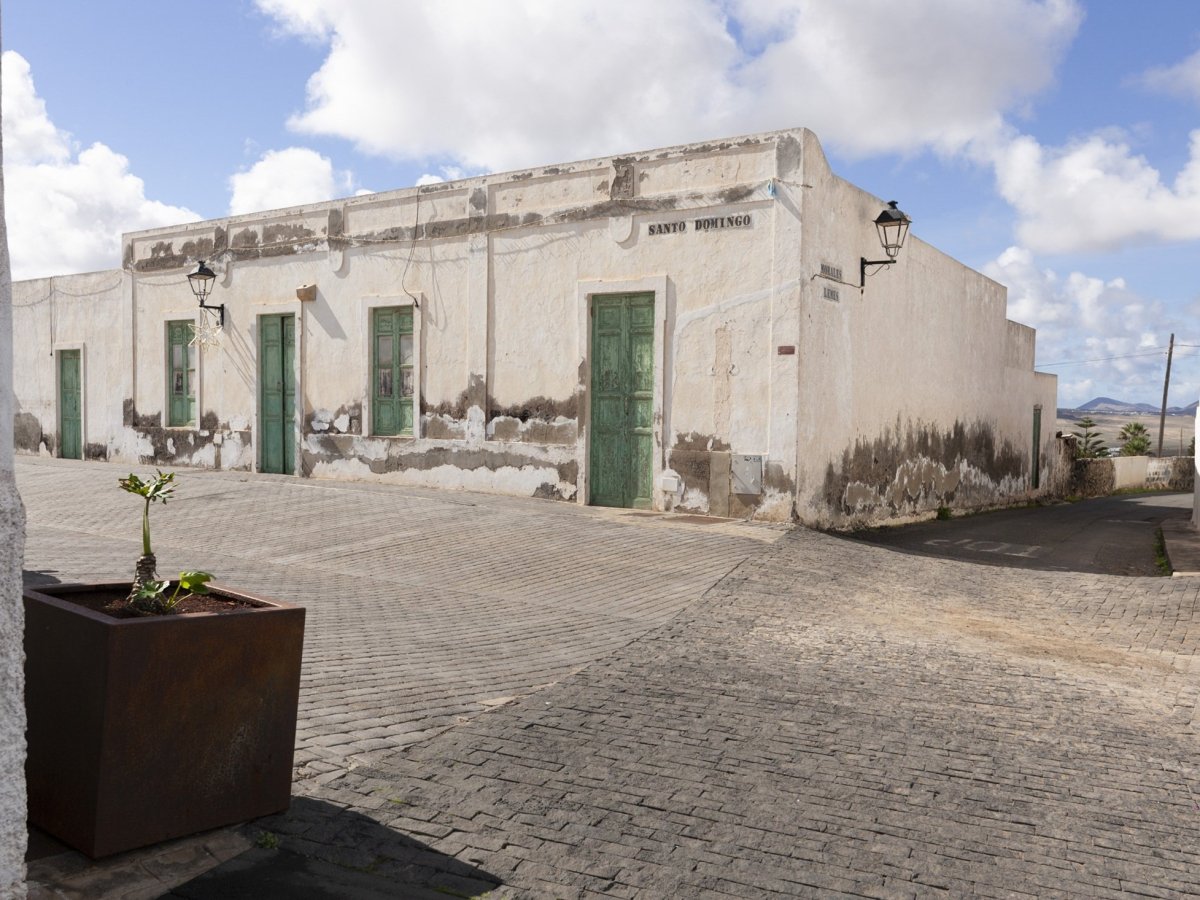
Ginés de la Nuez explains that one of the indicators that set off alarms and warn of gentrification is the expulsion of the local population. Through the different research she has carried out with various universities, the professor points out that gentrification manifests through evictions or foreclosures, that is, by families who "cannot afford the rent increases."
Thus, it details that this usually occurs in neighborhoods on the outskirts of cities, such as fishing or middle-class neighborhoods, and mainly affects older people. "What happens is that rents keep going up and since you can't pay them, they kick you out," she says.
Another indicator that can be observed is the transformation of neighborhoods. "All neighborhoods change, but if they do so violently and quickly, something is happening because some elements are forcing that neighborhood to change," she explains.
A neighborhood with small shops, traditional bars, or local clothing stores can suddenly become "a neighborhood of terraces", something that is happening in many neighborhoods on the islands, according to the professor. In the case of Teguise, the vast majority of shops on the main streets are tourist-oriented. "It's a design and leisure commerce, but that doesn't serve the town's inhabitants," she maintains.
In this regard, she points out that this situation is not negative, but "it doesn't serve the population, it serves other people." "We are using the city for something other than living, and this is doing business, which is legitimate, but up to a point," she continues.
"Neighborhoods have a function, but we are depersonalizing them"
Regarding the transformation of neighborhoods and towns largely driven by tourism, Carmen Ginés insists that "neighborhoods have a function, but we are depersonalizing them."
The researcher also highlights the emotional impact that gentrification has on the residents of towns and cities. "Imagine leaving your house and seeing that you don't know anyone, that you don't have your usual bar where you used to go or the shop where you bought potatoes, but instead you have a lot of different people every day," she emphasizes. "It's not that I think it's bad, but I think the consequences of activities like the street market are not being measured," she clarifies.
At this point, the gap that has opened up due to the tension generated between the population and tourism due to overtourism comes into play. "It's great that tourists come, but it should benefit the population because with 18 million travelers, how do we have the lowest salaries in Spain?" the doctor questions.
Carmen Ginés de la Nuez sets her sights on the "lack of regulation" regarding housing. "In some way, we must control and coexist; tourist homes have jumped from tourist areas to residential ones," she suggests. "The population deserves to live in the neighborhood they want," she emphasizes.


Add La Voz de Lanzarote as a preferred Google source.
Stay informed with the latest current news.