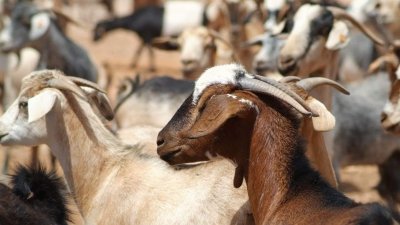
The goats that currently inhabit the Canary Islands are genetically identical to those that accompanied the first settlers of the archipelago fifteen centuries ago, according to researcher Clara Díaz, from the University of La Laguna, based on an analysis of ancient DNA.
In her doctoral thesis, which has received an international distinction, the researcher has revealed this important finding for the biological history of the archipelago and genetics by demonstrating that the pre-Hispanic Canarian goat has maintained an astonishing genetic continuity from Roman times and the aboriginal period to the present day.
The study, a pioneer in the application of paleogenomics and bioinformatics techniques, confirms that this animal is the only member of the original "Neolithic package," composed of pigs, goats, and sheep, that has survived practically unaltered through the profound historical and demographic changes of the islands, as reported this Monday by the University of La Laguna.
To reach these conclusions in the thesis, which was supervised by Rosa Fregel and Mariano Hernández, both from the Department of Biochemistry, Microbiology, Cell Biology, and Genetics at the University of La Laguna, the scientist analyzed a total of 344 samples, including teeth, bones, and horns, from 33 archaeological sites throughout the archipelago.
A fundamental technical milestone was the analysis of remains from the Roman settlement on the island of Lobos, which allowed for the establishment of a timeline from the beginning of the common era, adds the academic center.
Unlike the human population, whose genetic composition underwent a drastic transformation after the Castilian conquest in the 15th century due to miscegenation with European settlers and African population, the Canarian goat remained stable.
Thus, the research concludes that local goat breeds achieved perfect adaptation to the abrupt island environment and its unique flora, which gave them a much higher resilience than European breeds introduced after the conquest.
Although there was a European genetic contribution after the 15th century, this component ended up being diluted over the centuries and, according to the research, natural selection favored aboriginal traits, better prepared for survival in the Canarian terrain, resulting in a biological "purity" based on adaptive efficacy.
"The goats that are with us now in the ravines and corrals are genetically the same as those brought by the ancients," says Díaz, who emphasizes that these animals are "authentic capsules" of biological time.
One of the greatest scientific achievements of this thesis is the positioning of the Canary Islands as a unique "laboratory" for global paleogenomics.
Due to the lack of preservation of biological remains and the scarcity of published data in mainland Africa, the animal genomes recovered on the islands constitute, to this day, the first and only real approximation to the DNA of the Iron Age in North Africa.
However, the story of their companions, the sheep, offers "a fascinating contrast" and serves to illustrate the limits of biological adaptation.
The researcher explains that the aboriginal Canarians possessed "hair" sheep, perfectly adapted to the semi-arid climate, and after the conquest, European settlers introduced "wool" sheep for economic textile interests.
But the attempt to cross both breeds resulted in an adaptation failure: "the wool sheep did not thrive in the island environment, which led to the practical disappearance of the original hair sheep in the archipelago," adds Díaz.
The historical curiosity is that the hair sheep observed today in the Canarian countryside are not direct descendants of those that survived the 15th century, but rather come from specimens brought from Venezuela in the 1950s.
These American animals were, paradoxically, descendants of the Canarian sheep that were exported to the New World centuries ago during transatlantic routes, thus completing a surprising cycle of genetic return.



Add La Voz de Lanzarote as a preferred Google source.
Stay informed with the latest current news.