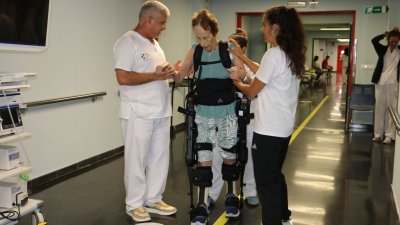
The Doctor José Molina Orosa University Hospital, a center affiliated with the Ministry of Health of the Government of the Canary Islands, has incorporated the first robotic exoskeleton for lower extremities into the center's Rehabilitation service for the functional recovery of gait in patients with central nervous system pathologies, such as multiple sclerosis, stroke, or spinal cord injuries.
The equipment, costing 101,970 euros, has been financed with funds from the Next Generation EU recovery, transformation, and resilience plan, framed within the objectives of improving healthcare for patients with rare diseases and amyotrophic lateral sclerosis (ALS).
The Physical Medicine and Rehabilitation service has begun to use the new robotic equipment in patients with central nervous system disorders, such as multiple sclerosis, Parkinson's disease, different ataxias, or spinal cord injuries who meet the criteria for this innovative therapeutic option, which ultimately aims to improve functionality and independence in walking.
Precisely this therapy combines technology and rehabilitation for the functional recovery of the patient and their quality of life. The exoskeleton allows for controlled and safe rehabilitation, with intense and repetitive training adapted to each patient.
The exoskeleton therapy helps patients to stand up, walk, and sit down, and aims for them to recover basic functions that directly impact their daily autonomy.
This therapy is established and prescribed by rehabilitation doctors in consultation. The head of Physical Medicine and Rehabilitation at Molina Orosa Hospital, Ricardo Díaz, assures that the use of the exoskeleton is mainly indicated for gait rehabilitation and provides multiple benefits, such as the prevention of osteoporosis due to disuse and lack of axial load, improved intestinal transit, help in the prevention of pressure ulcers, and reduced risk of urinary infections by facilitating bladder emptying.
Furthermore, depending on the intensity and duration of the sessions, it contributes to improving physical and cardiorespiratory conditioning; and on the other hand, by recovering a function that the patient believed lost, it has an emotional benefit.
Service Activity
The Physical Medicine and Rehabilitation service of the Molina Orosa Hospital has a team made up of six physicians, after the incorporation of a new specialist, and six nursing care technicians, who attend to consultations and the performance of diagnostic and therapeutic tests
Until September of the current year, this team has attended a total of 9,187 consultations. Regarding diagnostic and therapeutic tests, the specialists have performed 4,795 tests of this type until September.
Add La Voz de Lanzarote as a preferred Google source.
Stay informed with the latest current news.