The surface of the seas and oceans of the planet recorded a new historical record this summer. On August 22, the global daily temperature marked a new milestone and the thermometer stood at 21.1 degrees. This was noted by the Copernicus Climate Change Service (CS3), the European Union's program for observing the planet. Until then, the peak had occurred in March 2024, with 21.09 degrees.
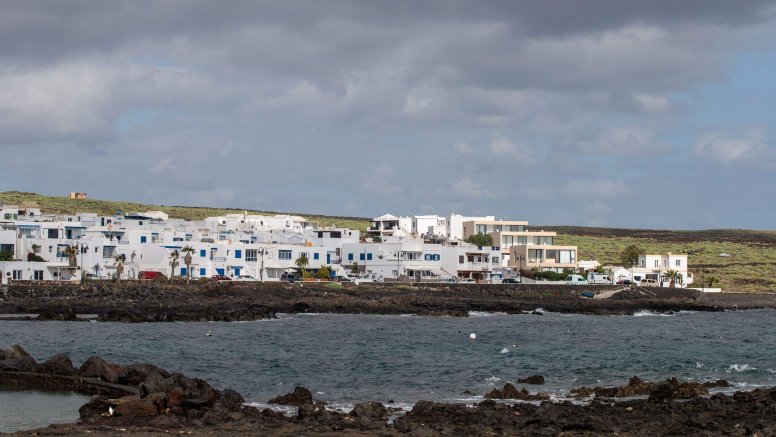
On the same day that the average sea surface temperature exceeded 24 degrees on the east coast of Lanzarote. That same day, temperatures above 23 degrees were also recorded on the west coast of the island.
This trend had been observed for years, with a constant increase in ocean temperature generated by greenhouse gas emissions, which now coincides with the natural phenomenon of El Niño.
In Spain, the State Meteorological Agency (Aemet) and Puertos del Estado reported on social media that the Canary Islands, the Cantabrian Sea, and the Mediterranean reached historical temperature records. Its External Buoy Network, distributed in deep waters far from the coast, registered a local temperature record in the Canary Islands, with 22.93 degrees at the beginning of May.
Between 1982 and 2024, the surface temperature of the planet's seas grew by 0.5 degrees. Climate forecasts predict that this trend will continue to increase and that the biodiversity of the Canary Islands, as an archipelago, will be at risk.
Far-reaching consequences for the planet
Ocean warming has far-reaching consequences for communities and ecosystems, as the sea acts as a natural climate regulator, capable of absorbing heat generated by anthropogenic causes and reducing terrestrial warming.
The constant warming of the oceans can impact the speed of the Atlantic Meridional Overturning Circulation, which affects the entire planet and especially regions like the Canary Islands, force species migration, generate episodes of mass deaths, promote invasive species, and degrade ecosystems.
"A large part of our socioeconomic activity is linked to the sea," highlights María Dolores Pérez, doctor from the University of Las Palmas de Gran Canaria and Applied Physics, expert in physical oceanography, oceanic variability, and climate change. "We are going to be affected by the loss of beaches, coastal infrastructure due to sea-level rise, and adverse phenomena, such as storms or calimas," she adds.
Furthermore, the University of La Laguna has already warned of the "tropicalization" of the sea in the Canary Islands, with the arrival of tropical species to the archipelago's coasts. "We already have many invasive species that come on commercial ships, and if they find a favorable habitat here, they develop and can replace native species," she highlights.
Climate projections warn that this constant warming of the oceans will generate a loss of biodiversity in the ecosystem and with it a decrease in fish catches and, therefore, problems for food security. It will also impact the distribution of rainfall and the intensity of storms.
Although this ocean warming is latent throughout the planet, seas such as the Mediterranean, the Baltic, or the Black Sea suffer even more from the increase in oceanic temperature. While in areas like the Arctic Ocean, warming occurs more rapidly. Along with ocean warming, more marine heatwaves are also recorded, which have doubled since 1982.
What will happen with migratory movements?
The International Organization for Migration, dependent on the United Nations, points out in a 2023 study on Climate Change and Human Mobility that despite alarmist forecasts warning of massive migratory movements towards Europe for climate reasons, most of these displacements already occur within their own countries.
It also points out that climate is one more factor within the complexity of reasons that push a person to migrate and that the effects of climate change in the poorest regions can further reduce the possibilities of prosperity for local populations, turning them into "trapped populations."
Between 2013 and 2022, most weather-related displacements were recorded due to storms and floods in the Asian continent. Around 17.8 million displacements annually. After East Asia and the Pacific, South Asia is found, and then Sub-Saharan Africa is added, with 2.5 million displacements annually recorded due to floods, storms, and droughts.
The aforementioned study indicates that most asylum seekers' applications in the European Union flee from violence and economic factors, while it indicates a gradual increase in applications for climate reasons.
Faced with this reality, Doctor of Applied Physics María Dolores Pérez points out that to combat ocean warming, in addition to adaptation measures, it is necessary to reduce "very considerably" carbon dioxide emissions.
Add La Voz de Lanzarote as a preferred Google source.
Stay informed with the latest current news.