A study by the universities of Las Palmas de Gran Canaria (ULPGC) and La Laguna (ULL) has documented the oldest case of Paget's bone disease outside continental Europe in the skeleton of an adult male buried in the early 15th century in San Marcial de Rubicón, in Lanzarote.
The research, published in the journal International Journal of Paleopathology, provides one of the first archaeological examples of this disease outside Europe, also situated in the context of the first decades of European colonial expansion across the Atlantic.
Its interest lies both in its ability to expand the geographical record of this condition, as well as in showing how a chronic disease could affect the body of a person who lived in a frontier population formed through migrations and intercultural interactions, the ULL details in a statement.
The individual studied, named 'Individual 10', was recovered in one of the funerary areas excavated during the 2023 campaign in San Marcial de Rubicón.
It is a man over 40 years old, whose skeleton was almost complete and presented a set of unusual alterations: thickening of the skull bones, formation of new bone tissue, curvature of the left humerus and right femur, complete fusion of the left joint between the sacrum and the pelvis, and very advanced osteoarthritis in the right knee.
The study combined macroscopic observation of the remains with X-rays, computed tomography, and ancient DNA analysis.
The results revealed accelerated and disorganized bone remodeling affecting the skull, spine, pelvis, and several long bones.
The general pattern of the lesions, the researchers conclude, is most compatible with polyostotic Paget's bone disease, meaning it is spread across several regions of the skeleton.
This chronic pathology alters the normal bone renewal process: bone tissue is destroyed and rebuilt at an abnormal rate, producing thicker, deformed, and sometimes more fragile bones.
The team performed an extensive differential diagnosis to assess other possible causes.
Although some vertebral alterations and sacroiliac fusion complicate the interpretation, none of the considered alternatives better explain the distribution and combination of the observed lesions.
Researchers from the ULL and ULPGC emphasize that the importance of the case goes beyond the identification of a rare pathology.
The skeletal alterations allow us to approach, "albeit necessarily with caution," the bodily consequences that a long-term illness may have had during the early decades of European colonization of the Canary Islands.
The deformation of the right femur, the deterioration of the knee, and the asymmetry between the lower limbs indicate unequal loading maintained over a prolonged period and possible compensatory biomechanical adjustments.
However, the skeletal remains do not allow us to determine precisely how much pain he experienced, what his degree of functional limitation was, or if he needed help to move.
The muscle insertions of the arms show pronounced and bilaterally symmetrical development compared to other individuals in the cemetery.
This pattern suggests generalized loading of the upper extremities and could be related to habitual physical activities, although it does not allow for the identification of a specific task or the use of a walking aid.
Overall, the skeleton reflects a prolonged biomechanical adaptation to a chronic bone condition. It does not allow us to know if the individual received care, if he had to modify his tasks, or if he had other forms of practical help within the community.
His burial followed the same pattern as the others documented in the cemetery: supine extended position, absence of grave goods, and no clearly marginal spatial location. This funerary normality indicates that he did not receive differentiated mortuary treatment.
Mitochondrial DNA analysis identified haplogroup X2c1, compatible with European maternal ancestry.
The nuclear DNA data preserved in the skeleton were insufficient to study genetic variants linked to susceptibility to the disease.
For this reason, the haplogroup must be interpreted exclusively as an indicator of maternal ancestry and not as proof of a specific hereditary predisposition.
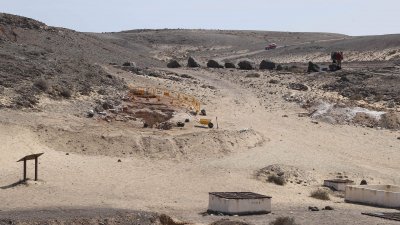
San Marcial de Rubicón, founded in 1402 and the main administrative and religious center of Lanzarote during the early decades of European occupation, provides with 'Individual 10' early bioarchaeological evidence of Paget's disease in an Atlantic colonial setting, the ULL emphasizes in the statement.
The article has been carried out by a team made up of research staff from the ULL and ULPGC, Leiden University and Baraka Arqueólogos S. L., as well as independent specialists.
The study has been coordinated by Jared Carballo-Pérez, a researcher at the ULL and Leiden University, and includes the participation of Selene Rodríguez-Caraballo, Rosa FRegel, Esther Chávez-ÁLvarez, María del Cristo González-Marrero, Miguel Ángel Hervás-Herrera, Luis Alejandro García-García, Sara B. Armas-Quintana, Alejandra C. Ordóñez, María Antonia Perera-Betancor, Emilio González-Reimers and Matilde Arnay de la Rosa.
The research is integrated into the Rubicon Project, scientifically co-directed by Esther Chávez-Álvarez, from the ULL, and Cristo González-Marrero, from the ULPGC.
The project is developed through a collaboration agreement between the two Canarian public universities, the Directorate General of Culture and Cultural Heritage of the Government of the Canary Islands and the Yaiza City Council.



Add La Voz de Lanzarote as a preferred Google source.
Stay informed with the latest current news.