Students from Lanzarote and the rest of the Canary Islands interested in the aeronautical sector will no longer be forced to move to the mainland to pursue their higher education studies.
The Social Council of the University of La Laguna (ULL) approved this Thursday the implementation of the future Degree in Aerospace Engineering, a strategic qualification that is expected to begin its journey in the 2028/29 academic year with an initial offer of 60 places for new admissions to retain young talent in the archipelago.
With this approval, the academic institution begins the administrative process for the degree. The first step will be to submit a feasibility report to the Government of the Canary Islands in December. Once regional authorization is received, the academic design and its subsequent evaluation by the competent quality agencies will be addressed, as detailed by the ULL in a statement.
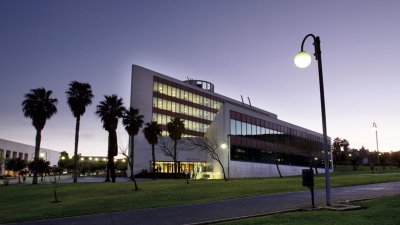
The new degree will be offered at the Higher School of Engineering and Technology, whose director, Ernesto Pereda, was responsible for defending the proposal before the university body. Pereda stressed that the initiative responds to a real demand from students and the urgency to curb the brain drain towards the dozen or so mainland universities that currently offer these studies. As a guarantee, he highlighted the high demand already registered in other branches at the ULL, such as Electronic Engineering (169%) and Mechanical Engineering (186%).
Practical and Bilingual Focus
Beyond avoiding the uprooting and economic cost of studying outside the islands, the degree aims to train professionals with high employability and good salary prospects. To this end, the curriculum will specialize in Aerospace Equipment and Materials, a branch aligned with the technological capabilities already emerging in the Canary Islands, such as testing small satellites, unmanned systems (drones), space instrumentation, and aircraft maintenance.
To ensure the international projection of future graduates, the academic proposal includes that the subjects in the third and fourth years will be taught entirely in English. Logistically, classes will begin in the current facilities of the School, although the university already anticipates that it will need to establish specific infrastructure in subsequent years to meet the technical needs of the degree.
Two New Postgraduate Programs: Emergencies and Cinema
In the same session, the Social Council approved the creation of two own postgraduate degrees focused on key sectors in the islands.
On the one hand, the Diploma of Specialization in Emergency and Urgent Care Nursing. Organized by the Nuestra Señora de Candelaria Nursing School, it will have 15 places (limited by operating room capacity). The theoretical part will be completely online —facilitating access from non-capital islands—, while the practical part will be carried out at the Nuestra Señora de Candelaria University Hospital.
In addition, the Diploma of Expert in Film Production will be created co-organized by the Faculty of Social and Communication Sciences of the ULL and the Fuera de Campo Film School, which will offer 30 places. Although the teaching will be in person in Tenerife, the classes will also be broadcast online to respond to the growing need for specialization in an audiovisual sector that already has about 600 companies in the Canary Islands.
Finally, the university body gave the green light to its budget for the 2027 fiscal year, which amounts to 1,265,315.32 euros.


Add La Voz de Lanzarote as a preferred Google source.
Stay informed with the latest current news.