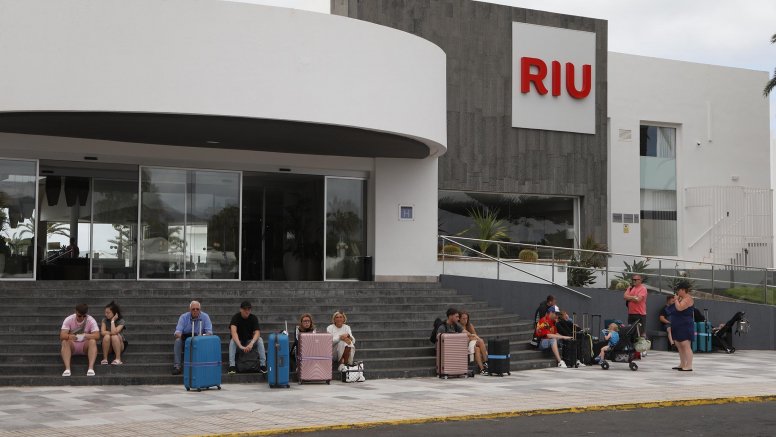
Lanzarote has gained 22,283 tourist places in 30 years. Hotels, apartments and, in recent years, vacation homes make up the tourist accommodation offer in Lanzarote. In 1991, the island had 43,943 places in tourist establishments. Three decades later, in 2022, the figure rose to 64,043. This is reflected in the Joint indicator system between Lanzarote and Menorca, on the occasion of the anniversary of the declaration as Biosphere Reserves. In February 2024, it rose to 66,226 tourist places in February 2024.
The growth of the accommodation offer in Lanzarote is linked to "real estate processes" and reflects the importance of tourism in its economy. After the zero tourism of the pandemic, the report reflects on the possibility of "deepening the objectives of economic diversification". Thus, although it highlights that "it is undeniable" that tourism growth provides development opportunities, it also presents environmental and cultural "challenges".
Since its declaration as a Biosphere Reserve, Lanzarote has increased its accommodation places by 50%. The same has happened on the Balearic Island. However, they have not grown at the same rate. Since the mid-90s, the urban growth of Lanzarote has not stopped. In the early 2000s, it pioneeringly approved a tourism moratorium, which began to bear fruit in 2009, when its accommodation park stagnated and even decreased.
In contrast, Menorca, with more moderate growth, had to wait until twenty years later for a similar measure to be considered in the Archipelago.
Occupied places
In 2009, the tourist accommodations in Lanzarote had an occupancy rate of 54.2%. Ten years later, it was already close to 80%. In addition, hotel rates have grown by 90% in just 14 years.
This figure has continued in this line in recent years. However, after the coronavirus pandemic, the average stay has decreased. "A decrease in the average stay may result in a greater concentration of tourists in shorter periods," he indicated. This concentration of travelers "increases the pressure on local resources due to a greater turnover of tourists, an increase in the use of infrastructure, pressure on the market, the overload of services and equipment, and an impact on the local community."
Lanzarote has 197 open tourist accommodations, including apartments and hotels. In addition, it has 31,396 vacation home places, according to data from the Canary Islands Institute of Statistics reproduced in the report. Menorca, with 30,318. The research shows that "it is true that it can be beneficial for the local economy", by generating employment and "contributing to the generation of income through tourism", the report reflects. However, it is important that "this growth is managed properly" in order to "avoid problems" such as saturation and tourist gentrification, as well as the increase in rental prices for locals.
The local destinations that are beginning to make a name for themselves end up attracting the attention of tourists and businesses with prices above the usual. The local population is moving away from consumption spaces, and even in many cases must end up abandoning the place due to the high price of rentals due to the withdrawal of the housing market to dedicate it to vacation rentals.
The debate on whether or not to regulate vacation rentals has been going on for years in Lanzarote. Interestingly, the two autonomous communities with the highest number of vacation rentals are the two Spanish archipelagos: the Canary Islands and the Balearic Islands. The Balearic Islands have 13 vacation rental places per 100 inhabitants, compared to eight in the Canary Islands.
Add La Voz de Lanzarote as a preferred Google source.
Stay informed with the latest current news.