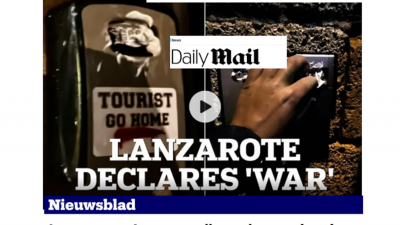
The growing social tension due to tourist saturation in Lanzarote has crossed borders, capturing the attention of the press in Germany, the United Kingdom, and the Netherlands, three of the countries that contribute the most visitors to the island.
The recently published reports focus on the "discontent of the population, problems accessing housing, and recent acts of sabotage against vacation rental properties".
The German newspaper Bild, replicating coverage from the British Daily Mail, has reported on groups of activists who block the key boxes of tourist accommodations with glue. They also highlight the appearance of anti-tourism graffiti and other symbolic protests in the most crowded areas.
The press in the Netherlands has also echoed the situation. The newspaper Nieuwsblad describes the situation as a "campaign of intimidation". In addition to sealing security locks, they mention the "fictitious sealing of access to beaches" using tape that mimics police tape.
The journalistic articles agree that the root of the protests is the excessive increase in housing costs, the lack of residential rentals, and a tourism growth model that many consider unsustainable.
Although the reports capture the complaints of residents—who demand stricter control of the real estate sector and better tourism planning—they also highlight the other reality of Lanzarote. Both business owners and citizens admit the existing dilemma, recalling that tourism is the indispensable economic engine on which employment and the island's stability depend.
This international media projection places Lanzarote in a delicate position. Beyond the necessary debate on the sustainability of the current model, the dissemination of news and images linked to sabotage, social tensions, and rejection of foreign visitors can damage the island's reputation and affect the perception of potential travelers in its most critical source markets.


Add La Voz de Lanzarote as a preferred Google source.
Stay informed with the latest current news.