According to data from the real estate portal pisos.com, added to those from the latest quarterly report by the College of Registrars, the Spanish coasts continue to be one of the favorite destinations for foreign buyers in Europe.
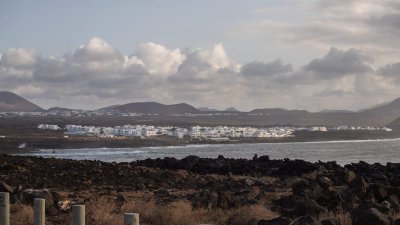
In the province of Las Palmas, the purchase of homes by foreigners increased by 20.3% going from representing 16.7% of the total in 2021 to accounting for 20.1% of total sales in 2025.
In contrast, the province of Santa Cruz de Tenerife was the only coastal province where the percentage of sales made by foreigners has decreased, going from 26.79% in 2021 to 26.05% in 2026.
However, this relative setback in foreign participation has not stopped the escalation of prices in the Canary Islands. Across the archipelago, the average price of coastal housing has risen by 59.55% in five years, from 198,605 euros to 316,869 euros.
The Spanish provinces with the most sales by foreigners are Alicante (44.65%), Málaga (34.30%), and Balearic Islands (28.89%), consolidating the Mediterranean-insular axis as the great magnet for foreign investment.
At the other extreme, Lugo (2.48%), A Coruña (2.80%), and Pontevedra (3.36%) register the lowest percentages among all coastal provinces, although evolution data tell a very different story. The impact of international buyers is also reflected in prices.
The Costa del Sol, where Málaga accounts for 34.30% of sales in the hands of foreigners, is at the same time the coast that has become most expensive in the last five years: 73.14% more expensive, going from an average of 280,497 euros in 2021 to 485,645 euros in 2026. The Balearic Islands follow the same logic. With 28.89% of foreign buyers, the average price of housing on the Balearic coast has increased by 65.04% in five years, up to 578,562 euros. And on the Costa Blanca, where Alicante leads the national ranking with that 44.65% of foreign investment, the price increase exceeds 46.60%.
The north, the big surprise
If the 2026 data show a coastal map dominated by the Mediterranean and the islands, the evolution data since 2021 point to a shift that cannot be overlooked.
Pontevedra is the most extreme case, where the percentage of sales by foreigners has gone from 0.71% to 3.36%, an increase of 373.24% in five years.
They are followed by Asturias (from 2.12% to 6.89%, +225%), Lugo (from 0.81% to 2.48%, +206.17%) and A Coruña (from 1.18% to 2.80%, +137.29%). Also noteworthy are Cantabria (from 2.47% to 3.97%, +60.73%) and Barcelona, whose Maresme and Garraf coasts have seen foreign presence grow by 78.51% in the same period (from 7.77% to 13.87%).
"What we are seeing in the north is the beginning of a process of internationalization of the coastal market that took decades to occur in the Mediterranean. Relatively low prices, added to the attractiveness of a less crowded coastline and, in the Galician case, very differentiated nature, are acting as a lever for that foreign buyer seeking alternatives to already mature destinations," explains Ferran Font, director of Studies at pisos.com.


Add La Voz de Lanzarote as a preferred Google source.
Stay informed with the latest current news.