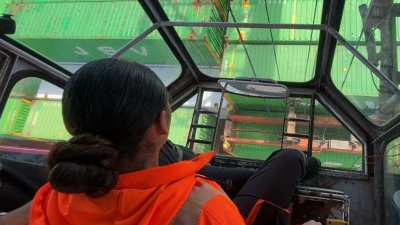
The blue economy consolidated in 2024 its strategic role in the productive model of the Canary Islands, generating 1.690 million euros of Gross Value Added (GVA), which is equivalent to 2.9% of the Canary GDP.
This represents a growth of 159,633 million euros compared to 2023, a 10.4% increase. This is according to the ISTAC report analyzing the activity of this sector between 2018-2024. The study also confirms sustained employment growth to 21,187 people, 2.3% of the total employment in the Archipelago.
Of this total, 18,711 corresponded to salaried employees and 2,476 to self-employed individuals, although with a still very marked male predominance: 15,930 men versus 5,257 women.
However, the growth of blue employment was more intense in the female group, especially among self-employed individuals, where the year-on-year increase reached 4.4% for women compared to 1.3% for men. Overall, the report points to a progressive expansion of the sector, with the capacity not only to generate economic activity but also to create employment opportunities linked to the sea, logistics, the naval industry, and port services.
The report places maritime transport and port activities as the two main pillars of the blue economy in the Canary Islands, jointly accounting for nearly 70% of the sector's GVA. Maritime transport contributes 36.6% and port activities 33.2%, followed by shipbuilding and repair, processing and distribution, and recreational maritime activities.
The Vice President of the Government of the Canary Islands and Minister of Economy, Industry, Trade, and Self-Employment, Manuel Domínguez, highlighted that this data confirms that the blue economy "is no longer an expectation of the future, but a reality that is effectively contributing to the diversification of the Canary economy." Domínguez stressed that the Executive will continue to promote this strategy to "generate higher value-added employment, attract investment, and turn the potential of our marine spaces into a true engine of development for the islands."
From an economic point of view, the contribution of the blue economy to the Canary Islands as a whole has improved steadily in recent years. After exceeding €1.53 billion in GVA in 2023, the sector reaches its series maximum in 2024, reinforcing its status as a key area for the economic diversification of the Archipelago. "The update published by ISTAC confirms, in short, that the blue economy is no longer a peripheral area, but a structural piece of Canarian growth, with special relevance for competitiveness, employment, and the connection of the Canary Islands with the Atlantic," Domínguez insisted.
Regarding employment trends, the report also confirms the sector's strength. In 2024, the blue economy generated 21,187 jobs, 3.2% more than in 2023, maintaining its weight at around 2.3% of total employment in the Canary Islands.


Add La Voz de Lanzarote as a preferred Google source.
Stay informed with the latest current news.