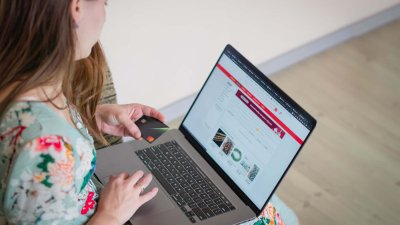
For a business in Lanzarote, it can be a way to keep in touch with those who visited the island, receive orders outside of business hours, or showcase a catalog of local products. However, having a website is just the beginning: the buyer also needs to find what they are looking for and complete their order with ease.
Support for SMEs and self-employed individuals offers a starting point to advance in that process. Afterward, each business must decide what improvements it needs, from updating its inventory to facilitating navigation. Among these is one that may go unnoticed: the functioning of the search engine within their own store.
The boost to the digitalization of SMEs and self-employed individuals in the Canary Islands
For small businesses in the Canary Islands, digitalization means solving everyday needs. Keeping inventory updated, managing orders, or clearly showing delivery times are tasks that affect both the customer experience and the organization of the business.
Technological investment makes more sense when it addresses a specific need. Before incorporating new tools, it is advisable to review where difficulties arise: if it is difficult to update stock, if inquiries about shipments are repeated, or if visitors cannot find items that are available.
The role of the Acelera Pyme Office
In Lanzarote, the Chamber of Commerce of Lanzarote and La Graciosa offers support through its Acelera Pyme Office. According to information published by the entity in September 2026, the service includes free diagnostics, individual guidance, and training on topics such as e-commerce, artificial intelligence, and cybersecurity. The program is co-financed by the European Regional Development Fund.
This support can help the merchant prioritize. A store that is just starting to sell online and one that already receives orders regularly have different needs. Identifying the starting point allows for choosing actions tailored to the resources and operations of each company.
Why some businesses lose sales in their own online store
A visit to the website does not always end in a purchase. Price, shipping costs, or availability can influence the decision, but there are also earlier obstacles, such as the user not finding a product that is part of the catalog.
In a physical store, a question to the salesperson can resolve that difficulty. Online, guidance depends on menus, categories, product sheets, and the search engine. If these elements do not function correctly, the customer may abandon the page without discovering what they need.
Facilitating that journey is the objective of tools like OliSearch, a search engine for e-commerce that incorporates suggestions as the customer types, correction of typographical errors, and filters to locate items.
Autocompletion guides the buyer from the first letters, while typo correction allows for retrieving relevant results even if the product name is misspelled. Added to this are real-time results and the possibility of filtering by categories, brands, prices, or specific attributes.
The tool also allows prioritizing certain products in specific searches, for example, to highlight new arrivals or promotions.
Small, but specific catalogs: the challenge of craftsmanship and local products
A reduced catalog can also be difficult to explore. Let's consider a handicraft store in Lanzarote: the seller can organize the pieces by collection or elaboration technique, while the buyer searches by material, color, utility, or budget.
Something similar happens with local products. A visitor who wants to buy again an item discovered during their vacation might remember its appearance or use, but not the exact name under which it appears on the web.
Therefore, product sheets must describe products with words understandable to someone arriving for the first time. Including materials, sizes, formats, and uses helps the catalog respond to different ways of searching.
Technology needs that information to offer useful results. An advanced search engine can facilitate the location of items, but its effectiveness also depends on the quality of the available data.
Search errors that can alienate the customer
A typo, a name variation, or an incomplete description can become a dead end when the system demands overly strict matches. The buyer interprets that the product is not available, even if it appears in another section of the store.
The purchase is also hindered by results that are not very related to the query, filters that do not allow narrowing down options, or a search bar that is difficult to use from a mobile phone.
The merchant can detect some of these problems through a simple check:
-
Search for products with common terms: use words that someone unfamiliar with the catalog would use.
-
Enter typographical errors: check if the search engine recognizes queries with minor mistakes.
-
Review results from mobile: verify that suggestions and filters work correctly.
-
Check searches with no results: identify misclassified items, missing references, or unclear descriptions.
These tests allow for the discovery of specific obstacles before implementing broader changes to the store.
How to leverage technology to sell better in local commerce
Improving an online store requires observing the complete buyer's journey. Photographs should allow for product evaluation; descriptions, for resolving doubts; and information on availability, deliveries, and returns, should appear before confirming the order.
Within that journey, the search engine serves an especially important orientation function when the customer knows what they want to buy but is unaware of how the catalog is organized.
Intelligent search engines adapted to small businesses
Advanced search tools can also be applied to smaller businesses. Their usefulness depends on the queries they receive, the variety of products, and the difficulties presented by navigation.
Solutions like OliSearch allow for the incorporation of intelligent search functionalities and the analysis of user queries. This information can help detect terms that yield no results, products that are difficult to find, or needs that the catalog does not yet cover.
For example, if several buyers use an expression different from the one appearing on the product sheets, the merchant can adapt the descriptions to facilitate their location. Similarly, a recurring search with no response may reveal a missing reference or a classification problem.
The choice of these tools should start from a review of the business. If customers find items easily, there may be other more urgent improvements. If searches are repeated without results or queries about products that are difficult to locate, it is advisable to analyze what is failing.
For commerce in Lanzarote, advancing in digitalization means paying attention to these details. Advice facilitates diagnosis and technological tools help implement improvements, but the objective remains recognizable for any business: to serve well those who enter, guide them, and facilitate their purchase, also when they do it through a screen.



Add La Voz de Lanzarote as a preferred Google source.
Stay informed with the latest current news.