The Ministry of Education, Vocational Training, Physical Activity and Sports of the Government of the Canary Islands, led by Poli Suárez, has established new instructions for public schools to remove from the classrooms of the first cycle of Early Childhood Education interactive multitouch screens (PIM) and other interactive digital systems that do not conform to the developmental characteristics of students aged zero to three years.
The measure, promoted through the Directorate General of Curriculum, Inclusion and Innovation, which is coordinated by David Pablos, responds to the recommendations of the Spanish Society of Pediatrics, to the available scientific evidence on child development, and to the work carried out by the early intervention teams of the Ministry, whose functions include identifying system needs and proposing improvement measures for this stage.
On this matter, David Pablos explained that these instructions "seek to adapt the use of digital resources to different educational stages." In this regard, he pointed out that the Ministry "maintains a plan to continue promoting the provision and development of digital resources in schools, while it is committed to directing this strategy towards older ages, starting from Primary Education and always in a responsible and guided manner." In Early Childhood Education, he added, priority is given to "a more experiential learning, based on experimentation, the manipulation of materials from the analog environment, and the promotion of human relationships."
The instructions establish that the PIMs currently installed in classrooms of the first cycle of Early Childhood Education must be relocated to other areas of the school before November 30, 2026. After that date, they may not remain physically installed in classrooms intended for students aged zero to three years.
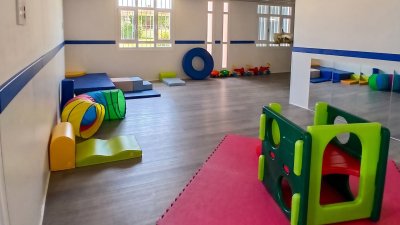
The decision is based on the specific nature of this educational stage, in which the curriculum gives special relevance to sensory and psychomotor exploration, free play, the manipulation of real materials, movement, and direct interaction with adults, peers, and the physical environment.
In this regard, the first years of life are decisive for people's cognitive, emotional, and social development, and classrooms should be configured as flexible, safe spaces adapted to the needs of children. Therefore, environments that favor the motor, emotional, relational, cognitive, and artistic development of students are prioritized, respecting their individual rhythms.
The provision of resources and equipment for the classrooms of the first cycle of Early Childhood Education was previously framed within the execution of the program financed by the Ministry of Education, Vocational Training and Sports. Once this implementation phase is concluded, the planning of educational resources will be developed according to the criteria established by the General Directorate of Educational Planning, Inclusion and Innovation, which is competent to define the equipment and pedagogical resources for the educational centers of the archipelago.
The contributions made by the educational community have also contributed to this process, especially from the management teams of centers that had conveyed the convenience of reviewing the use of these devices at these ages, as well as the reports prepared by the new specialized teams in Early Intervention and the recommendations made by the Spanish Society of Pediatrics. All of this has made it possible to address this update from a pedagogical perspective, based on scientific evidence and the needs of students at this stage.
Support
The management teams will be responsible for determining the new location of the screens and their intended use, depending on the characteristics and needs of each center. To facilitate this procedure, they will have the advice and support of the technical staff from the Educational Technology Area, dependent on the aforementioned general directorate.
Furthermore, in cases where it is necessary to resort to an external company for the reinstallation of the devices, the centers will receive financial support through an extraordinary allocation to cover the expenses derived from the relocation process.
“The educational centers will not lose the resource and will be able to relocate it to another space. Furthermore, this intervention will not entail any economic cost for the center, with the general directorate assuming any expenses derived from this intervention,” added David Pablos.
The instructions also establish that the classrooms for the first cycle must be organized according to the pedagogical principles of this stage, optimizing the available spaces to favor free movement, sensory exploration, play, manipulation of materials, interaction among peers, and affective contact with educational staff.
In the second cycle of Early Childhood Education, interactive digital systems may only be used for a specific and duly justified educational purpose. In any case, learning experiences based on sensory exploration, manipulation, play, movement, and direct interaction with the environment will be prioritized.
Exceptionally, the instructions contemplate that interactive digital systems may be used in the first cycle when there are duly justified pedagogical reasons appropriate to the characteristics and needs of the students, especially when they are essential for access to the curriculum or communication, in the case of students with special educational needs who require alternative and augmentative communication systems.

Add La Voz de Lanzarote as a preferred Google source.
Stay informed with the latest current news.