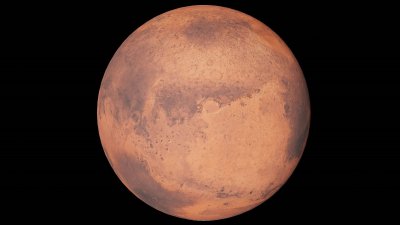
Canadian astronaut Julie Payette is convinced that one day a human will walk on Mars, but she has a wish for when it happens: that they do not arrive alone, that they do not plant the flag of a country and that they do so in the name of all humanity, following the spirit of cooperation of the International Space Station.
That aspiration has been the focus of her intervention at Starmus this Tuesday, centered on vindicating the quality of human collaboration as one of the great legacies of space exploration and, in particular, of the International Space Station (ISS), where Russians, Americans, Europeans, Japanese, and Canadians have worked together for a quarter of a century despite the political crises that have occurred on Earth.
Payette, who flew on two space shuttle missions and participated in the construction of the ISS, recalled how in 1999 she arrived at a station made up of just two modules and returned ten years later to find an infrastructure with dimensions close to a football field.
Differences imperceptible from "up there"
In her opinion, in centuries perhaps few will remember the names of those who passed through there, but they will remember that it was the first time humanity was able to jointly build and maintain something extraordinarily complex in one of the most hostile environments possible.
And from up there, she added, earthly differences become difficult to find.
Astronauts from different cultures, languages, and countries share the impulse to approach the window to look at a planet that Payette has described as a "blue wonder" suspended in darkness, alive, changing, and without the political borders that organize the lives of those who remain on its surface.
That model, she considered, should accompany the return to the Moon and the future exploration of Mars.
You don't get far without cooperation
At the subsequent panel "¿Espacio para todos?" (Space for everyone?), Payette shared a panel with filmmaker and Norwegian astronaut Jannicke Mikkelsen and geoscientist and astronaut Sian Proctor, who agreed that going further will require not only technology, but cooperation, time, and reflection on who participates in that expansion.
In it, Payette has lowered expectations of a quick arrival on Mars because, she recalled, there are still extremely elementary issues to resolve, including how to wash clothes during a trip that can last up to two years without wasting water or using toxic substances.
“Nobody wants to touch Mars with dirty underwear,” she quipped.
The Moon will be a laboratory in this regard, as exploring its south pole may allow us to verify if the ice existing in permanently shadowed craters can be transformed into a resource to be exploited by future crews.
“It will come,” Payette said about human expansion beyond Earth, although “not as fast as some would like,”
And it will require, she insisted, “the brains of many humans and the heads of many nations.”
Proctor stressed that this cooperation should not replicate a logic in which space is measured solely by what benefits the global north or south, while Mikkelsen defended the role of astronauts not only to inspire future generations but also to convince political decision-makers of the usefulness of exploration.
And amid the need for cooperation, climate optimism
Payette described the feeling of contemplating a “living” planet from orbit, with volcanoes, oceans, weather systems, and moving tectonic plates, and defended the hope produced by verifying the extraordinary uniqueness of the only place where, for now, it is possible to live.
“I hope this one planet we have is worth taking care of,” she summarized. This idea led to the next presentation, in which the view from space inevitably brought the debate back to Earth.
The day also included the conference "A Future for the Fabric of Life on Earth?", by Argentine ecologist Sandra Díaz, Princess of Asturias Award for Scientific and Technical Research and one of the leading international specialists in biodiversity.
In her talk, she argued that the best available models on the future of life on Earth indicate that it is still possible to reverse the curve of biodiversity loss and reach the end of the century with a more abundant and intact nature than the current one.
But, he has warned, “we are on time, barely,” and it will not be enough to expand protected areas or plant trees, but rather a profound transformation of agriculture, commerce, diets, consumption, food waste, and, in general, of the economic and political incentives that continue to drive degradation will be necessary.



Add La Voz de Lanzarote as a preferred Google source.
Stay informed with the latest current news.