For a long time, we have addressed mental health primarily from the perspective of illness, and suicide, from the perspective of tragedy that has already occurred. We acted when suffering was visible, when the crisis had erupted and only care-based response was possible. Prevention is the opposite. Prevention is arriving earlier.
Arriving earlier demands a society capable of recognizing suffering, of talking about it without stigma, of knowing how to act when a person, whether adolescent, adult, or elderly, begins to show signs that they need help.
In recent years, the prevention of suicidal behavior has ceased to be an exclusively health-related matter in the Canary Islands. The Suicidal Behavior Prevention Program of the Canary Islands Health Service, the protocols that have been developed, and the training promoted by the School of Health and Social Services of the Canary Islands have made this a shared responsibility among professionals in healthcare, education, social services, and the third sector.
Childhood and adolescence deserve particular attention, because educational centers are often the first place where changes are detected. Isolation, self-harm, bullying, emotional and behavioral changes are signals that a school can read before anyone else. That is why it is positive that the Canary Islands have a protocol for intervention in cases of suicidal risk in educational institutions, and that counselors and professionals working with minors have been trained.
A teacher does not have to become a psychologist, nor a counselor a psychiatrist. But both can do something decisive. They can detect that something is wrong, listen, and activate the appropriate help. And many, every day, are already doing so.
It would be a mistake, however, to limit prevention solely to young people. We must also think about adults going through a loss, a breakup, economic or work difficulties, social isolation, or serious illness. And we must think about our elderly, for whom unwanted loneliness, loss of autonomy, or lack of social networks increase vulnerability. That is why prevention must accompany us throughout life, not just a specific stage.
This forces us to expand the protection network. Prevention cannot rely solely on mental health professionals. Primary care and nursing professionals, social services staff, teachers, police officers, emergency personnel, association volunteers, residential staff, and sports coaches encounter someone who needs help in their daily lives. We owe them all gratitude, even though they often act without even knowing it. Not everyone needs to know how to diagnose. Many can learn three essential skills. Recognize, listen, and refer.
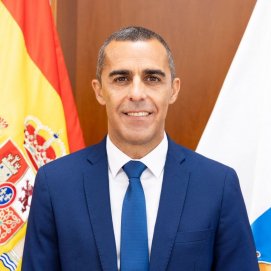
Here, training acquires a strategic dimension, and therein lies the direct responsibility of the School of Health and Social Services of the Canary Islands, which I direct. ESSSCAN has a key role to play. It is up to us to transform specialized knowledge into accessible, rigorous, practical, and scalable training.
It is also up to us to consolidate a permanent training pathway adapted to each group. A family doctor does not need to know the same as a teacher, a social worker, a police officer, or someone who works daily with the elderly. But all should share some minimum knowledge. What signs should concern us. How to ask. How to listen. What we should not do. How to act in the face of risk. What resources to activate.
In a fragmented territory like ours, this implies an added responsibility, which is to ensure that this knowledge reaches all islands equally. No island should feel further from help than others. The next step is to move from training professionals to building protective communities. Prevention must be where life happens. In schools, high schools, universities, health centers, social services, companies, sports clubs, senior centers, families. And it requires rigorous information directed at citizens, because the first sign rarely appears before a professional.
It appears at home, in a conversation, in a message, in a change of behavior. Knowing how to recognize it, and knowing where to ask for help, is also public health.
All of this must be evaluated. It is not enough to measure the number of courses taught or accredited professionals. We need to know if the training changes behaviors, if it improves early detection, if it facilitates coordination between agents, if it ensures that people receive help sooner. Training without evaluation does not generate the value we need.
Canary Islands already has a strategy, protocols, professionals, training, and accumulated experience. The challenge now is not to add more pieces. It is to connect the ones we have. It is to move from developing prevention programs to building a social culture of prevention, in which asking for help is normal, and in which we also know how to look at the silent suffering of our elders.
Preventing suicide does not start in a mental health consultation. It starts earlier. It starts when we decide to talk about it with knowledge and not with silence. And arriving earlier, in this matter, can mean saving a life. It is, simply, what we want for the Canary Islands.
Add La Voz de Lanzarote as a preferred Google source.
Stay informed with the latest current news.