Lanzarote has treasures in its depths.
I am not referring to olivine, nor to the heat of its volcanoes or to monuments like the Cueva de los Verdes or the Jameos del Agua.
Its ancient inhabitants did not search for or excavate caves in the peaks or ravines, as happened in Tenerife or other mountainous islands. In Titerogakat, the Mahos excavated in the ground or took advantage of natural caves to remain out of sight of pirates and other looters who continually visited the Archipelago.
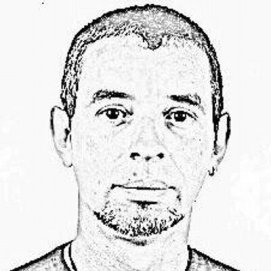
From the interior of that land, from its depths, my dear friend Ramón Alfonso Hernández is born. Ramón has earned, on his own merits, to be known as an artisan and recognized in today's Lanzarote, although his work is not new.
I had the good fortune to meet Ramón in the eighties of the last century. We were no longer children, but we still had much to learn. We were just two young people interested in the culture of the Canary Islands. And a sincere, authentic friendship quickly formed, from two distant islands, such as Lanzarote and Tenerife were in the analog era.
I did not know Ramón as a potter or artisan; for me, he was a reference for the Juego del Palo of Lanzarote, that of Don Cristín Feo. He was one of his outstanding students, and that's why I took him to important exhibitions. Thus, we coincided in memorable Juego del Palo gatherings, which remained in my memory thanks to masters like Maestro Paquito, of the Telde garrote, or Don Cristín Feo himself from Lanzarote.
The Juego of Lanzarote was and is a true spectacle. It is rhythmic, short, circular, with a tremendous richness of movement and a unique appearance.
Last July 26th, I had the good fortune to coincide again with Ramón and part of the Juego del Palo school of Lanzarote that he directs, true descendants of Don Cristín Feo's.
El Auchón Guanil paid him a well-deserved tribute in Tenerife, so far and yet so close. Now it may seem closer than his own island, the one that has always carried him in its depths, the one that gave birth to him, the one that knows him as an artisan. The institutions do the same, although they have not yet given him the recognition he deserves as a master of the Lanzaroteño Juego del Palo.
Along with his, a posthumous tribute was also paid to Joaquín Reyes (Chiche), who passed away just a few months ago, whose portrait (work by Gara Espinel) was received by his friend Ramón Alfonso.
There are treasures to unearth in Lanzarote. Sometimes it's just a matter of wanting to.
Add La Voz de Lanzarote as a preferred Google source.
Stay informed with the latest current news.