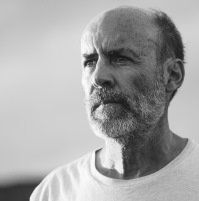
On the 10th, the approval of a law that restores Spanish nationality to some Spaniards who should never have lost it, and to their children, goes to congress.
I was in the Sahara and, as life would have it, now that so many Spanish flags are fluttering in the air, I had to carry the flag of all the armies that had moved from the Canary Islands to Villa Cisneros to guard those territories. At that time, a Spanish province.
I had to learn to handle and command a small group that drove a jeep with an anti-tank cannon, through those deserts full of mirages.
I had to be part of a small team that was harshly trained as vanguards, scouts. Suicide missions if necessary.
I had to be selected as a sniper along with another comrade. They trained us a lot, he was always better than me. If it had been necessary, he would have been the chosen one.
I had to be in charge of all the fuel depots, in charge, I mean, in them at night, when it was known that Franco had died.
I had to, once the government knew that the green march was inside the Spanish province and, likewise, Moroccan armies on the other side of the river, leave there. Flee.
And I had to get on the Plus Ultra with a human clinging to my leg, crying not to abandon them, and there was no press. I wasn't looking for a photo.
Since that day, I often cry about all of it. I learned to love the Sahara and its people, that was my downfall. Perhaps, and only perhaps, if that law is approved, I can once again feel something of being Spanish and look at that flag with which I marched shoulder to shoulder and in step with the legionaries and their goat celebrating that the traitor Borbón was visiting the Sahara. They had no idea what he was coming for.
Years later, I had him in front of me in La Graciosa, I called him "tú" and all hell broke loose. If I had called him what I had in mind, they would have shot me. Not by law. By Spaniards with Spanish sentiment.
Years later, I returned to the Sahara just as the MINURSO people were arriving. One day, while driving around, we visited a solitary Jaima. A woman received us, and as soon as she knew we were from the Canary Islands, she began to whimper because we had left and abandoned them, leaving them there alone. Facing them.
I am writing something like a book, I am stealing a small excerpt from it today:
It says:
Listen to me. I was 18 years old.
And the whole world was a hurricane of sand, lies, and betrayals swirling around me.
But I was in the eye of the hurricane.
A point of forced calm, of tense silence, while the desert tore itself apart.
To my left, the Green March: thousands of civilians from a newly created nation, so young it was my age, 18 years old, and already killing, advancing like a tide, pushed by Hassan II, who entertained everyone with his own internal miseries like a magician, while Spain negotiated behind the scenes. With him. Be aware, those negotiators were not leftists.
To my right, the Polisario: young men like me, but with thirst in their hands and a rage that already smelled of war. With a right in their hearts SELF-DETERMINATION.
A country of their own.
Behind, Madrid: politicians in suits signing agreements in secret in Agadir, selling out a people and their own soldiers.
Ahead, the ocean: the same blue mass that bathed my island, but which here was only a dead-end border.
In charge, of course, the Americans.
And in the center of all that, Me.
A boy from the Canary Islands in a uniform that no longer meant anything, guarding gasoline tanks that would soon belong to others.
Obeying orders from a country that was falling apart.
Hearing how the legionaries—those tough men who feared nothing—cursed the same generals who had sent them there. And they feared, yes, the loss of all their privileges, almost of caste. Those who said they did not fear death, began to fear life.
I was the witness.
The one who saw a meaningless flag being lowered and raised.
The one who felt the power falter when Franco died and no one knew what to do, faced with American pressure, the spurious interests at play, and the Bourbon looking for his opening.
The one who looked the Sahrawis in the eyes and saw the exact moment when trust turned into contempt.
I was not a hero.
I was a boy stuck to the sand, in the exact place where History decided to break.
Where an empire died with a last sigh and a new conflict was born amidst napalm bombings and night escapes.
Listen to me:
The hurricane passed by.
It swept away loyalties, promises, and flags.
But it left me standing there, in the quiet eye of the storm, with a truth seared into my soul:
that sometimes war is not just bullets;
it is the complicit silence of those who surrender without firing.
And that betrayal smells of gasoline,
of marsh,
and of the cold of the Sahara.
I did not fight in a war.
I witnessed how peace was sold.
And that marks more than any battle.
Even Heraclitus would have shuddered at the inaction.
Enough with superfluous little flags, TikTok, you want
Add La Voz de Lanzarote as a preferred Google source.
Stay informed with the latest current news.