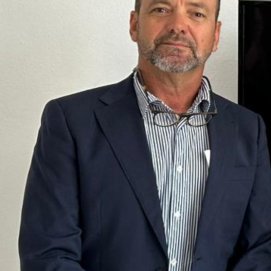
I have been visiting the elderly residence of the Hospital Insular de Lanzarote frequently for several months now. My mother resides there, and this has allowed me to get to know up close a reality that, on many occasions, goes unnoticed by those who have never crossed its doors.
It is true that the facilities are already a few years old, but it is also true that they have numerous services and amenities that convey well-being and quality of life. When one enters for the first time, the last thing they think is that they are accessing a socio-health center. The atmosphere is warm, calm, and human.
However, what really makes the difference are not the walls, nor the corridors, nor the furniture. It is the people.
As you move through the residence, you encounter nursing assistants, nurses, doctors, and the rest of the staff. They all have something in common: they greet you with a "good morning" or a "good afternoon," always accompanied by a smile. You can tell that they work with dedication, that they are comfortable in their work, and, above all, that they treat our elders with a affection and respect that is moving. On many occasions, they care for them as if they were members of their own family.
And that deserves recognition. Because when something works well, it should also be said. From my experience, the human service provided by this residence is five-star.
But it is also true that, sometimes, those who run public administrations forget about those small details that seem insignificant from an office, but which can mean a great deal to an elderly person.
A few days ago, my sister, who accompanies my mother daily, told me about a situation that made me reflect. There was an elderly person admitted who had very little family and did not have a television in her room. They asked my sister if she knew anyone who could donate one to make her days a little more bearable.
I confess that I found it hard to understand.
We live in a society where public administrations are capable of spending millions of euros on projects of dubious utility and, yet, sometimes they cannot find resources to cover basic needs like a television to keep company to a person who spends many hours alone.
We are not talking about a luxury. We are talking about company, entertainment, information, and, ultimately, about making the stay of those who already have enough to deal with illness, dependency, or loneliness a little more humane.
Faced with that situation, I decided to act. I spoke with some businessmen in the hotel sector, and we managed to gather around fifteen televisions to donate to the residence. The objective was simple. That, if a similar situation occurs again, no resident has to remain in an empty room without company due to the lack of a device that costs so little compared to other budgetary items.
I even offered to continue collaborating if more were needed at any time.
Sometimes we think that changing things requires large investments or grand speeches. I am more convinced every day that societies are also built by taking care of the small details.
Because it is precisely those details that make the difference between managing a service and caring for people.
Juan de León is spokesperson for Nueva Canarias-Bloque Canarista in the municipality of Tías.
Add La Voz de Lanzarote as a preferred Google source.
Stay informed with the latest current news.