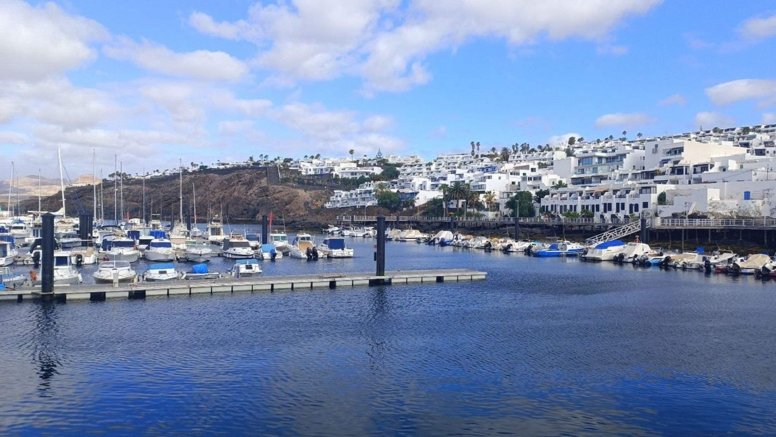
With an estimated budget of €145,208.27 (including IGIC), the Tías City Council has put out to tender the project for the renovation, modernization, and improvement of the outdoor space in the Varadero area of Puerto del Carmen, with the deadline for submitting bids being December 29.
The work will be carried out in the area near the Fishermen's Guild of La Tiñosa, with a surface area of 396.01 square meters where a sculpture will be placed in homage to the sailors. This space has great potential to become a point of social gathering and cohesion, benefiting residents and visitors alike, while also improving universal accessibility, the safety and security of the space, ease of movement, maintenance, and cleaning.
This involves, among other aspects, aesthetically improving the area and establishing places for rest, protection, and shade with three awnings and their structures. It will be an inclusive, safe, equitable, and cultural space, where pedestrian and user transversal circulation is improved, reducing the risks associated with travel and access on the routes.
According to the project, a strengthening and improvement of the connections and accesses between existing public spaces is also achieved. "The versatility of uses that converge in the intervention space has been taken into account, as well as considering how it relates to the existing network or potential public spaces at the city level".
"They have been designed with basic materials, elements, and systems, such as reinforced concrete for foundations, slabs, and benches, and slabs and tiles for pavements and finishes on pedestrian paths. The coverings will be exposed or rendered and painted white, like the finishes found in the immediate surroundings," he adds.
Furthermore, factory elements, metal structures, and textile tarpaulins have been chosen. The aim is also to eliminate corners or public health conflict points by creating planters in strategic locations, with native soil and vegetation.
Add La Voz de Lanzarote as a preferred Google source.
Stay informed with the latest current news.