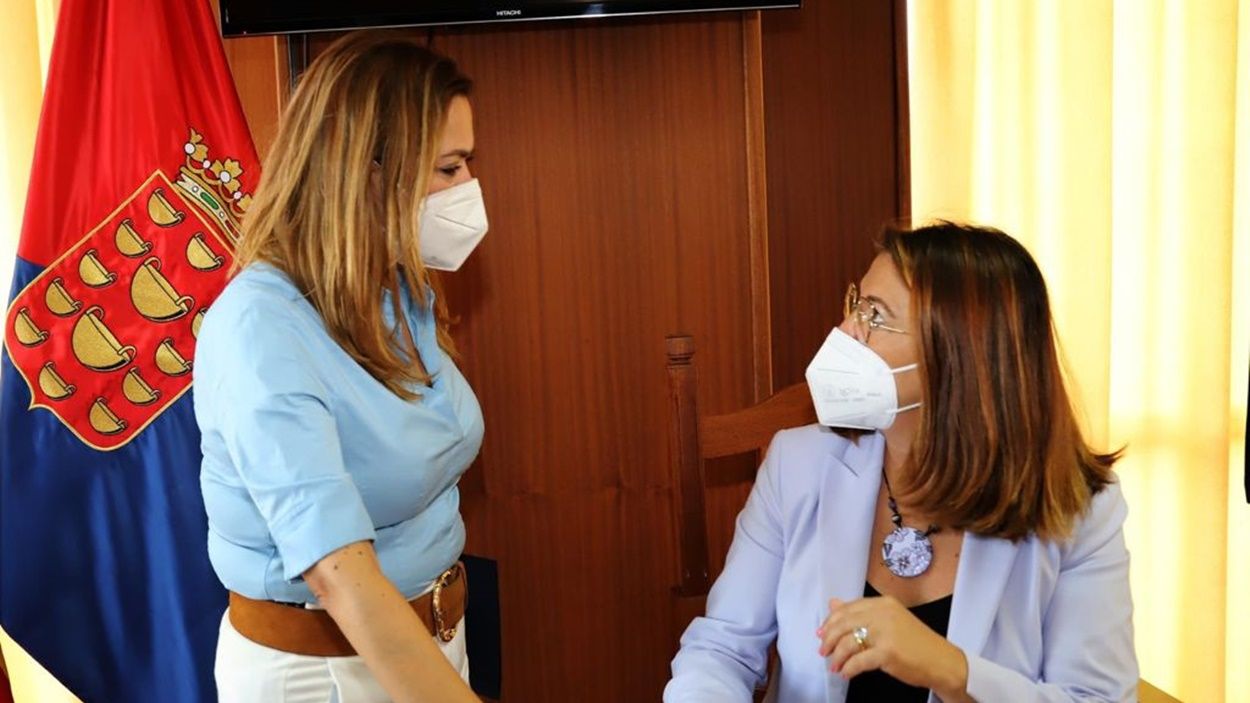
The Cabildo of Lanzarote will bring to the Negotiation Table the agreement for the approval of the Instruction that regulates the provision of service in the non-in-person modality, through the formula of teleworking among its public employees.
In this way, the Island Corporation will approve the regulation of teleworking for those public employees whose jobs are susceptible to being performed in this modality. In general, the weekly working hours will be distributed as follows: three days a week will be provided in a non-in-person manner through the teleworking formula and two days in person, in accordance with the usual working hours.
“The purpose of teleworking is to achieve greater efficiency in the provision of services, through a better organization of work through the use of technologies and management by objectives, while contributing to the reconciliation of personal, family and work life, in order to achieve a greater degree of job satisfaction, all without detriment to the dedication and quality of public service,” says the president of the Cabildo, Maria Dolores Corujo.
"We are currently immersed in a process of profound change in the use of technologies and the relationships between Public Administrations and citizens. As a result, the Spain Digital 2025 Plan is underway, one of its objectives being the digital transformation of the public sector," the institution adds.
For her part, the Minister of Human Resources, Isabel Martín, emphasizes that “the experience put into practice by the Lanzarote Cabildo, during the prevention and control of Covid-19, has allowed the application of teleworking as an ordinary form of service provision. Thus allowing us favorable conditions that advise advancing in the legal formalization of this modality.”
Voluntary and compatible with the in-person modality
The figure of teleworking is not configured as an ordinary form of service provision, but must be expressly authorized and compatible with the in-person modality, guaranteeing in any case direct in-person attention to citizens.
Likewise, teleworking may be requested in those positions that are considered susceptible to being developed in this modality, such as the study and analysis of projects; preparation of reports; advice; writing, correction and processing of documents; management of information and communication systems; analysis, design and programming of information and communication systems.
On the other hand, positions in registration and citizen information and service offices and all those that necessarily involve the provision of in-person services will not be susceptible to being performed through teleworking, among others.
With respect to the authorization of teleworking, this will have a maximum duration of one year, without prejudice to the request for an extension, as well as the possibilities of suspension, loss of effects, resignation or automatic termination.
Compliance with objectives
One of the most important aspects of the regulation of teleworking will be the establishment of compliance with objectives. In this sense, it will be up to the heads of service or heads of units to determine the specific tasks to be carried out in this modality of service provision, and to monitor the work carried out during it in accordance with the objectives and results to be achieved, the control criteria for the tasks carried out and the systems of indicators or measurement mechanisms that allow verifying that such objectives have been met.