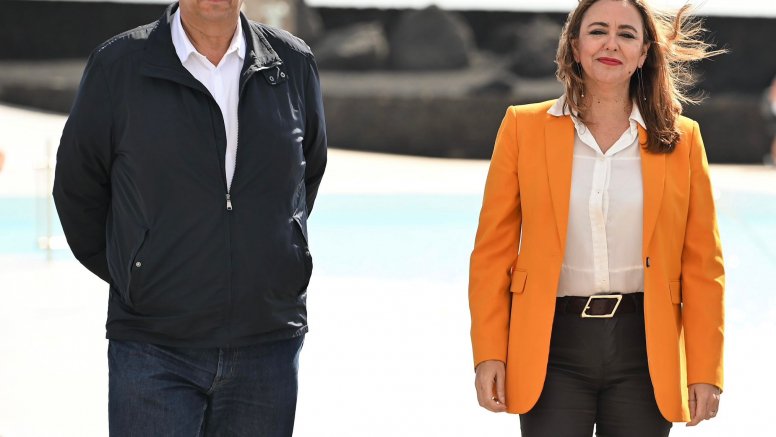
The Cabildo of Lanzarote participated in the V Cooperation Seminar of the INTERREG-MAC Project 'Saborea: Gastronomic and Sustainable Tourist Destinations', in Madeira, in which the partners from the different territories of the Macaronesia area, Canary Islands, Madeira, Azores, Cape Verde, Senegal and Mauritania, and whose general objective is to promote gastronomic tourism as a tool for the sustainable development of the MAC cooperation area.
The president of the Cabildo of Lanzarote, María Dolores Corujo, stressed the importance of "promoting cohesion between territories to promote international cooperation agreements that promote gastronomic tourism" and highlighted "the importance of the quality of the primary sector in the island's tourism".
The Councilor for Economic Promotion, Andrés Stinga, highlighted the important role of gastronomy "to promote the protection and conservation of the natural and cultural heritage of the territories, aspects highly valued when presenting this initiative to European projects."
The general objective of this plan is to "promote gastronomic tourism as a tool for the sustainable development of the MAC cooperation area. To this end, three specific objectives have been established: the creation of a common planning model, the integration of gastronomy as a key resource for the development of sustainable tourism and the promotion and marketing of associated destinations.
Eight destinations participate in this plan, Cape Verde, Senegal, Mauritania, Azores, Madeira, La Palma, Fuerteventura and Lanzarote, and a total of 15 partners; and has a budget of €2,440,000, of which 85% is co-financed by the ERDF.
The execution of this initiative ends at the end of 2023, although the project partners have asked Lanzarote to submit a new one for the next call.
The seminar consisted of the celebration of two round tables, one on the Strategy for the Promotion of Gastronomic Tourism, led by the Regional Director of Tourism of Madeira, in which the president of the Chamber of Commerce of Lanzarote, José Valle, participated, who highlighted "the great importance of this type of initiatives that promote the cohesion of the associated territories. In this context, connections are generated that favor the creation of unique gastronomic experiences, which manage to capture the attention of long-distance tourists. A tourist who requires a more complex proposal by combining several destinations."
The second table, on the adaptation of gastronomy to new trends, was moderated by the Director of the Chamber of Commerce of Madeira and included the presence of the President of the Wine Regulatory Council, Víctor Díaz, who contributed his vision of what has happened in the Lanzarote wine sector during the last ten years, explaining the "successful tandem" that has been the gastronomic development of the island linked to wine.
The agricultural producer Antonio Morales also spoke at the same table, who explained that "talking about gastronomic tourism goes far beyond restaurants, going out to eat. Of course it is an important part of the product, but it is increasingly important to offer experiences linked to the primary sector."
Add La Voz de Lanzarote as a preferred Google source.
Stay informed with the latest current news.