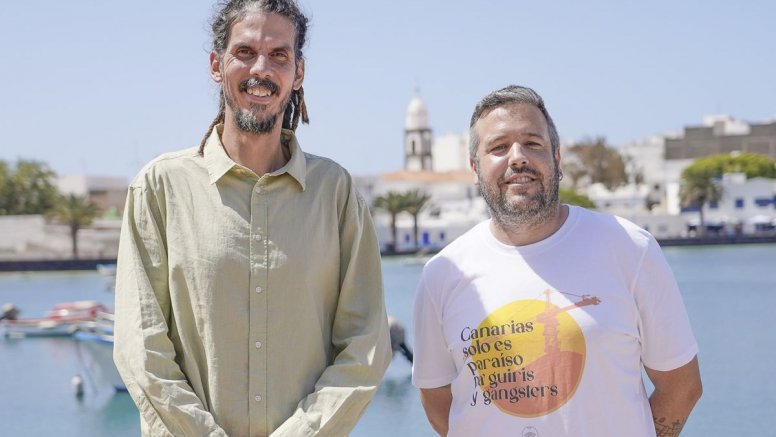
The spokesperson for Drago Canarias in Lanzarote, Rafa Jiménez, has spoken out about the decision of the Island Council to prohibit migrant minors from using public transport. As Jiménez explains, this is a "segregationist" measure that has nothing to do with the "solidarity and welcoming nature of Canarian society" and that "dilutes the responsibility of the institutions for the adequate distribution of migrants."
Jiménez pointed out that from Drago Canarias "we perfectly understand the tension generated by migratory pressure in a small town, without the appropriate support to generate good coexistence between migrant minors and the local population," but stressed that "we must never lose sight of the precarious conditions to which migrants are subjected, both in their countries of origin and in the macro-centers in which they are internally located in the Canary Islands, as well as the added vulnerability when this migratory project is carried out by children."
In this sense, the spokesperson in Lanzarote pointed out that "La Santa has historically been a small fishing village, and is currently bearing a large part of the migratory pressure of Lanzarote," and recalled that "the Municipal Council has been requesting the relocation of migrants housed in this center for several years due to its inability to withstand so much burden and the conditions in which the center is located."
"On the other hand, we want to support the statement issued last Tuesday, March 5, by the Solidarity Network with Migrants in Lanzarote," commented Jiménez, in which the decision adopted is described as "discriminatory and arbitrary" and added that "regarding the justification made by the Cabildo as a measure to protect migrants themselves, the statement argues that a vulnerable group is not protected by excluding it even more."
Likewise, Jiménez emphasized that "Drago Canarias has always defended that macro-reception centers are not a model of migration management that respects migrants and their rights" and that "the most appropriate way would be distribution in small centers spread throughout the archipelago and state."
In addition, Jiménez detailed that "in these smaller centers they could be given specialized attention, favoring their integration into Canarian society, so that if they choose to stay, they contribute to this country on equal terms" and added that "it must also be taken into account that improving care for migrants would generate jobs in the third sector related to legal, social, health, cultural mediation or educational assistance."
Add La Voz de Lanzarote as a preferred Google source.
Stay informed with the latest current news.