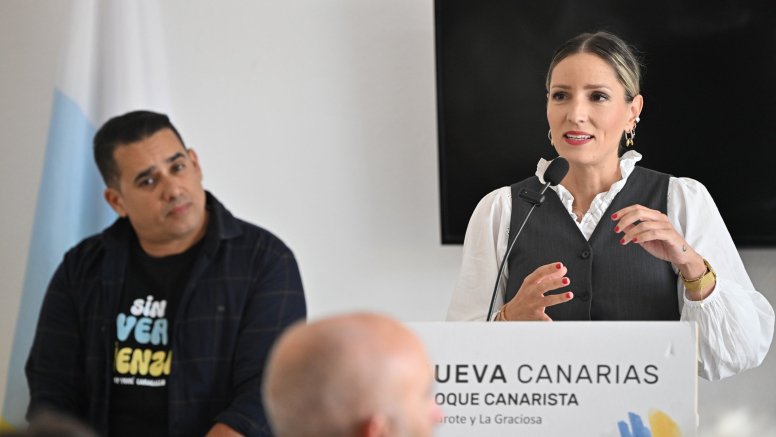
The Local Committee of Nueva Canarias-Bloque Canarista in Arrecife (NC-B) denounces that, one summer more, the capital of Lanzarote continues without bus shelters that adequately protect public transport users from the high temperatures recorded during this time of year.
The Canarian party laments that "this is a reality that hundreds of residents suffer daily, having to wait for the bus under an intense sun, with temperatures that usually exceed 30 degrees, without sufficient shade and, in many cases, without benches or areas where they can sit while waiting".
Added to this situation is the lack of real-time information on bus arrivals, which causes waiting times to be uncertain and even more oppressive, especially for the elderly, minors, people with reduced mobility, or those with health problems.
The spokesperson for NC-BC in Arrecife, Sheila Guillén, considers that "it is unacceptable that in the middle of 2026 public transport users continue to wait in conditions that put their well-being and health at risk. Extreme heat is already part of our climatic reality and public infrastructures must adapt to it".
For this reason, Guillén calls on the governing group of CC and PP to develop and execute a comprehensive plan for the renovation of bus shelters in the municipality, which includes the installation of structures with greater shade capacity, materials adapted to high temperatures, accessible benches, and spaces designed to guarantee the comfort and safety of all users.
Likewise, Guillén defends that this plan should incorporate universal accessibility criteria, facilitating the use of public transport for people with reduced mobility, as well as the installation of real-time information systems that allow for precise knowledge of bus arrival times and reduce uncertainty during the wait.
"Promoting public transport also involves offering dignified conditions to those who use it. We cannot ask citizens to leave their cars at home while the stops remain unprotected spaces against the heat, uncomfortable and inaccessible," concludes Sheila Guillén.
NC-BC insists that improving the bus shelters "should not be considered a secondary action, but a necessary investment to move towards a more sustainable, accessible city committed to the quality of life of its residents".
Add La Voz de Lanzarote as a preferred Google source.
Stay informed with the latest current news.