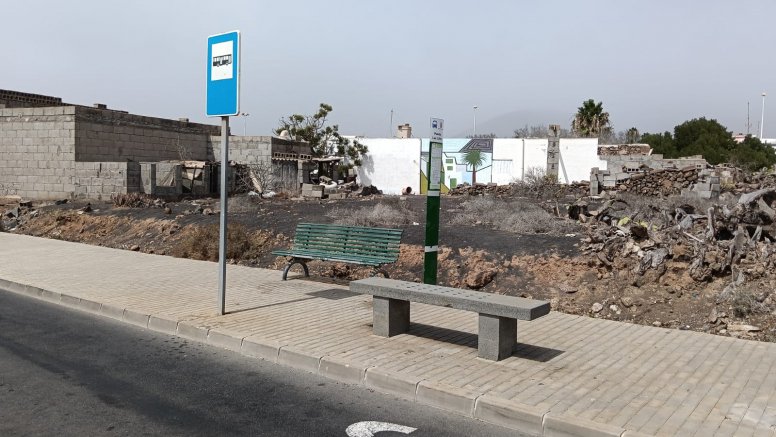
Marea Viva has raised its voice against what it considers an "unsustainable" situation in the municipality of Tías: the state of neglect of the bus stops. According to their complaint, the lack of adequate shelters exposes public transport users daily to rain, wind and extreme temperatures, endangering their safety and threatening their dignity. According to the party, "neighborhood complaints have multiplied in recent months and it is not just a matter of comfort, but of public health." They demand facilities equipped with basic elements such as effective roofing, lighting, access to electricity, air conditioning, information panels and even Wi-Fi connection, standards that—they recall—already exist in other municipalities in Spain and in cities around the world. As part of the Strategic Plan for the Rehabilitation of Rural Areas, the organization proposes the implementation of a comprehensive plan for the modernization and adaptation of the bus stops, respecting the architectural identity of Tías but incorporating technological and design solutions that improve the user experience. "If modern and functional bus stops already exist in other places, why not here? Are we less, or simply more conformist?" asks the spokesperson for Marea Viva, who directly appeals to the responsibility of the City Council and the Cabildo of Lanzarote. The municipal group insists that "this is not a superfluous expense, but an investment in well-being and social cohesion." "The citizens of Tías deserve 21st-century public transportation. No more excuses. It's time to act," they conclude.
With this appeal, Marea Viva points out that they reaffirm their commitment to the improvement of the municipality and encourages institutions to make Tías an example of accessibility, innovation, and respect towards its residents.
Add La Voz de Lanzarote as a preferred Google source.
Stay informed with the latest current news.