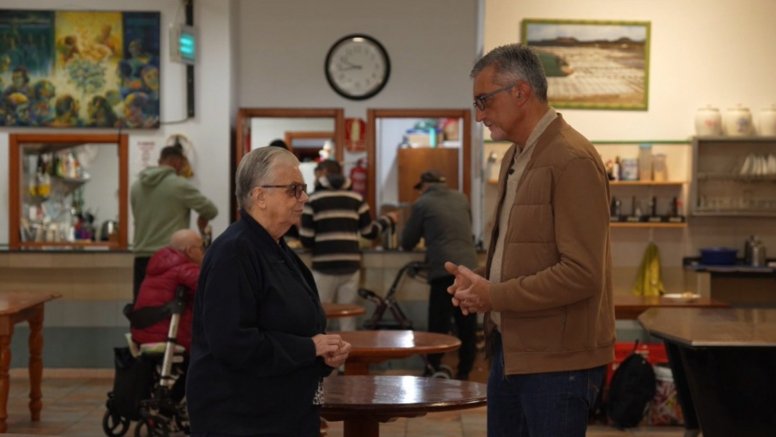
The Cabildo of Lanzarote, through the Social Welfare Area, consolidates an intervention model that places food donation as a structural part of its strategy for preventing food waste and assisting people in vulnerable situations, in collaboration with Mercadona and the Calor y Café association.
In quantitative terms, during the year 2025 a total of 26,000 kilos of food were channeled from Mercadona establishments in Lanzarote, while in the months of January and February 2026, 8,300 kilos have already been distributed. By centers, the Argana store contributed 10,100 kilos in 2025 and 4,400 so far in 2026, while the Puerto del Carmen establishment registered 15,900 kilos in 2025 and 3,900 kilos in the first months of the current year.
The president of the Cabildo of Lanzarote, Oswaldo Betancort, explains that this line of work responds to a planning where resource management, waste reduction, and social care are addressed in a coordinated manner, with measurable results, and adds that “the collaboration between administration, business, and the third sector allows for the conversion of surpluses into a useful resource for those who need it on the island”.
Likewise, the Minister of Social Welfare and Inclusion, Marci Acuña, points out that the project "is not limited to the punctual delivery of food, but rather is part of an organized system, with daily collections, classification, and distribution, which ensures that products arrive in optimal conditions to those who need them".
Acuña points out that "the value of the project lies in its ability to cover basic needs and, at the same time, generate spaces for participation that favor inclusion processes," highlighting the collaboration with an entity with a track record on the island such as Calor y Café.
Daily collection and social impact
The project also incorporates a social intervention dimension by linking food management with programs aimed at people in recovery and reintegration processes. These participate in collection, organization, and support tasks, which contributes to generating routines, responsibilities, and practical skills linked to employment.
Each day, products are removed from points of sale and transferred to the Calor y Café facilities, where they are classified and allocated both for the preparation of dishes in the soup kitchen and for distribution among families in difficult situations, within a system that allows for the use of products in good condition that are outside the commercial circuit.
Add La Voz de Lanzarote as a preferred Google source.
Stay informed with the latest current news.