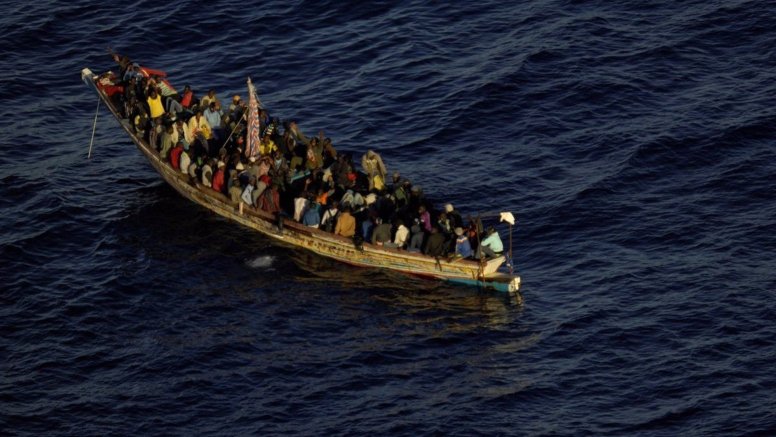
The so-called "Atlantic route", which starts from the coasts of West Africa towards the Spanish archipelago of the Canary Islands, is one of the main migratory corridors despite also being one of the most dangerous in the world. Behind the increase in departures is a combination of political, economic, social, climatic, and security factors.
The migratory flow on this route has skyrocketed in recent weeks. The Canary Islands received 11,037 irregular immigrants in the first half of November alone, according to data from the Spanish Ministry of the Interior.
According to the International Organization for Migration (IOM), at least 454 people have lost their lives or are missing on the West African Atlantic route since the beginning of 2026.
The main points of clandestine departures towards the Canary Islands are distributed along the coasts of Senegal, Gambia, Mauritania, and Morocco.
Why has the migratory flow surged? Below, five keys to the increase in migratory pressure in the region.
The Sahel crisis and the regional factor
Beyond the particularities of each country, there are several common factors that explain the evolution of the Atlantic route, especially the Sahel crisis.
The expansion of armed violence, as is happening in Mali, and regional instability generate forced displacements and population movements towards Mauritania, Senegal, and Morocco.
Furthermore, the progressive closure of other migratory routes, such as the reinforcement of controls in the western Mediterranean and on land borders, favors the search for alternative routes and pressure on the Atlantic corridor.
Climate change and fishing resources
Environmental degradation and the loss of livelihoods is another fundamental element. Desertification, coastal erosion, and pressure on fishing resources exacerbate the vulnerability of numerous communities.
The crisis particularly affects coastal communities. The overexploitation of marine resources, competition from industrial fleets, and the reduction in catches are damaging the fishing sector in countries like Senegal and Gambia. For many families, it means losing their main means of subsistence.
There is also a direct relationship between these communities and Atlantic crossings: their inhabitants know the sea, have boats, and maintain networks that can facilitate the organization of departures towards the Canary Islands.
The result is a regional migratory dynamic in which movements do not respond to the circumstances of one country, but to a combination of crises affecting several territories and constantly shifting departure points.
Economic crisis and social deterioration
The enormous economic inequality between Europe and West Africa is another structural factor of emigration.
The average per capita income in the European Union stood at around 41,570 euros per year in 2025. It is 46 times more than in Gambia (900 euros/year) and 22 times more than in Senegal (1,900).
Economic precariousness, lack of opportunities for young people, and uncertainty about the future fuel irregular migration.
The profile of migrants has transformed. They are no longer exclusively vulnerable young people, but students, employed individuals, and even entire families.
The causes are repeated in Senegal, Gambia, and Mauritania, while Morocco is a point of origin for irregular migratory flows but also a transit country for migrants from Sub-Saharan Africa.
The increased surveillance on the Moroccan Mediterranean coast, following the serious migratory incident last July – when more than 80,000 people irregularly entered the Spanish city of Ceuta (North Africa) – has conditioned movements and contributed to the diversion of the flow towards the Atlantic route.
The outsourcing of European policies
The outsourcing of migratory control is one of the pillars of the European Union's strategy. Its objective is to transfer part of the control of migratory movements outside the community territory through political agreements, financing, and cooperation with countries of origin and transit.
These agreements have strengthened surveillance and interception capabilities, but have not eliminated the structural causes of migration.
Mauritania is one example of this policy. Its geographical position, between Senegal, Mali, and Morocco, and its extensive Atlantic coast make it a strategic partner for curbing departures towards the Canary Islands.
In 2024, Brussels signed a migratory partnership agreement with Nouakchott that included 210 million euros for border management and the fight against irregular migration.
Spain has also intensified its cooperation with Senegal and Gambia. In 2024, the Government signed agreements to promote circular migration, strengthen police cooperation, and promote legal employment channels.
Faced with the new surge in arrivals in the Canary Islands, Madrid has called for greater collaboration from Senegal and Gambia. The Senegalese president, Bassirou Diomaye Faye, has advocated for intensifying coastal surveillance but also for adopting economic measures and reactivating agriculture and fishing.
The European strategy also includes strengthening the role of Frontex, the community border agency, and cooperation with the security forces of African countries.
Morocco and the control of routes to Spain
Morocco considers itself a strategic partner for migratory control of routes to Spain, and therefore to Europe, both in the Atlantic and the Mediterranean.
Between 2021 and 2024, the European Commission allocated approximately 222 million euros to Morocco in the area of migration management and the fight against trafficking networks.
In 2025, a new regional package of 675 million euros for North Africa was approved. Within this program, 160 million are allocated to support the Moroccan immigration and asylum strategy.
Add La Voz de Lanzarote as a preferred Google source.
Stay informed with the latest current news.