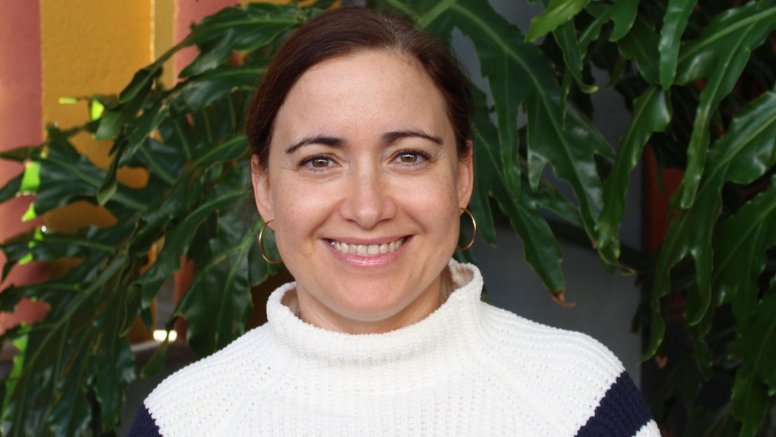
The professor and researcher of the Area of Genetics of the University of La Laguna, Rosa Fregel, is one of those responsible for genetically analyzing the corpses found in the archaeological site of San Marcial de Rubicón, the first city founded by the European colonizers in Lanzarote and in the Canary Islands 620 years ago.
The Doctor of Biology is genetically studying the biological remains found by a group of researchers during the archaeological excavations of San Marcial. Specifically, her work is based on obtaining the DNA of these individuals to be able to discover data such as their molecular sex, more complicated to obtain in neonates or infants, their geographical origin, or even their kinship relationship as it is a small cemetery.
In 2023, a group of researchers found a total of ten corpses in the first colonial settlement in Lanzarote. That same year, they were able to confirm that it was a burial area, a necropolis. During recent years, they found the remains of seventeen people. Of the bodies analyzed, four children have already been detected.
Fregel explains that as in the San Marcial de Rubicón site, the mahos, Lanzarotean indigenous people, begin to converge with the European colonists and with aborigines who were transported as slaves.
"The aboriginal populations of the Canary Islands show similarities with populations from North Africa," the researcher shows. Fregel reports that when "comparing the aboriginal people of the Canary Islands with ancient populations from different parts of the world, those they most resemble are ancient populations from North Africa" and that the same happens when the aboriginal people are genetically compared with current populations, those they most resemble are populations from Northwest Africa.
The bones help to define their profession
The geneticist Rosa Fregel explains that after excavating the bones in the necropolis of San Marcial de Rubicón, the human remains have been analyzed by a group of specialists in Archaeology. "They determine the sex of the individuals, if they had any disease or the marks on their bones that might speak of the profession they had or the activities they performed," points out the expert.
Once the biological remains have been analyzed from other disciplines, archaeologists choose the remains that are in the best state of preservation and allow obtaining their DNA and hand them over to the geneticists. "The analyses we perform are destructive, that is to say, the piece of bone or tooth that they give us to perform DNA studies will be destroyed in the extraction process," he continues.
The bones in which there is a better genetic quality are "the dental pieces or bones that are extremely dense, such as the petrous portion, a part of the skull that is in the inner ear area or else the distal phalanges, which is the last phalanx of the toes and fingers, very small and compact bones that preserve DNA very well".
Problems in genetic conservation
Being in an initial phase, in their laboratory they are responsible for corroborating through molecular techniques the sex assigned by the archaeologists. For the moment, samples from ten individuals have already been analyzed and they have in the laboratory the challenges of three others.
"The problem in San Marcial de Rubicón is the same one we have in almost all historical sites: the poor conservation of archaeological material," indicates the doctor in Biology. While they have already been able to confirm the genetic sex of some individuals, others need more genetic material.
Fregel states that the project also needs more time to be able to obtain the sufficient genetic information and establish kinship ties. "Once we have the information for each of the individuals, we will be able to determine what their most probable geographical origin is," he adds.
"Through DNA, we will be able to decide if they are more similar to the aboriginal populations of the Canary Islands, of the Iberian Peninsula, of North Africa or of Sub-Saharan Africa," explains the geneticist. The laboratory already has sufficient information about the aboriginal population of the archipelago, which can be compared with the DNA sequences of the analyzed individuals.
Regarding the present, the geneticist shows that the current population is a mixed population, which combines the components of the aboriginal population, with that of the settler population and another associated with the slave trade in the Canary Islands.
Are genetic studies reliable online?
Regarding the genetic studies that have become fashionable on social media, Fregel explains that they are "precise" at a continental level, but that they become "increasingly imprecise" in more regional spaces. "To differentiate what percentage of someone's origin is associated with Spain or is associated with Portugal "is very complicated because they are very close populations," he points out.
The doctor advises not to take the numerical values obtained by these studies as "an absolute truth", since on a smaller scale the error tends to be greater. "It's something interesting to do and discuss with the family, but it's also not something that should be used as some type of identity mechanism", she adds.
Migrate: a human quality
"Human populations have always been migrant populations. When one studies the current and ancient populations of all regions of the world what we see are migratory processes," points out the researcher. "It is a quality that human populations have, that we always want a better life and sometimes a better life involves migrating, involves seeking a new horizon," she concludes.
Add La Voz de Lanzarote as a preferred Google source.
Stay informed with the latest current news.