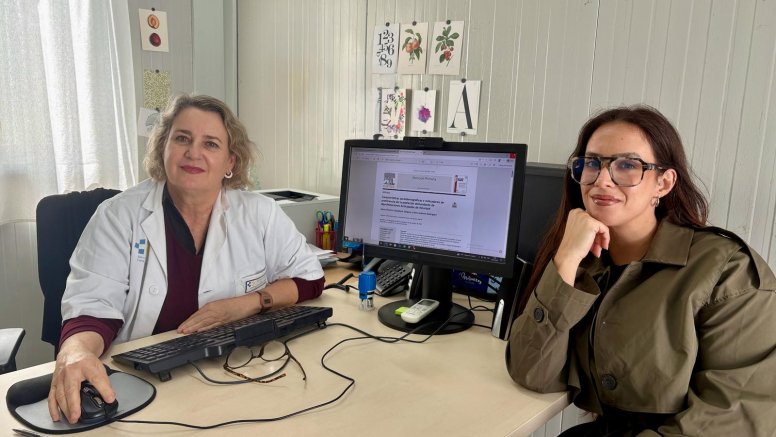
The persons in charge of the Register of Advance Directives (MAV) and of the Research Support unit of the Management of Health Services of Lanzarote have published a scientific article about these advance directives in the journal Primary Care.
The scientific article, titled Sociodemographic characteristics and preference indicators of the population requesting Advance Directives, prepared by María Victoria Castañeyra and Xenia Cabrera analyzes the sociodemographic profile, preferences, and degree of satisfaction of the 527 people who registered their living will in Lanzarote during the year 2024.
The study reveals, first of all, that the age range of users who request Advance Directives (AD) is very broad and ranges between 19 and 101 years, while the average age stands at 59.51 years.
Likewise, among the main results, the study identifies as the predominant profile that of middle-aged or elderly women with a medium or higher educational level. Of the registered Advance Directives, 354 were submitted by women, compared to the 173 men who signed their living will that same year.
Reasons to register the MAV
Personal autonomy and the possibility of making their own decisions are the main reasons cited by more than 70% of people to formalize this document. However, the motivation of men and women to make the MAV shows significant differences. While women show a greater tendency to formalize it to avoid suffering, in the case of men the reason responds mainly to the desire to be them who make the decision.
On the other hand, the study reflects a high interest in organ donation and a high acceptance of the possibility of euthanasia in certain clinical situations, as well as a very high level of satisfaction with the care received, close to 99%.
The results collected by the article provide relevant evidence about the real use of this registry in the insular scope and highlight the need to reinforce the information and training of professionals and citizens about Advance Manifestations of Will, as a key tool to guarantee patient autonomy in decisions related to the end of life.
The article has been published in open access, which allows its free consultation by professionals and the interested public.
Profile of the demonstrator
Regarding the nationality of the applicants, 71.9% were born in Spain and 28.1% come from other countries. German and English citizens predominate among foreigners who have registered their MAVs.
On the other hand, 38.5% of the people who made the living will have declared to possess secondary studies and 37.6% university studies. Likewise, it is relevant that 20.9% of the grantors are healthcare professionals or workers in the sector.
47.6% of the protesters have accessed information about MAVs through friends and 32.3 percent state that they learned about it through posters, informative leaflets, workshops, the SCS website, or the media. 11% of users have undergone the MAV at the recommendation of healthcare personnel
Disclosure of the MAV
The Advance Directives document contains the instructions that healthcare personnel must follow when the patient can no longer express their consent and is considered a guide that helps healthcare professionals in making difficult decisions, close to the end of life.
The Management of Health Services of Lanzarote currently has three MAV registration points, at the Doctor José Molina Orosa University Hospital, at the Titerroy Health Center and at the Valterra Health Center.
The registered nurses also develop a dissemination work throughout the entire year with talks and workshops in high schools, the School of Nursing, associations, nursing homes, NGOs and among healthcare professionals.
Add La Voz de Lanzarote as a preferred Google source.
Stay informed with the latest current news.