A man in his thirties, dressed in sportswear, makes live videos from platforms like YouTube and Twitch commenting on video games from an armchair. In the middle of a virtual conversation with thousands of followers, he sends a message and says that his friends "had a lot of fun taking girls who were drugged" out of a party. It was the year 2022, and el Xokas, whose real name is Joaquín Domínguez Portela, closed that year surpassing three million subscribers on Twitch, despite being publicly accused of promoting rape culture to a mostly male and very young audience.
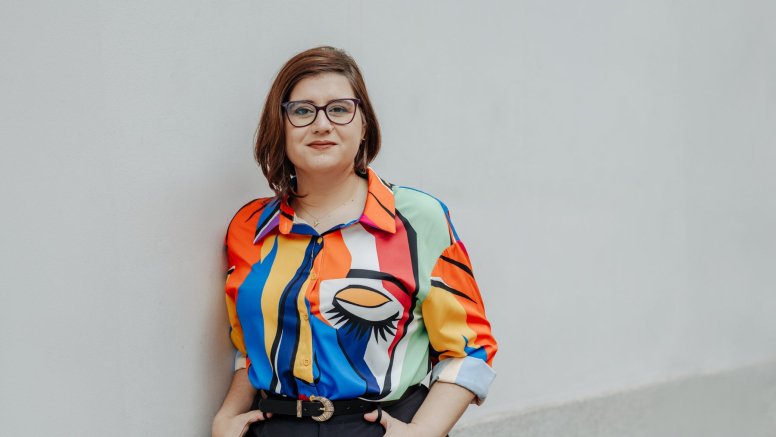
"The kids spend hours and hours and hours watching these gentlemen talk, play video games, and between broadcasts, these values and phrases are being instilled," says social educator and specialist in Gender Violence, Marina Marroquí, a few days after her visit to Lanzarote as part of the Lanzarote en Familia workshops.
This expert, who has 100,000 followers on social media and dedicates part of her life to giving gender perspective training in educational centers, points out that the "deceptive policy" of the far-right in Spain uses the loudspeaker of influencers, gamers, and TikTok personalities to spread their denialist discourses at greater speed, leaving victims defenseless.
A ridicule of violence against women
"We are talking about a normalization and even a ridicule of violence against women," explains Marroquí, who points to the statements of Vox leader Santiago Abascal, on *La Revuelta*, where he mocked the legislative trends promoted by feminism to make cities safer and more habitable for women and blamed them for the difficulties in building housing in Spain.
"Architecture does have to have a gender perspective because it has been shown that poorly lit alleys increase the chances of us being raped," exemplifies the educator.
This ridicule of violence against women and the rise of parties that deny gender-based violence reaches adolescents and their classmates with special force. "Adolescents now pick up these phrases and believe they are arguments that make them grow more and attack more," highlights Marroquí, who explains that some political discourses support the most reactionary positions, which verbalize and attack women.
"In adolescence, that stage in which you prioritize and evolutionarily need to fit in, survive, and be accepted, if the environment becomes more sexist, many adolescent girls will have to embrace that sexism to survive," warns the expert in gender perspective.
A discourse that resonates with the youngest
"Now there is going to be a very big setback for women," reveals Marina Marroquí, who explains that despite the fact that in the years 2018, 2019, and 2020 it was stated forcefully that young women were more feminist, this reality is dissolving "very quickly."
The educator warns that "social networks are the great fuse for transmitting far-right messages." However, she explains that these arguments resonate because the educational system does not provide a complete affective-sexual education based on human rights. "The goodwill of some teacher is taken for granted, but not as a regulated methodology," she points out.
This lack of education is met with pornography becoming a means of sexual education for young people. "Pornography can be summarized as multiple rapes, incest, pedophilia, and violence and humiliation towards women," and "it reaches them when they are building their entire value system." Marroquí points out that if from the age of eight, their value system is based on "violence as fun and desire," this translates into "much more sexual violence, much more gender-based violence, and violent boys."
This normalization of violence also affects how young women assume being victims of rape. "It is much harder for me now than it was five years ago for a girl to admit to being subjected to a tremendously sadistic rape," she points out.
That violence be hidden again in the home
This reactionary movement against feminist movements directly affects women and their ability to report the different forms of violence they suffer. "What does the increase in reports mean? It means that women had that social, judicial, and political support to be able to speak out," explains Marina Marroquí, who adds that these reports were only reduced for two years: in 2009, at the height of the economic crisis, and in 2020, due to the lockdown.
The expert fears that the housing crisis and the denial of gender-based violence will mean a setback. "If you can't afford to rent to leave and escape your abuser and housing and protection resources disappear, how are those women going to leave?", she warns.
In this invisibilization of violence, the social educator is clear that the use of concepts such as "domestic violence," defended by far-right parties, are not chosen at random. "What they want is for women's suffering to once again remain silent within the home," she concludes.
Add La Voz de Lanzarote as a preferred Google source.
Stay informed with the latest current news.