The owner of the bar Baifo Gastrobar & GourmetStore, Alejandro Betancort Hernández, has made public a letter addressed to the mayor of Arrecife, Yonathan de León (Partido Popular), in which he has proposed a debate on "the lack of fit that proximity cultural expressions suffer within regulatory frameworks designed for large shows or massive nightlife".
In his letter sent to de León, Betancort argues that live music within the restaurant industry is not solely an entertainment offering, but rather acts as "a driver of the local economy, offers a living showcase for local creators, and enriches the public space experience on a human scale".
Faced with this reality, he adds that "rigid sound regulation often places small establishments in a bureaucratic limbo, where administrative requirements are disproportionate to the actual nature of the activity". In the letter, the businessman addresses "the disconnect" between regulation and the commercial reality of Arrecife.
A "large-format" concert
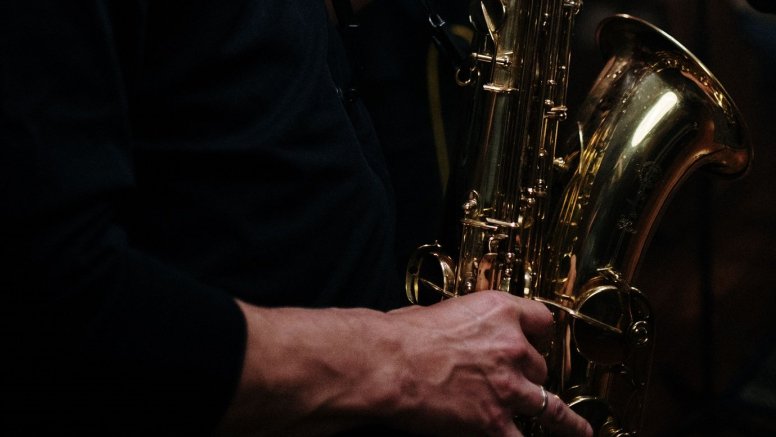
In this document, Alejandro Betancort explains that while a large-format event or mega-concert "usually requires a technical deployment, a high budget, and a notable acoustic impact on an entire neighborhood, small-format live music (an acoustic duo, a saxophonist at a dinner, a small performance during vermouth) encounters a bureaucratic wall under the premise of noise pollution, depriving the local fabric of accessible and close culture".
The owner of the aforementioned gastrobar points out that although he understands that ordinances "must ensure the tranquility of neighbors and prevent noise pollution". However, he adds that current regulation "treats a large-scale nightlife event the same as an acoustic or minimally amplified performance". "By demanding the same bureaucratic procedures, high fees, licenses, and expensive acoustic studies from a family bar or restaurant as from a nightclub, the rule ends up stifling low-impact initiatives that would bring life to the city," he continues.
Betancort explains that for a small establishment like his, assuming these costs or the administrative complexity is unviable. "Adapting a venue to the requirements that public entertainment regulations often demand (complex acoustic studies, approved limiters, specific event insurance) implies an unassumable investment," he continues. "This creates a tacit monopoly of musical offerings in favor of large promoters or occasional public events," he highlights.
A live concert, "a decibel level similar to a full terrace"
In this letter, the owner of Baifo Gastrobar & GourmetStore indicates that "an unplugged live concert or one with very reduced amplification at lunchtime produces a decibel level similar to or even lower than that of a full terrace speaking loudly." "Treating the emission of background music or an acoustic guitar the same as that of an outdoor stage with high-power speakers is a conceptual disproportion," he insists.
In this regard, he points out that by restricting small-format performances, a complementary income stream for local musicians is eliminated, and citizens are forced to consume culture only at large events, where ticket prices or overcrowding exclude many residents. "The small format revitalizes the restaurant business without transforming the urban space into an aggressive nightlife area," he states.
The businessman argues that it is possible to reconcile neighborhood rest with cultural dynamism and proposes several measures:
- Creation of the figure of "Small Format/Acoustic Cultural Space": Distinguish in the municipal ordinance between mass public entertainment and low-impact musical entertainment, with simplified procedures through a responsible declaration.
- Limits based on actual decibels and commercial hours: Allow reduced-format performances with a clear decibel limit (for example, adapted to the background noise of the street) and strictly limited to commercial hours (until 10:00 PM).
- Municipal catalog of local cultural venues: Promote a registry of establishments; these registries are already being implemented in other cities where bars and restaurants can join a municipal cultural network if they comply with coexistence minimums, without needing large party room licenses.
Add La Voz de Lanzarote as a preferred Google source.
Stay informed with the latest current news.