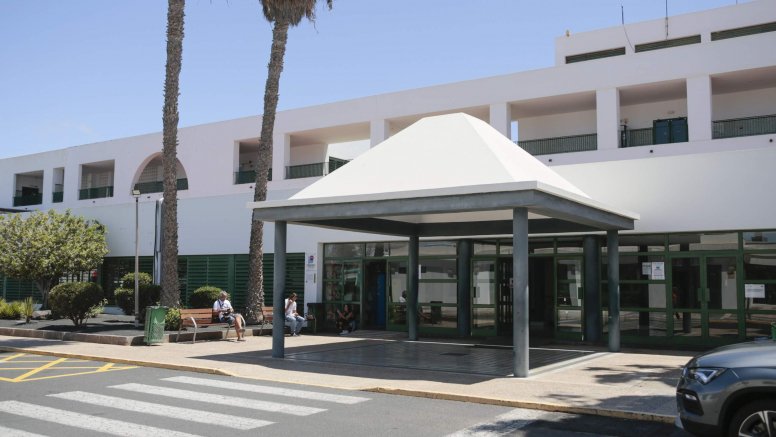
The midwives of Lanzarote will join the concentration announced by this collective in Tenerife and Lanzarote, being the only non-capital island that will celebrate this demonstration to claim new hirings and salary improvements.
The concentration will take place this Tuesday, May 5 at 11:00 AM in front of the main entrance of the Hospital José Molina Orosa.
According to Yasmina Martín, midwife and spokesperson for the Canary Association of Midwives (ACAMAT), who explained to La Voz, "we are running out of midwives because not all those who could be trained are being trained, since university hospitals are not making room for those positions and the few midwives who are graduating are not being given decent contracts". Martín recalls that this was one of the first specialties in Nursing, along with Mental Health.
Likewise, she denounces that the ratio of midwives in the Canary Islands is very low, assuring that there is at least only one midwife per health center "for everything that the Basic Zone (municipality) encompasses". "This is causing precariousness in all health from birth," she states. It should be remembered that the midwife not only accompanies the woman and the baby during childbirth, but does so during the rest of the stages that she goes through for the rest of her life until old age, such as, for example, during menopause.
Therefore, the collective criticizes that "there are no midwives who do health education, who accompany sexuality, that there is sex education done by midwives with respect to schools and they are only dedicating themselves to leaving midwives in the delivery room". Furthermore, "on the wards, nurses work when those positions can be used to be occupied by midwives".
This demonstration is also being carried out to request salary improvements, as they denounce that the difference with other autonomous communities is notable. "There is an abysmal difference in working as a midwife in the Canary Islands compared to working in the Basque Country, there is a difference of 600 euros in a monthly payslip," assures the spokesperson.
A deficit of 300 midwives in the province of Las Palmas
The College of Nursing of Las Palmas has explained this Monday that to approach the average European rate of midwives per 100,000 women of childbearing age, the Canary Islands Health Service would need to have 300 more midwives in the eastern province.
Currently, Canary Islands has the lowest rate of midwives in Europe, which means that International Day of the Midwife cannot be just a celebration of the vocation, knowledge, and commitment of midwives to the health of women, families, and the community, but also a day to raise their voices. The International Confederation of Midwives (ICM), a global organization representing over 135 associations in 115 countries, states that there is a global deficit of one million midwives. This means that millions of people worldwide lack the safe and respectful care they need and deserve.
Of that million more midwives needed worldwide, 300 correspond to the islands of Gran Canaria, Fuerteventura, Lanzarote, and La Graciosa. Incorporating them would mean betting on more comprehensive and personalized specialized care in sexual, reproductive, maternal, neonatal, and adolescent health. It would also mean responding with greater guarantees to new realities, in the face of more complex births, and would allow for safe and respectful home monitoring of pregnancies and postpartum periods.
With more midwives, the Canary Islands' healthcare system would have more reference health agents in peri/menopause, given the growing demand for care during climacteric. It would help with perinatal grief care, protecting and promoting sexual and reproductive rights, care regarding contraception, fertility treatments, care for pregnancy interruptions, and improving population screening programs for cervical cancer.
Add La Voz de Lanzarote as a preferred Google source.
Stay informed with the latest current news.