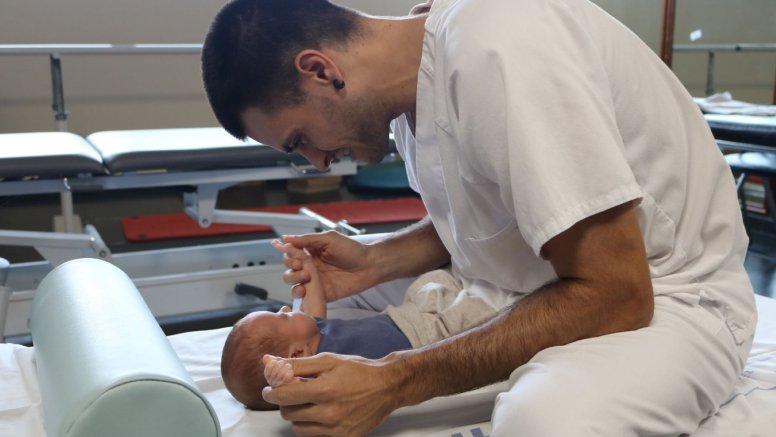
The physiotherapists of the Doctor José Molina Orosa University Hospital, attached to the Ministry of Health of the Government of the Canary Islands, have increased their care activity by 8.5 percent in the last year. Between January and August 2026, the professionals have treated 2,182 patients and have carried out 55,097 treatment sessions, compared to the 50,785 sessions registered in the same period of 2025.
On the occasion of World Physiotherapy Day, celebrated every September 8, the Lanzarote Health Services Management highlights the work carried out by these professionals within the care teams and their contribution to functional recovery and the improvement of patient autonomy after an illness, injury, or surgical intervention.
The data reflect the growing activity of a service that participates in the care of patients with very diverse profiles and needs and that carries out its work both in the physiotherapy areas and in the hospitalization units.
A fundamental role in stroke recovery
This year, the celebration of World Physiotherapy Day focuses on cardiovascular diseases and cerebrovascular accidents or strokes, pathologies in which physiotherapy plays a relevant role in the recovery process.
At the Molina Orosa Hospital, physiotherapists participate in the rehabilitation of patients who have suffered a stroke, with treatments aimed at recovering functional capacities and promoting mobility and autonomy. During 2025, 200 patients were treated after suffering a stroke, while in the first eight months of 2026, a total of 113 patients have already received physiotherapy treatment.
The intervention is adapted to the characteristics and evolution of each person and is part of the multidisciplinary approach necessary for recovery after a cerebrovascular accident.
Therapeutic options
Physiotherapists intervene in the functional recovery of patients with neuromuscular diseases, musculoskeletal pathologies, injuries, and disabilities that affect mobility, as well as in the recovery processes after a cerebrovascular accident and after surgery or trauma.
They also participate in the treatment of patients with respiratory and cardiovascular diseases, as well as in the care of people with neurological diseases, in pediatric rehabilitation and in those situations that require recovering or maintaining mobility and functionality.
The Physical Medicine and Rehabilitation Service also has specific physiotherapy units for the treatment of lymphedema in women operated on for breast cancer, pelvic floor, and vestibular pathology, which addresses the treatment of peripheral and central vertigo.
Innovation applied to recovery
The service has recently incorporated a non-invasive radiofrequency treatment, which, together with the dynamic work of physiotherapists, promotes cell regeneration, reduces pain, decreases inflammation, and facilitates the return to normal activity.
The incorporation of new technological resources allows for the expansion of the service's therapeutic possibilities and the reinforcement of functional recovery processes.
Likewise, the next incorporation of a rehabilitation exoskeleton is planned, which will be the first of its kind to be available at the Doctor José Molina Orosa University Hospital and will expand the resources dedicated to mobility and functional recovery work.
Activity in Primary Care
The activity of physiotherapists in Primary Care is also noteworthy; last year these professionals attended a total of 6,290 patients and carried out 17,410 sessions, while up to August of this year, 3,966 patients have been attended with a total of 10,229 sessions in the different health centers and clinics in the basic health zones of the island.
Add La Voz de Lanzarote as a preferred Google source.
Stay informed with the latest current news.