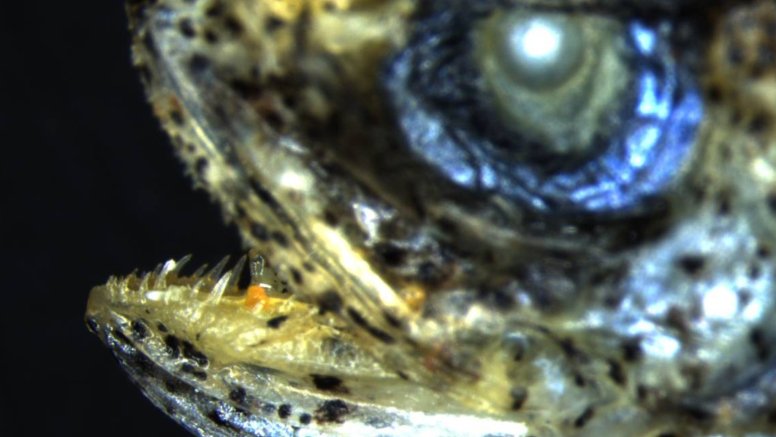
Research personnel from the Spanish Institute of Oceanography (IEO-CSIC) has documented for the first time in Spanish waters the presence of the fish 'Bregmaceros atlanticus', known as the antenna codlet, based on the study of three specimens found in the Canary Islands.
The research, published in the journal Marine Biodiversity and developed in collaboration with the universities of Vigo and La Laguna, also suggests that the distribution of this species could be restricted to the Atlantic Ocean, contrary to the theory previously held that it inhabited the Atlantic, Indian, and Pacific Oceans.
Two of the specimens were captured off the coast of El Hierro during the oceanographic campaign CETOBAPH, carried out in 2012 aboard the oceanographic vessel Cornide de Saavedra, while the third appeared stranded on a beach in southern Tenerife in 2024, marking the first documented case of stranding for this species, the IEO reported this Monday in a statement.
Rafael Bañón, a researcher at the IEO's Oceanographic Center in Vigo and the study's lead author, stated that the results obtained support the hypothesis that the actual distribution of this species "could be limited to the Atlantic."
To confirm the identification of the specimens, the research team combined the study of their morphological characteristics with molecular genetic analyses using COI gene sequencing, internationally employed for species identification.
As a result of the work, a new genetic sequence has been incorporated into international databases.
The antenna codlet is a small pelagic fish that inhabits oceanic and mesopelagic waters, generally between the surface and several hundred meters deep, the research center adds, also noting that its identification has historically been complex due to its small size, its lifestyle, and its similarity to other species of the same genus.
The genetic analysis carried out has also revealed the existence of distinct genetic groups that could correspond to species still pending taxonomic review, which, according to the authors, highlights the need to deepen the study of the genus 'Bregmaceros'.
The researchers have also highlighted the value of the Canary Islands waters for the study of deep marine biodiversity and have pointed out that the stranding recorded in Tenerife could be related to oceanographic processes characteristic of the archipelago, such as the interaction between currents and oceanic eddies that occasionally displace mesopelagic organisms towards the coast.
Add La Voz de Lanzarote as a preferred Google source.
Stay informed with the latest current news.