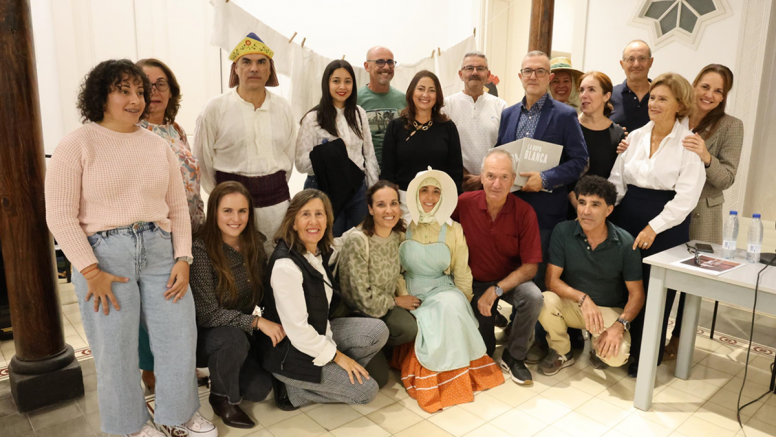
The Cabildo of Lanzarote, through its Publications Service, celebrated on the afternoon of this Monday, December 16, the presentation of the book La ropa blanca. An approach to traditional underwear of Lanzarote between the 18th and 20th centuries, by the Lanzarote writer Ricardo Reguera Ramírez. The event took place at the Casa de la Cultura Agustín de la Hoz, in Arrecife, and had a remarkable attendance of public interested in the rescue of the island's cultural heritage.
The councilor of the Publications Service of the Cabildo, Ascensión Toledo Hernández, highlighted during her speech the importance of disseminating the traditions and customs that make up the history of Lanzarote and La Graciosa. "This work is a valuable testimony of our past, which allows us to know the most intimate clothing of our ancestors and how it reflects their lifestyle and society," she said.
For his part, the author, Ricardo Reguera, explained that La ropa blanca offers a detailed analysis of the traditional underwear used in Lanzarote between the 18th and 20th centuries, highlighting its ethnographic value through materials, fabrics, workmanship and uses. "This clothing, often forgotten, reveals both social and private aspects of the time," he said.
The book collects the textile pieces gathered by the Malpaís de la Corona Folk Association for the exhibition Vestir la Ropa Blanca: una Mirada al Interior, previously held at the Casa Amarilla in Arrecife.
Ricardo Reguera and Ascensión Toledo were accompanied during the event by Luz María Rodríguez, president of the Malpaís de la Corona Folk Association, and María José Alonso, coordinator of the Publications Service of the Cabildo.
The presentation, with free access, was attended by a large audience and made clear the relevance of this type of initiatives for the conservation and dissemination of the cultural heritage of Lanzarote and La Graciosa.
Add La Voz de Lanzarote as a preferred Google source.
Stay informed with the latest current news.